7 Best Preschool Curriculum Homeschool Picks for 2026
Welcome to the wonderful world of home preschool! Choosing the right curriculum can feel overwhelming, but it’s also an incredible opportunity to shape a learning environment that reflects your family's faith, values, and your child's natural curiosity. If you are searching for the best preschool curriculum homeschool options, you've landed in the right place. This guide is designed specifically for faith-centered and Montessori-minded parents who want more than just workbooks; you’re looking for a gentle, hands-on approach that nurtures both heart and mind.
Forget the endless searching and information overload. We've done the heavy lifting to bring you a comprehensive roundup of the top programs that blend academic readiness with spiritual growth and joyful, play-based discovery. Each review dives deep into the details that matter most to homeschooling families like yours. You will find a clear, practical breakdown for each curriculum, including:
- Target ages and core skills covered
- Faith alignment and integration
- A peek into a sample week or lesson pacing
- Honest pros and cons from a parent's perspective
- Pricing, format, and what's included in the box
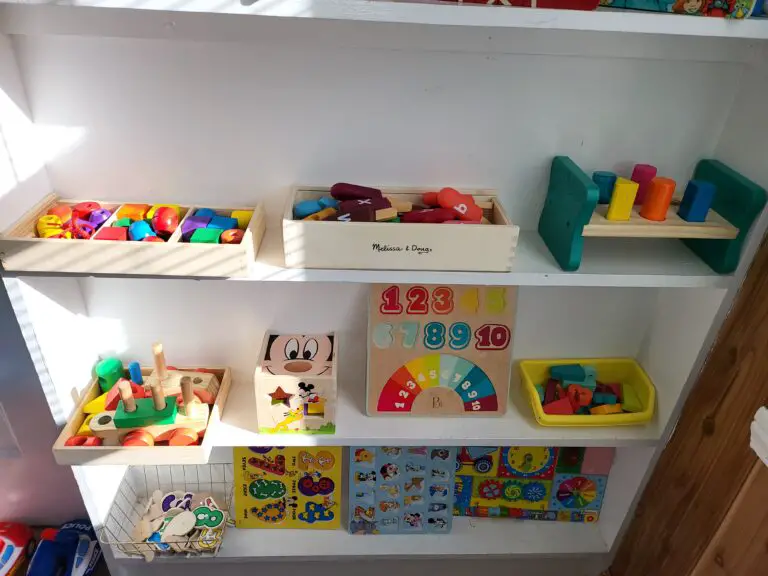
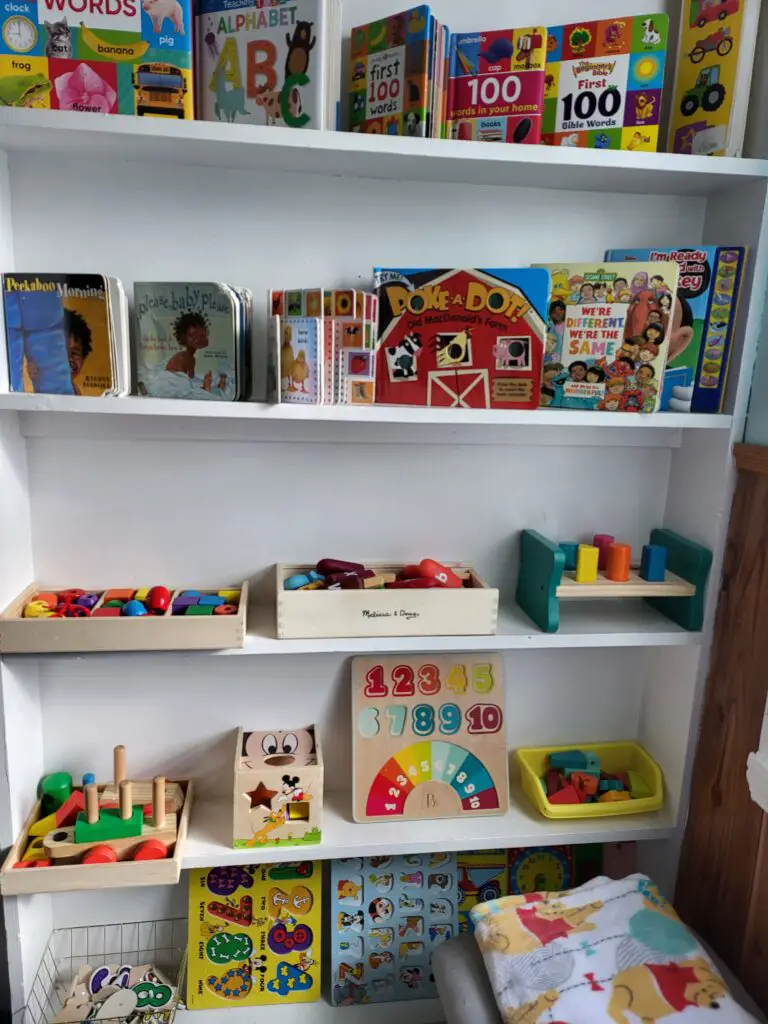
We provide direct links and screenshots for every platform, making your comparison process simple and straightforward. Our goal is to help you confidently select a curriculum that not only prepares your child for kindergarten but also builds a foundation of loving to learn. To further enrich your hands-on learning environment, consider exploring our guide to the best educational toys for preschoolers, which can perfectly complement any program you choose. Let’s find the perfect fit to build a confident and connected start to your homeschool journey.
1. The Mom Resource: Homeschool – Curriculum
Best For: Families seeking a flexible, faith-forward resource hub rather than a rigid, single-box curriculum.
The "Homeschool – Curriculum" category on The Mom Resource stands out not as a singular curriculum, but as a meticulously curated and comprehensive resource hub. It’s an ideal starting point for parents who want to build a custom, faith-centered preschool experience without being locked into one specific methodology. This platform excels at blending practical, ready-to-use materials with the philosophical underpinnings of Montessori and gentle parenting, making it a standout choice for the best preschool curriculum homeschool journey.
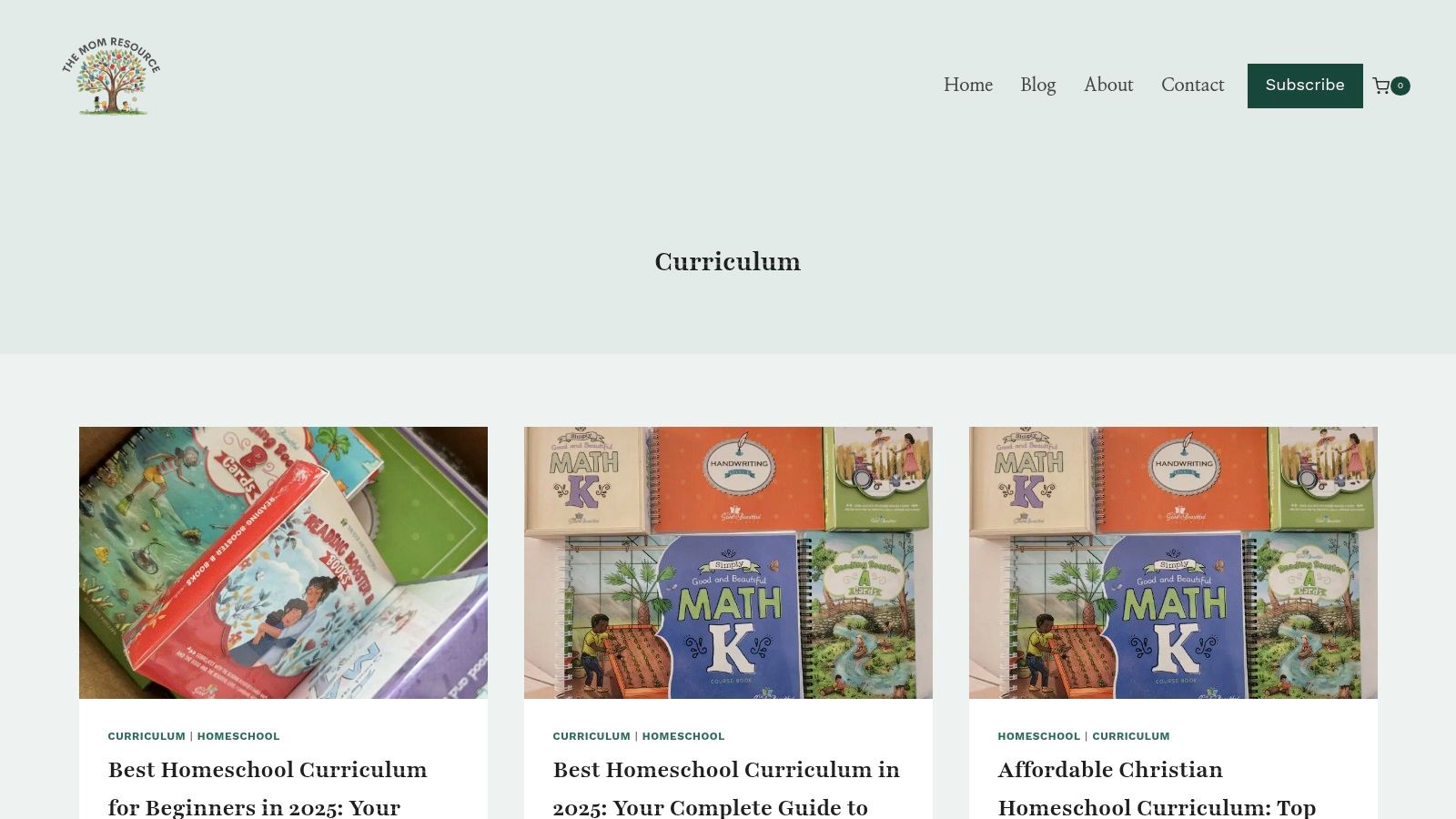
Unlike websites that sell a single, all-in-one package, The Mom Resource provides the building blocks for a dynamic and adaptable learning environment. It’s designed for parents who want to be the architects of their child’s education, offering a wealth of reviews, printable lesson plans, and subject-specific ideas that can be mixed and matched.
Key Strengths and Features
The platform's value lies in its intentional curation and focus on practical application. It moves beyond theory to provide actionable tools that busy parents can implement immediately.
- Curated Blend of Philosophies: The content masterfully integrates academic goals with Christian values and Montessori-inspired activities. You will find recommendations for phonics worksheets alongside articles on creating peaceful family rhythms and nature-based learning prompts.
- Ready-to-Use Printables: A significant advantage is the vast library of printables and lesson ideas designed to minimize prep time. These resources cover everything from letter tracing and number recognition to seasonal crafts and Bible-themed activities, allowing you to quickly assemble a lesson for the day.
- Support for the Homeschooling Parent: The Mom Resource acknowledges that homeschooling is as much about the parent’s journey as the child’s. It offers workshops, a supportive newsletter, and active social channels where parents can ask questions, share successes, and find encouragement. This community aspect is invaluable for those new to homeschooling or seeking to refresh their approach.
- Focus on Foundational Skills: While holistic, the resources remain focused on core preschool objectives like early literacy, numeracy, and fine motor skills. In addition to traditional materials, many homeschool families integrate digital tools and resources, such as the best reading apps for kindergarten, to support early literacy.
What a Week Might Look Like
Using The Mom Resource, a typical preschool week is flexible. You might start Monday with a printable letter-of-the-week packet, shift to a Montessori-inspired practical life activity (like pouring or sorting) on Tuesday, and use a recommended Bible story printable for faith integration on Wednesday. The platform empowers you to build this rhythm based on your child's interests and your family's schedule. You can learn more about how to structure a homeschool plan by exploring The Mom Resource's guide to the best homeschool curriculum.
Pros and Cons
| Pros | Cons |
|---|---|
| Highly Adaptable: Perfect for building a custom curriculum that fits your child's unique needs and interests. | Not an All-in-One Program: Requires parents to actively piece together their curriculum, which may not suit everyone. |
| Reduces Prep Time: A large library of printables and activity ideas saves hours of searching and planning. | Requires Self-Direction: Parents must assess their own state standards or learning goals to ensure all bases are covered. |
| Strong Community Support: Access to workshops, newsletters, and social channels provides ongoing encouragement and new ideas. | Focus is Broad: Not a deep academic database; those needing intensive, research-heavy comparisons may need other sources. |
| Faith and Montessori Integration: Seamlessly combines spiritual growth with proven early childhood learning methods. | Adaptation Needed: Suggestions may need modification for special education needs or specific learning challenges. |
Pricing and Access
The vast majority of content, including articles, reviews, and many printables on The Mom Resource, is free to access. Some premium printables, workshops, or bundled resources may be offered for purchase through their shop, but the core curriculum-building content is readily available without a subscription.
Website: The Mom Resource: Homeschool – Curriculum
2. Timberdoodle
Timberdoodle is a long-standing favorite in the homeschooling community, functioning less like a single curriculum publisher and more like an expert curator. They specialize in building comprehensive, all-in-one curriculum kits that pull the best hands-on resources from various brands into one convenient box. This approach makes it a standout choice for parents seeking the best preschool curriculum homeschool option without the stress of piecing it together themselves.
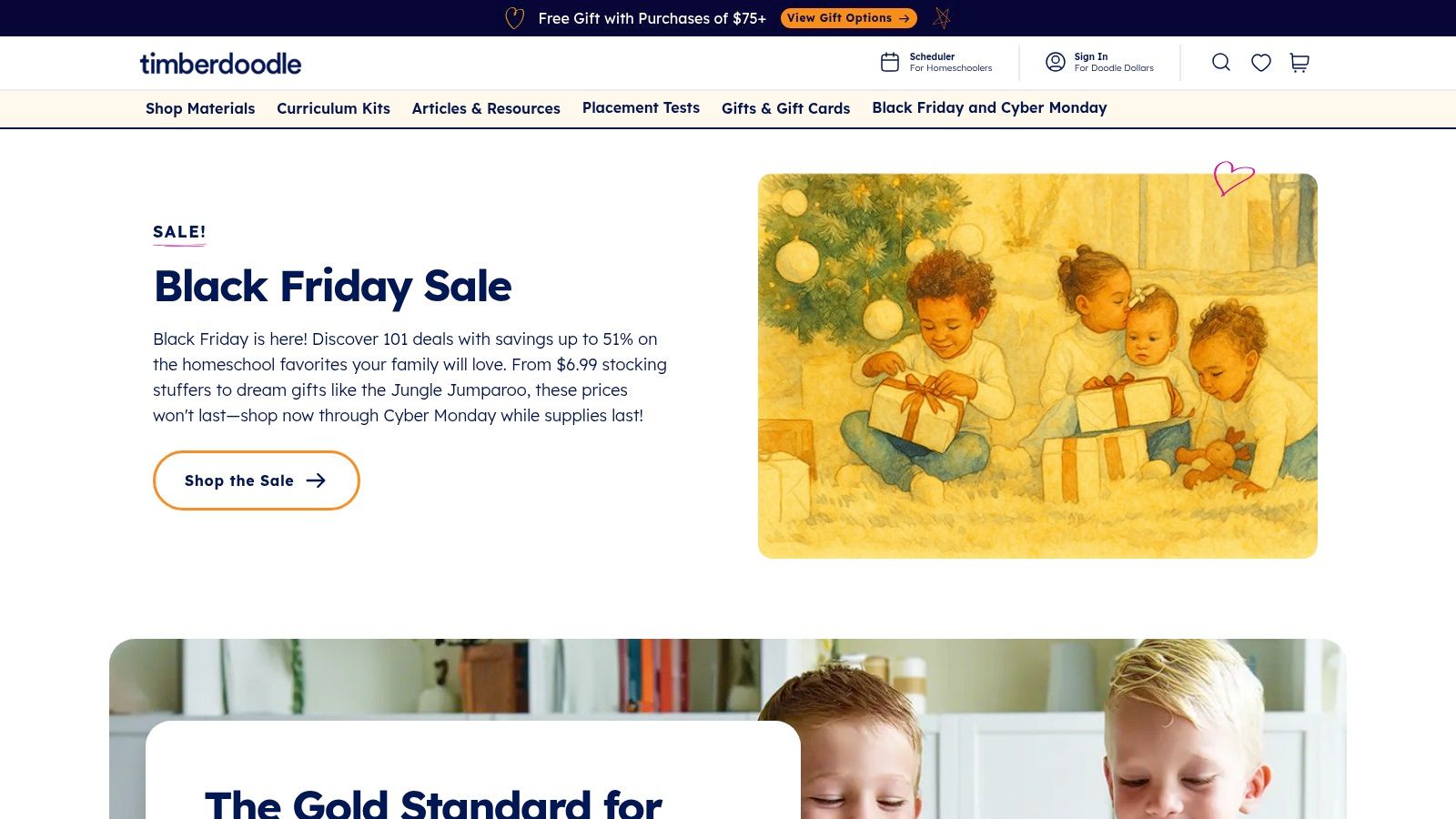
Their kits are known for a strong emphasis on tactile, game-based learning, which is ideal for the preschool years. Instead of relying solely on workbooks, a Timberdoodle kit includes STEM toys, art supplies, puzzles, and colorful manipulatives designed to engage a young child’s mind and body. This multi-sensory approach is particularly effective for kinesthetic learners who thrive on doing rather than just listening.
Key Features and Offerings
Timberdoodle offers both Religious and Non-Religious curriculum kits, making them adaptable to different family values. The Religious versions incorporate a Christian worldview, while the Non-Religious kits are charter school-friendly.
- Customizable Kits: Kits come in three tiers: Basic, Complete, and Elite. This allows you to choose a package that fits your budget and educational goals. You can also customize any kit by swapping out individual items, ensuring it's a perfect fit for your child's specific needs and interests.
- Hands-On STEM and Thinking Skills: A unique strength is the inclusion of premium logic games, building toys, and science materials. These components are expertly chosen to build critical thinking and problem-solving skills from a very young age.
- Free Online Scheduler: One of the most practical tools for new homeschoolers is the free online scheduler. It takes the items in your kit and automatically generates a simple, 36-week checklist, dramatically reducing your weekly planning time. This tool alone makes Timberdoodle one of the most accessible options for parents who are just getting started and want to learn more about how to structure their homeschool days.
What a Typical Week Looks Like
A week with the Timberdoodle preschool kit is varied and dynamic. Your schedule might look like this:
| Day | Activity 1 (Language Arts) | Activity 2 (Math/Thinking) | Activity 3 (STEM/Art) |
|---|---|---|---|
| Monday | Letter tracing with Kumon workbook | Plus-Plus BIG building | Storytime with included read-aloud |
| Tuesday | Skill-building with a Djeco puzzle | Pattern blocks activity | Painting with Djeco art supplies |
| Wednesday | Gamenote letter magnets practice | Logic game: Smart Farmer | Sensory bin play (materials extra) |
| Thursday | Read-aloud and character discussion | Counting with manipulatives | Building with DUPLO challenge |
| Friday | Review letters and sounds | Free play with kit toys | Finish any incomplete art projects |
Pros and Cons
Pros:
- Excellent for Tactile Learners: The hands-on, game-based approach keeps energetic preschoolers engaged.
- Reduces Planning Overwhelm: Kits are open-and-go, with a scheduler that tells you exactly what to do each day.
- High-Quality, Unique Components: Bundles premium brands like Djeco, SmartGames, and Plus-Plus that you might not find elsewhere.
Cons:
- Higher Upfront Cost: As an all-in-one curated kit, the initial investment is higher than buying individual workbooks.
- Tiered Subject Offerings: You may need to upgrade to a Complete or Elite kit to get a full suite of subjects like science and social studies.
Pricing and Where to Find It
Timberdoodle’s Preschool and Pre-K kits are sold directly on their website. Prices vary by tier, typically starting around $300 for a Basic kit and increasing for the Complete and Elite versions. They frequently offer free shipping promotions on curriculum kits, which helps offset the cost.
Website: https://timberdoodle.com
3. The Good and the Beautiful
The Good and the Beautiful has become a household name for families seeking a gentle, faith-based, and academically strong curriculum that is also remarkably affordable. Their materials are known for their beautiful illustrations, wholesome content, and open-and-go format. This makes it an ideal candidate for the best preschool curriculum homeschool for parents who want a structured yet simple approach without a hefty price tag.

The curriculum integrates subjects like art and nature study directly into core learning, creating a rich and varied educational experience. The Preschool course focuses on foundational skills such as letter recognition, sounds, colors, shapes, and numbers 1-10 in a way that is engaging and never overwhelming. Its straightforward lesson structure requires minimal preparation, a significant benefit for busy parents.
Key Features and Offerings
The Good and the Beautiful offers a broad catalog for early learners, with many resources available as free PDF downloads, allowing families to try it before they buy. This approach aligns with their mission to make high-quality homeschooling accessible to everyone.
- Dedicated 'Start for Littles' Hub: Their website organizes materials for early years into a dedicated section, featuring the Preschool and Kindergarten Prep courses, along with early handwriting programs.
- Affordable Print and Free Digital Options: Complete printed Preschool course sets are very low-cost. The company also offers extensive free PDF samples and frequently provides full-level downloads for free, making it incredibly budget-friendly.
- Comprehensive Early-Years Catalog: Beyond the core preschool curriculum, they offer resources for math, handwriting, music, and early science, allowing you to build a complete and cohesive learning plan.
- Gentle, Open-and-Go Lessons: Each lesson is laid out clearly in the coursebook, telling you exactly what to say and do. The lessons are short, typically lasting just 5-15 minutes.
What a Typical Week Looks Like
A week with The Good and the Beautiful Preschool is gentle and consistent, building skills incrementally with beautiful, interactive lessons.
| Day | Activity 1 (Letters & Sounds) | Activity 2 (Numbers & Colors) | Activity 3 (Fine Motor/Art) |
|---|---|---|---|
| Monday | Lesson on the letter "A" | Counting activity with blocks | Tracing lines in the workbook |
| Tuesday | Review "A" sound with picture cards | Learning about the color red | Finger painting activity |
| Wednesday | Lesson on the letter "B" | Shape recognition: circles | Using the Activity Packet scissors |
| Thursday | Review "B" sound with a song | Number practice 1-5 | Creating with playdough |
| Friday | Review all letters learned this week | Free exploration of colors/shapes | Read-aloud & nature walk |
Pros and Cons
Pros:
- Very Budget-Friendly: One of the most affordable options available, with generous free samples and low-cost printed sets. Many families appreciate The Good and the Beautiful as a top choice for affordable Christian homeschool curriculum.
- Minimal Prep Time: The clear, easy-to-teach lessons are truly open-and-go, saving parents valuable planning time.
- Beautiful and Wholesome: The materials are visually appealing and filled with positive, character-building content.
Cons:
- Potential Shipping Delays: Some buyers report slower shipping times, particularly during peak homeschool shopping seasons.
- Faith-Based Content: The Christian worldview is integrated throughout, which may not be a fit for families seeking a purely secular curriculum.
Pricing and Where to Find It
All courses are sold directly through The Good and the Beautiful website. The Preschool Course Set is incredibly affordable, typically under $50 for the complete printed package, which includes the coursebook and an activity packet. Be sure to check their website for frequent free PDF downloads of various courses.
Website: https://www.goodandbeautiful.com
4. Abeka (Homeschool)
Abeka is a long-established name in Christian education, providing a highly structured, traditional approach to homeschooling. For parents who value a clear, teacher-led format with minimal daily prep, Abeka presents one of the best preschool curriculum homeschool solutions. It offers comprehensive, all-in-one kits for K3, K4, and K5 that follow a spiral learning method, introducing concepts and regularly reviewing them for mastery.

Unlike play-based programs, Abeka is academically rigorous from the start, focusing on early phonics, number recognition, and manuscript writing. The curriculum is fully scripted, with parent-led lesson plans that detail exactly what to say and do each day. This makes it an excellent choice for parents who are new to homeschooling and want the confidence of a proven, step-by-step educational framework.
Key Features and Offerings
Abeka provides a variety of formats to suit different family needs, from traditional parent-led kits to video-based instruction.
- Comprehensive Kits: Abeka offers full-year kits that include all necessary child materials (workbooks, readers) and parent materials (lesson plans, teaching aids). You can purchase a complete grade kit or select individual subjects à la carte.
- Abeka Academy Video Lessons: For parents who want to outsource the teaching, Abeka Academy provides streaming video or DVD lessons from master teachers. You can choose an accredited option for official record-keeping or an independent study track for more flexibility.
- Scripted, Open-and-Go Lessons: The detailed parent guides are a hallmark of the program. They lay out each day's lesson, including songs, Bible stories, and academic activities, which dramatically reduces planning time for busy parents.
- Payment Plans and Promotions: Recognizing the cost of a full curriculum, Abeka offers payment plans for larger orders and frequently runs promotional discounts and free shipping offers, which are clearly displayed on their site.
What a Typical Week Looks Like
A week with the Abeka K4 kit is structured and consistent, with daily seat work balanced with teacher-led activities.
| Day | Activity 1 (Phonics/Reading) | Activity 2 (Numbers/Writing) | Activity 3 (Bible/Arts & Crafts) |
|---|---|---|---|
| Monday | Learn letter "A" and its sound | Number recognition 1-5 | Bible story and related song |
| Tuesday | Phonics chart practice | Tracing number 1 in workbook | Community helpers lesson |
| Wednesday | Blending one-vowel words | Counting objects to 10 | Craft activity from curriculum |
| Thursday | Review letter sounds | Writing practice on primary paper | Memory verse recitation |
| Friday | Phonics review game | Skills development sheet | Show & Tell related to lesson |
Pros and Cons
Pros:
- Reduces Prep Time: The scripted, all-inclusive nature is ideal for parents who want a clear structure without guesswork.
- Strong Academic Foundation: Focuses on early phonics and math skills, building a solid base for elementary school.
- Multiple Delivery Modes: Options for parent-led, video streaming, or DVD lessons cater to different teaching styles and needs.
Cons:
- May Be Too Rigid: The heavy emphasis on seat work may not be the best fit for very active preschoolers who thrive on play-based learning.
- Costs Can Add Up: Full kits, especially the accredited video programs, represent a significant financial investment compared to single workbooks.
Pricing and Where to Find It
Abeka’s preschool curriculum is available directly from their website. Parent-led child kits for K4 typically start around $360, with full parent/child kits costing more. Abeka Academy video tuition varies, often starting near $1,000 for a full year of independent study.
Website: https://www.abekahomeschool.com
5. Sonlight
Sonlight has built its reputation on a literature-rich, Charlotte Mason-inspired approach that makes it a top contender for the best preschool curriculum homeschool for families who want to build a love of reading from day one. Their programs are designed around the core belief that children learn best through captivating stories and snuggling on the couch with a good book. This method replaces dry textbooks and repetitive drills with engaging read-alouds that naturally introduce history, science, and language arts concepts.
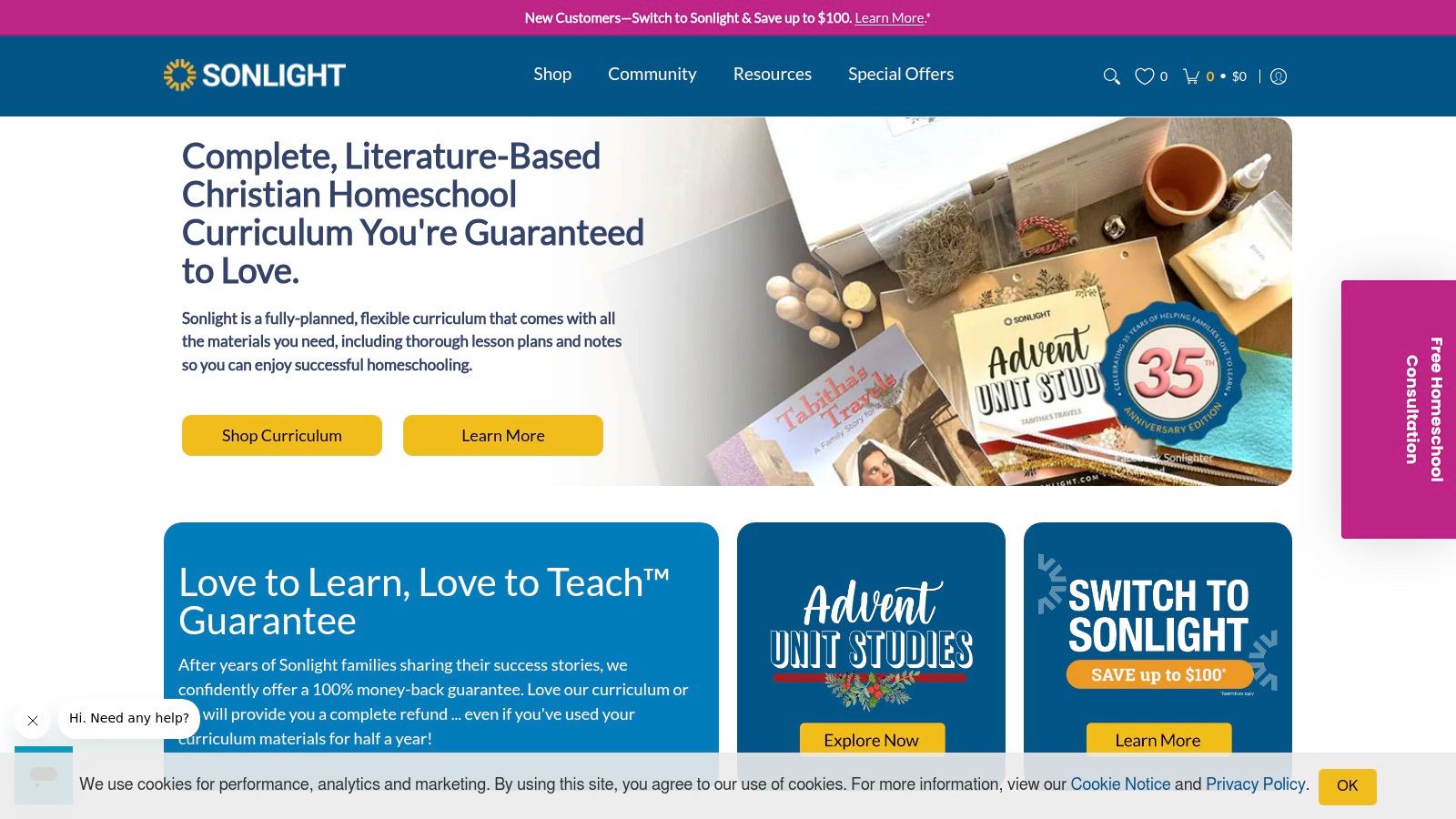
The curriculum is centered around a meticulously curated collection of classic and award-winning children's literature. For preschool, this means colorful picture books and gentle stories that spark curiosity and conversation. The real magic, however, lies in their comprehensive Instructor's Guides, which weave these books into a cohesive, easy-to-follow weekly plan, taking the guesswork out of homeschooling for parents.
Key Features and Offerings
Sonlight's preschool programs are designed to be gentle, flexible, and deeply relational. They offer several packages tailored to the 3- to 4-year-old range, focusing on foundational skills through stories and play.
- Exceptional Book Curation: The heart of the program is its library of high-quality books. These aren't just random stories; they are specifically chosen to be enjoyable, educational, and age-appropriate, fostering a family culture of reading.
- Detailed Instructor's Guides: These guides are the "engine" of the curriculum. They provide daily schedules, discussion questions for read-alouds, hands-on activity suggestions, and supply lists, dramatically reducing prep time. You can choose between 4-day or 5-day schedules.
- Customizable Packages: Unlike rigid boxed sets, Sonlight allows you to customize your order. If you already own some of the books or want to swap an item, their website makes it easy to tailor the package to your family's needs and library.
- Strong Support System: Sonlight offers excellent customer service with access to homeschooling advisors who can help with placement, customization, and any questions you have along the way.
What a Typical Week Looks Like
A week with the Sonlight Preschool package is cozy and story-focused. The schedule is a gentle guide rather than a strict mandate, encouraging parents to follow their child's lead.
| Day | Activity 1 (Read-Aloud) | Activity 2 (Skills) | Activity 3 (Science/Exploration) |
|---|---|---|---|
| Monday | Read The Tale of Peter Rabbit | Letter 'P' introduction with playdough | Discuss animals from the story |
| Tuesday | Read Blueberries for Sal | Counting blueberries (or beads) | Nature walk to find things in nature |
| Wednesday | Bible story and memory verse | Fine motor practice with lacing cards | Sing songs and rhymes from the guide |
| Thursday | Read Harold and the Purple Crayon | Drawing and coloring activity | Free play and building with blocks |
| Friday | Re-read a favorite book from the week | Review weekly concepts | Hands-on activity from the Instructor's Guide |
Pros and Cons
Pros:
- Fosters a Love of Reading: The literature-centric approach is exceptional for creating a read-aloud culture in the home.
- Low-Prep and Clearly Planned: The Instructor's Guides provide clear daily plans, making it easy for parents to open and go.
- Excellent Support: Access to advisors, online communities, and detailed samples provides a strong support ecosystem.
Cons:
- Less Hands-On by Default: While the guide includes activity ideas, the core package is book-heavy and may require intentionally adding manipulatives for kinesthetic learners.
- Higher Cost for Full Packages: The comprehensive, high-quality book packages can be pricier than minimalist, workbook-only options.
Pricing and Where to Find It
Sonlight's Pre-Kindergarten packages are sold directly through their website. A full All-Subjects Package typically starts around $500, with options to purchase smaller history or science packages. They offer a money-back guarantee and provide free shipping for orders over $250.
Website: https://www.sonlight.com
6. Experience Early Learning (formerly Mother Goose Time)
Experience Early Learning, widely known by its former name Mother Goose Time, delivers a complete, theme-based curriculum in a convenient monthly subscription box. It’s designed for both classroom and home use, making it an excellent choice for parents who want a structured, yet playful, open-and-go system. This model is ideal for families looking for the best preschool curriculum homeschool option that minimizes prep time and maximizes engagement.
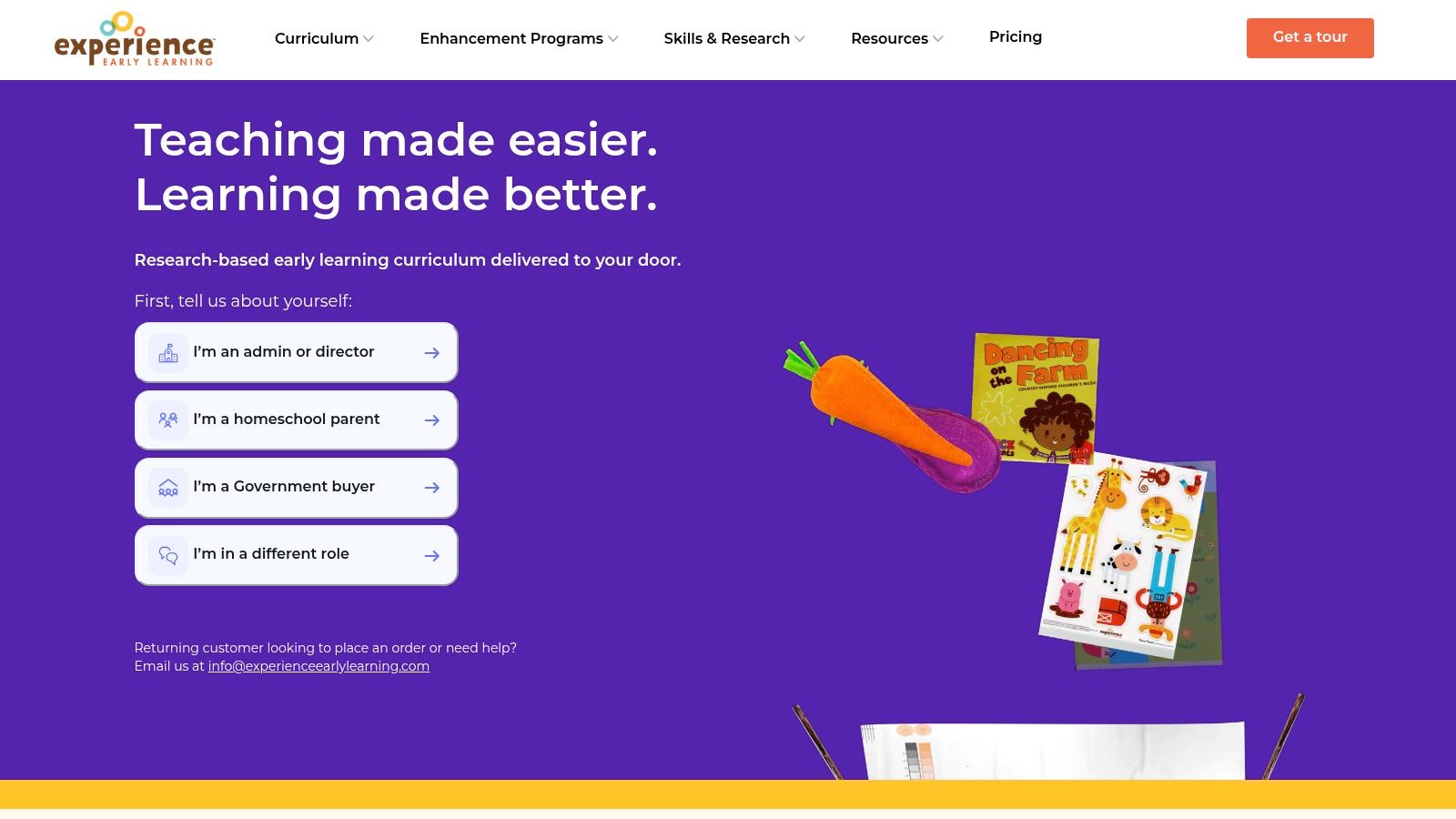
Each monthly kit is centered around a creative theme, like "Ocean Commotion" or "Dinosaur Dig," and includes nearly all the supplies needed for the daily activities. This all-in-one approach removes the burden of sourcing materials, allowing parents to focus entirely on teaching. The curriculum is built on a foundation of play and discovery, integrating art, music, storytelling, and hands-on manipulatives to cover a wide range of developmental skills.
Key Features and Offerings
Experience Early Learning excels at providing a cohesive, multisensory experience that is easy to implement right out of the box. The program also offers add-ons to tailor the curriculum to your family's specific needs.
- All-Inclusive Monthly Kits: Each box contains a teacher guide, daily lesson plans, storybooks, music, and pre-packaged materials for art, math, and literacy activities. This significantly reduces the daily planning load for busy parents.
- Optional Christian Supplement: Families can add the "Experience God" faith-based supplement, which integrates Christian stories, Bible verses, and character-building activities into the monthly theme.
- Customizable Add-Ons: Beyond the core kit, you can enhance learning with extra "Little Goose" toddler supplements, more advanced math and literacy materials, or a "Member Resources" digital package for extra printables.
- Homeschool Onboarding: They provide dedicated support for homeschool families, including an interest intake process to help you get started and make the most of the curriculum.
What a Typical Week Looks Like
A week with Experience Early Learning follows a predictable yet engaging rhythm based on the month's theme. Each day has a clear structure that covers multiple learning domains.
| Day | Activity 1 (Creative Arts) | Activity 2 (Math/Reasoning) | Activity 3 (Language/Literacy) |
|---|---|---|---|
| Monday | Painting a themed craft project | Sorting themed manipulatives | Story time with included monthly book |
| Tuesday | Creating a sculpture with clay | Patterning with character cards | Journaling with shape stencils |
| Wednesday | Exploring textures in a collage | Counting game from the kit | Letter recognition activity |
| Thursday | Music and movement with theme song | Building with counting cubes | Retelling the story from Monday |
| Friday | "Make & Play" activity from kit | Problem-solving puzzle | Free exploration of weekly concepts |
Pros and Cons
Pros:
- Extremely Low-Prep: The all-in-one boxes are ready to use, which is a major benefit for busy parents.
- Engaging Thematic Units: The creative monthly themes keep children excited and curious about learning.
- Strong Multisensory Approach: Incorporates art, music, movement, and hands-on activities to appeal to all learning styles.
Cons:
- Ongoing Subscription Cost: The monthly fee can be more expensive long-term compared to a one-time curriculum purchase.
- Less Academically Flexible: While comprehensive, it's harder to customize the academic pacing compared to piecing together your own curriculum.
Pricing and Where to Find It
Experience Early Learning is sold as a subscription directly on their website. The core curriculum kit price is based on the number of children. They often run promotional offers, such as introductory discounts for new subscribers who commit to a few months.
Website: https://www.experienceearlylearning.com
7. Christianbook
Christianbook operates not as a curriculum publisher but as a massive online retailer, aggregating one of the most extensive selections of homeschool materials available. For parents looking to compare different programs or build their own eclectic plan, it serves as an essential one-stop shop. Its robust filtering and dedicated preschool category make it a powerful tool for discovering the best preschool curriculum homeschool resources from a wide range of trusted publishers.
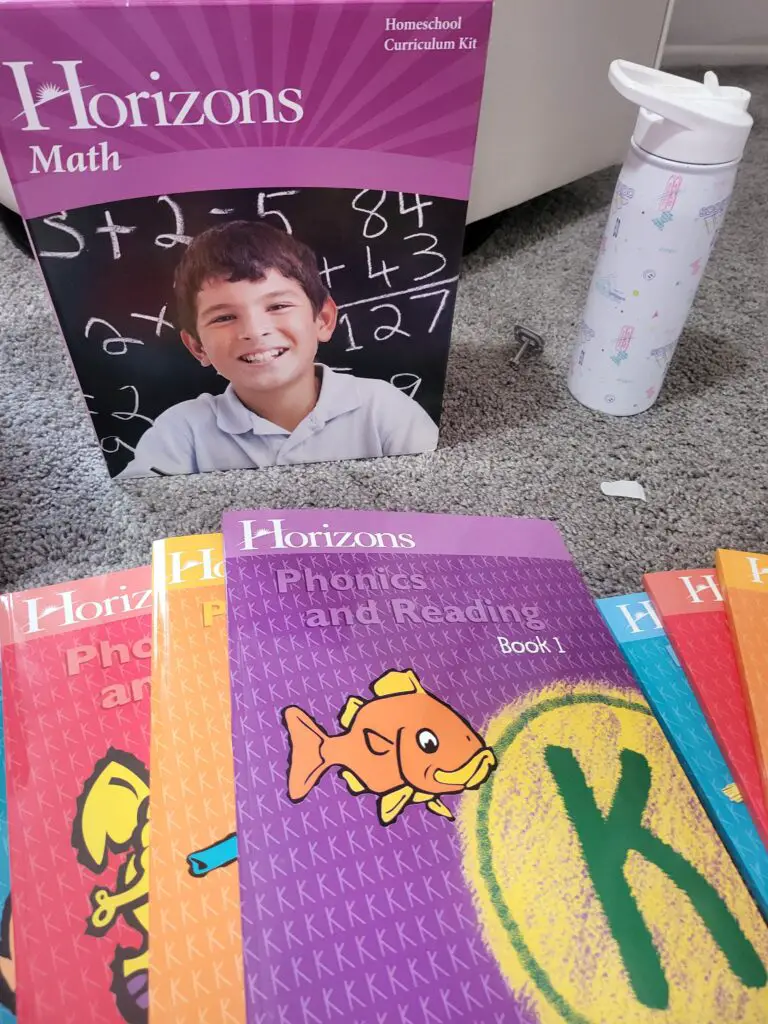
This platform excels at bringing diverse options like Abeka, BJU Press, and Horizons under one digital roof. Instead of visiting multiple websites to view samples and compare prices, families can do their research and purchasing in a single, streamlined experience. This is especially helpful for parents who want to mix and match workbooks from one publisher with read-alouds or manipulatives from another.
Key Features and Offerings
Christianbook's strength lies in its vast inventory and user-friendly shopping experience, tailored specifically for the homeschool community. The platform is designed to make finding and purchasing materials simple and efficient.
- Centralized Shopping: Access and compare curricula from dozens of different Christian and secular publishers. You can easily find everything from complete all-in-one kits to individual math workbooks, early readers, and hands-on science materials.
- Deep Filtering and "Look Inside" Previews: The website allows you to filter by publisher, grade level, subject, and price. Many product listings include digital "look inside" previews or sample page downloads, allowing you to evaluate a curriculum's style and content before buying.
- Frequent Sales and Promotions: Christianbook is known for its competitive pricing, regular sales events, and free shipping offers on qualifying orders. This makes it a budget-friendly option for acquiring high-quality resources.
What a Typical Week Looks Like
A week using resources sourced from Christianbook is entirely customizable. You have the freedom to build a schedule that reflects your child's unique needs, blending different approaches and materials.
| Day | Activity 1 (Language Arts) | Activity 2 (Math/Thinking) | Activity 3 (Bible/Character) |
|---|---|---|---|
| Monday | Horizons for Preschool Letter Page | Rod and Staff Counting Workbook | The Beginner's Bible Storytime |
| Tuesday | Alphabet flashcards (Carson Dellosa) | Sorting pom-poms by color/size | Character-building song/fingerplay |
| Wednesday | Abeka Phonics and Numbers K4 | Pattern block activities | Mission-focused read-aloud (Sonlight) |
| Thursday | Tracing practice in a dry-erase book | Counting manipulatives | Scripture memory verse practice |
| Friday | Review day: letter and number games | Free play with educational toys | Bible-themed craft or coloring page |
Pros and Cons
Pros:
- Unmatched Selection: The ability to shop across many top publishers in one place is a major advantage.
- Competitive Pricing: Frequent discounts and sales make it one of the most affordable ways to purchase new curriculum.
- Helpful Previews: The "look inside" feature is invaluable for making informed decisions without having the physical book in hand.
Cons:
- Potential for Overwhelm: The sheer number of options can be daunting for parents who are new to homeschooling and unsure where to start.
- Varying Return Policies: Because it's a marketplace, return policies can differ depending on the specific product or publisher.
Pricing and Where to Find It
Christianbook sells directly from its website. Prices range from just a few dollars for individual workbooks to several hundred for complete, multi-subject kits. The platform clearly displays stock availability and provides estimated shipping times for US customers, making planning easy and reliable.
Website: https://www.christianbook.com/page/homeschool/grade-level/preschool
Top 7 Preschool Homeschool Curriculum Comparison
| Item | 🔄 Implementation Complexity | ⚡ Resources & Cost | 📊 Expected Outcomes / ⭐ Quality | 💡 Ideal Use Cases | ⭐ Key Advantages |
|---|---|---|---|---|---|
| Homeschool – Curriculum | Low–Medium — curated suggestions, flexible adaptation needed | Low — printables + recommended materials; variable if buying curricula | Balanced academic + faith integration; adaptable quality depending on selections | Parents starting out or refining routines who want faith-forward options | Curated, printable resources + community support |
| Timberdoodle | Low — turnkey kits with easy customization | Medium–High — higher upfront cost for kits; includes manipulatives and scheduler | Strong hands-on skill development; high engagement for tactile learners | Families wanting ready-made, tactile preschool/Pre‑K kits | Hands-on bundles, clear placement & scheduler |
| The Good and the Beautiful | Very Low — open-and-go lessons with minimal prep | Low — budget-friendly, many free PDF samples and low-cost sets | Solid early-skills with gentle faith-based content; consistent quality | Budget-conscious families seeking minimal prep early-years materials | Affordable, many free samples, easy-to-teach lessons |
| Abeka (Homeschool) | Medium–High — scripted, structured programs and video options | Medium–High — costs add up for full kits/video; payment plans available | Comprehensive traditional academic outcomes; strong structure ⭐ | Families wanting highly structured, parent-led or accredited options | Full-year kits, multiple delivery modes (text/video), scripted guidance |
| Sonlight | Low–Medium — book-rich approach with detailed instructor guides | Medium — book-heavy packages can be pricier; customization can reduce cost | Excellent literacy and read-aloud outcomes; fosters strong reading culture ⭐ | Literature-focused families who prioritize read-alouds and flexible pacing | Exceptional book curation, clear daily plans, customization |
| Experience Early Learning | Very Low — monthly open-and-go thematic kits | Medium — ongoing subscription cost but kits include materials | Multisensory thematic engagement; consistent routine and low prep | Busy parents or centers wanting ready-made monthly preschool plans | Low prep monthly kits, multisensory activities, onboarding support |
| Christianbook | Low — marketplace shopping; comparison work required | Varies — wide price range, frequent discounts, shipping options | Enables tailored selections; outcomes depend on chosen publishers | Shoppers comparing multiple publishers or building mixed curricula | One-stop shop for many publishers, competitive pricing, stock info |
Bringing It All Together: Your Next Steps to a Joyful Homeschool
Choosing the best preschool curriculum homeschool for your family can feel like a monumental decision, but hopefully, this comprehensive look at top options has brought clarity and confidence to your journey. We've explored everything from the all-in-one, hands-on kits of Timberdoodle to the gentle, nature-focused lessons of The Good and the Beautiful. We've seen the traditional, time-tested structure of Abeka and the literature-rich approach of Sonlight.
You have a wealth of wonderful choices, each with a unique philosophy and presentation. The key takeaway is that there is no single "perfect" curriculum for everyone. The best program is the one that harmonizes with your family's rhythm, values, and educational goals while honoring your child's individual learning style. Whether it's the play-based activities from Experience Early Learning or the vast resources available at Christianbook, your perfect fit is out there.
Your Actionable Next Steps
Feeling empowered is great, but taking action is what builds momentum. Instead of getting stuck in "analysis paralysis," use this simple framework to move forward with purpose and peace.
- Revisit Your "Why": Before you click "buy," take a moment to reflect on your core goals. Are you prioritizing faith integration, Montessori principles, hands-on play, or academic readiness? Write down your top three priorities and keep them visible.
- Involve Your Child (Gently): Look at sample pages or unboxing videos of your top two or three choices with your preschooler. Their excitement (or lack thereof) can be a powerful indicator. Do their eyes light up at the sight of colorful manipulatives or beautiful storybooks?
- Trust Your Parental Intuition: You are the ultimate expert on your child. A curriculum might have glowing reviews, but if it feels overly rigid for your free-spirited child or too loose for your family that thrives on structure, it's okay to pass. Trust that gut feeling.
Remember this: Preschool homeschooling is not about replicating a formal classroom. It is a unique opportunity to cultivate curiosity, build strong character, and create beautiful, lasting memories. The goal is a love of learning, not a checklist of completed worksheets.
Final Thoughts on Your Homeschool Adventure
As you embark on this beautiful path, grant yourself grace. There will be days when lessons flow effortlessly and others when the best-laid plans are replaced with nature walks and cuddle sessions on the couch. Both are equally valuable. The curriculum you choose is simply a tool; you are the heart of your homeschool.
Your presence, patience, and love are the most essential ingredients for your child's education. Celebrate the small victories, embrace the messy moments, and cherish this precious season of learning and discovery together. You are fully equipped to provide your child with a rich, nurturing, and joyful start to their educational journey.
Feeling overwhelmed by piecing everything together? If you love the idea of a gentle, play-based approach but want a simple framework to guide you, explore the resources at The Mom Resource. We provide practical, low-prep activities and routines that blend seamlessly into your daily life, helping you create a connected and joyful learning environment without the pressure of a rigid curriculum. Find your rhythm and confidence at The Mom Resource today.