Finding the Best Homeschool Science Curriculum
Choosing the best homeschool science curriculum is less about finding the "most popular" option and more about discovering the right fit for your unique family. I've seen families thrive with so many different programs. For some, it's the faith-based, in-depth approach of Apologia. For others, the engaging, open-and-go video lessons from Mystery Science are a perfect match. And for many, the hands-on, secular investigations in REAL Science Odyssey hit the sweet spot.
Your ideal program will always be the one that aligns with your child’s learning style and your family’s core educational philosophy.
How to Choose the Right Science Curriculum
Walking into a homeschool convention or browsing online can feel completely overwhelming with the sheer number of science curricula available. The market for home education materials is booming, which is great, but it also means more noise to sift through.
In fact, the global homeschool curriculum market was valued at USD 34.5 billion in 2024 and is projected to shoot past USD 112 billion by 2033. This explosion in growth gives us more amazing choices than ever before, but it also makes having a clear decision-making framework absolutely essential. You can learn more about the growing homeschool market and what it means for families like ours.
To find the best homeschool science curriculum, you need a strategy that goes beyond a simple feature comparison. The real goal is to match a program's structure, content, and tone to your family's specific needs and values.
Key Decision Factors for Your Family
The first step is to get clear on three core areas: your child's learning preferences, your family's worldview, and your overarching teaching style. A curriculum that is a dream for a hands-on, kinesthetic learner might be a total flop for a child who thrives with reading and narration.
Similarly, your worldview is a critical filter. Do you prefer a curriculum that beautifully integrates faith and science from a creationist perspective? Or are you looking for one that presents scientific concepts from a neutral, secular viewpoint? Answering this question early on will dramatically narrow your search.
Finally, think about your homeschool philosophy. Are you guided by:
- Classical Education: Emphasizing memory work in the early years, followed by logic and rhetoric.
- Charlotte Mason: Focusing on beautiful living books, nature study, and short, focused lessons.
- Unit Studies: Exploring topics across multiple subjects for a rich, immersive experience.
- Unschooling: Following child-led interests with minimal formal structure.
This decision tree infographic is a great way to visualize how your learning style, worldview, and teaching approach can guide you to the right choice.
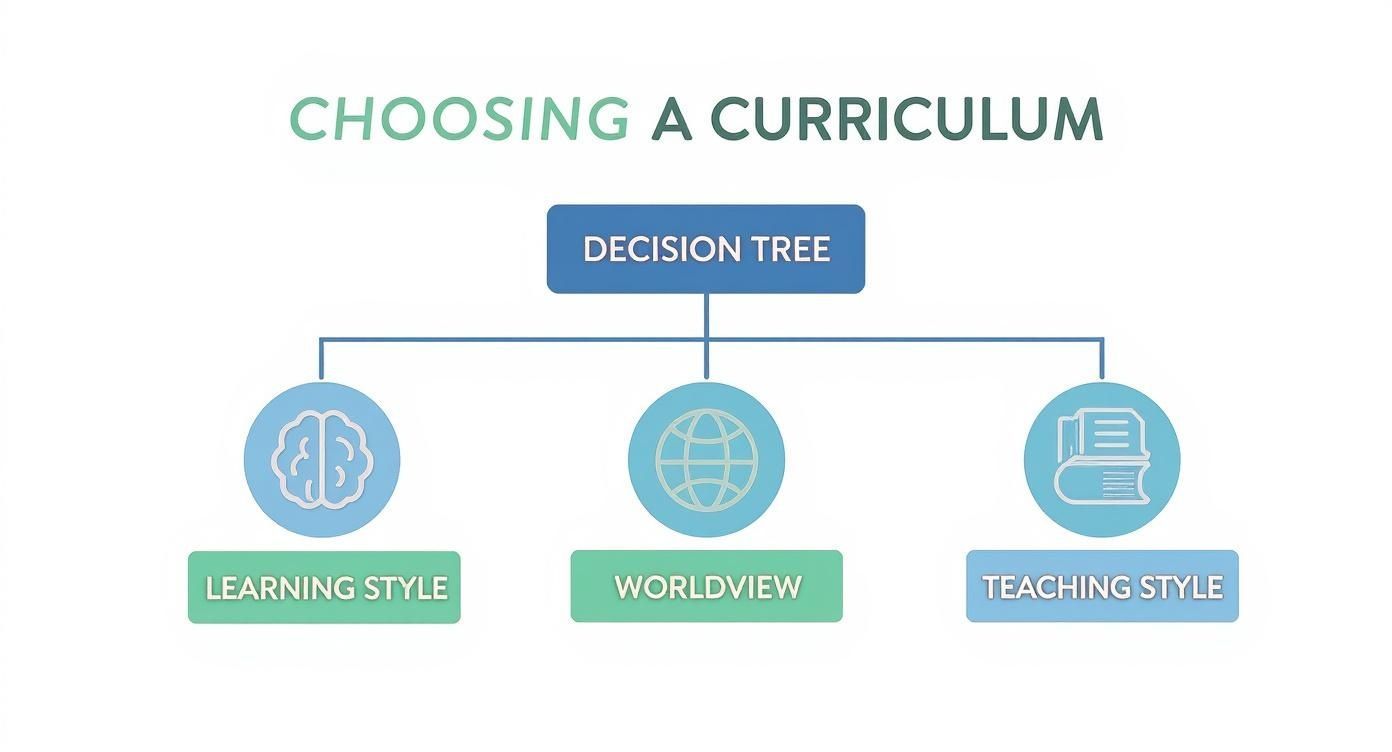
As you can see, starting with these foundational questions creates a clear path to the right resources, preventing that all-too-common feeling of "curriculum regret" (and wasted money!).
When you align your curriculum with these core principles, you ensure science instruction feels like a natural and exciting part of your homeschool day, rather than a subject you have to drag everyone through. From there, you can dig into the practical details, like the level of hands-on experiments, the amount of parent involvement required, and how well it fits your budget.
Comparing Top Homeschool Science Programs
Now that you have a better idea of what your family needs, we can dive into the fun part: comparing some of the most popular and well-regarded science programs out there. The goal here isn't to crown a single "winner." Instead, I want to show you the unique personality and teaching style of each one so you can picture how it would actually feel to use it in your home day-to-day.
Homeschooling has grown so much, and the quality of curriculum available is incredible. In fact, the number of homeschooled students in the U.S. hit 3.7 million in 2024, which means more families than ever are searching for the best homeschool science curriculum to fit their unique style. You can read more about recent homeschooling trends to see just how much things have changed.
Let's put three fantastic programs—Mystery Science, Apologia, and REAL Science Odyssey—side-by-side to see how they really stack up.

Mystery Science: The Inquiry-Based Powerhouse
If you're looking for an open-and-go, fully digital curriculum, Mystery Science is a game-changer. It's wildly popular for its video-led lessons that are built around questions kids actually ask, like "Why is the sky blue?" or "Could a volcano pop up in your backyard?"
The whole approach is inquiry-based learning. Each lesson kicks off with a short, beautifully produced video that immediately hooks your child's curiosity. After the video, there are guided discussion questions and a simple, hands-on activity that almost always uses common stuff you already have at home.
For parents, this structure is a dream. It's incredibly low-prep. You won't be reading dense textbooks the night before or spending days gathering supplies for a complicated experiment.
Key Differentiator: Mystery Science is the ultimate "plug-and-play" solution. For busy parents or those who don't feel confident teaching science, the minimal prep time is a lifesaver. You can deliver a fantastic lesson with just a few clicks.
Who is Mystery Science best for?
- Secular Homeschoolers: The content is 100% secular and aligns with the Next Generation Science Standards (NGSS).
- Families Needing Low Prep: If your schedule is bursting at the seams, this curriculum demands almost zero advance planning.
- Visual Learners: Kids who love videos and dynamic content will be completely captivated.
- Parents Unconfident in Teaching Science: The videos do all the heavy lifting, explaining complex topics in a simple, engaging way.
On the flip side, it might not be the right fit if you're looking for a literature-heavy program or prefer a traditional textbook-and-workbook feel. The hands-on activities are often more like quick demonstrations than deep-dive experiments, which could be a downside for kids (or parents) craving more rigorous lab work.
Apologia: The Faith-Based Mastery Approach
In the world of faith-based homeschooling, Apologia is a giant. It's known for its rigorous, creationist science curriculum that beautifully blends the classical and Charlotte Mason philosophies.
The textbooks are written in a conversational, narrative style that makes science feel like a story told by a trusted mentor. This method encourages deep mastery, as students spend an entire school year immersing themselves in a single subject, like Astronomy, Botany, or Anatomy.
Unlike Mystery Science, Apologia is very parent-intensive. You are the primary teacher, guiding your child through the text, leading discussions, and overseeing the detailed experiments. It definitely requires more prep time.
Apologia's Structure and Labs
The program centers around a textbook, a student notebooking journal, and optional lab kits. Those notebooking journals are a real standout feature, integrating:
- Templates for taking notes
- Vocabulary exercises
- Scripture copywork
- Space for detailed lab reports and drawings
The experiments are robust and directly tie back to the concepts in the textbook. They do require more specialized materials, but you can buy pre-made lab kits to make life easier. For families wanting to weave their faith into a strong academic foundation, Apologia is often considered the best homeschool science curriculum available.
REAL Science Odyssey: A Secular, Hands-On Alternative
For families who love a hands-on approach but want a secular option, REAL Science Odyssey (RSO) from Pandia Press is a fantastic choice. It hits a sweet spot, offering more structure and depth than Mystery Science but without the text-heavy or faith-based nature of Apologia.
Its teaching style is a secular mix of classical and Charlotte Mason ideas. Each lesson involves a bit of reading followed by lab sheets and multiple hands-on activities. The "REAL" in the name actually stands for Read, Explore, Absorb, and Learn.
RSO is famous for its exceptional lab work. The experiments are well-thought-out, clearly explained, and do an excellent job of demonstrating scientific principles. They feel like real science—meaty enough to be truly engaging.
Real-World Scenario: Picture a family with a 2nd grader and a 4th grader who love to get their hands dirty. They want a curriculum that feels substantial but doesn't come with a specific religious worldview. RSO would be a perfect fit, letting them explore topics like chemistry or biology together through labs that are both fun and educational.
Parental involvement here is moderate. It's more hands-on for the parent than Mystery Science, but generally less demanding than Apologia because the lessons are more concise and activity-focused.
Homeschool Science Curriculum Feature Comparison
To make these differences crystal clear, sometimes seeing it all laid out in a table is the best way to spot what clicks with your family's needs.
This quick-reference table compares our top curricula across the most important decision-making factors.
| Curriculum | Worldview | Pedagogy | Hands-On Focus | Best For Grade Levels | Parent Involvement |
|---|---|---|---|---|---|
| Mystery Science | Secular | Inquiry-Based, Digital | Simple Demonstrations | K-5 | Very Low |
| Apologia | Young-Earth Creationist | Classical/Charlotte Mason | In-Depth Labs | K-12 | High |
| REAL Science Odyssey | Secular | Classical/Hands-On | Robust, Core Labs | K-10 | Moderate |
Seeing them side-by-side really highlights the trade-offs. If your top priority is ease of use and a secular viewpoint, Mystery Science is a clear front-runner. If you’re committed to a deep, faith-integrated education with a classical feel, Apologia is hard to beat. And if you're hunting for a robust, secular program built around meaningful experiments, REAL Science Odyssey is an excellent choice.
Ultimately, the best homeschool science curriculum is the one that actually gets done consistently and joyfully in your home. By thinking through your teaching style, your child's personality, and your family's worldview, you can pick a program that will not only educate but also spark a genuine, lifelong love for science.
Matching Curriculum to Your Homeschool Philosophy
Finding the right science curriculum is about more than just checking off boxes; it’s about finding a program that speaks the same educational language as your family. When your science lessons click with your core teaching philosophy, they become a natural, meaningful part of your day instead of just another required subject. A curriculum that clashes with your style can lead to serious friction and burnout for everyone.
Think about it: a family that thrives on unstructured, interest-led learning will likely feel stifled by a rigid, textbook-heavy program. On the flip side, a parent who needs a clear, sequential plan might feel totally lost with a curriculum built around open-ended exploration.
Let’s dig into how you can find that perfect match for some of the most common homeschooling philosophies.
For the Charlotte Mason Homeschool
The Charlotte Mason method is built on a beautiful idea: children are whole persons who deserve a rich education filled with living ideas. In this world, science isn't a dry list of facts to be memorized. It’s a wondrous exploration of God's creation.
A true Charlotte Mason science curriculum will always lean heavily on:
- Living Books: Instead of dense textbooks, learning flows from beautifully written, narrative-style books that make science come alive.
- Nature Study: A huge portion of learning happens outdoors. Nature journaling, sketching, and firsthand observation are the heart of the curriculum.
- Narration: Children are asked to tell back what they've learned in their own words. This simple act solidifies understanding far better than any multiple-choice quiz ever could.
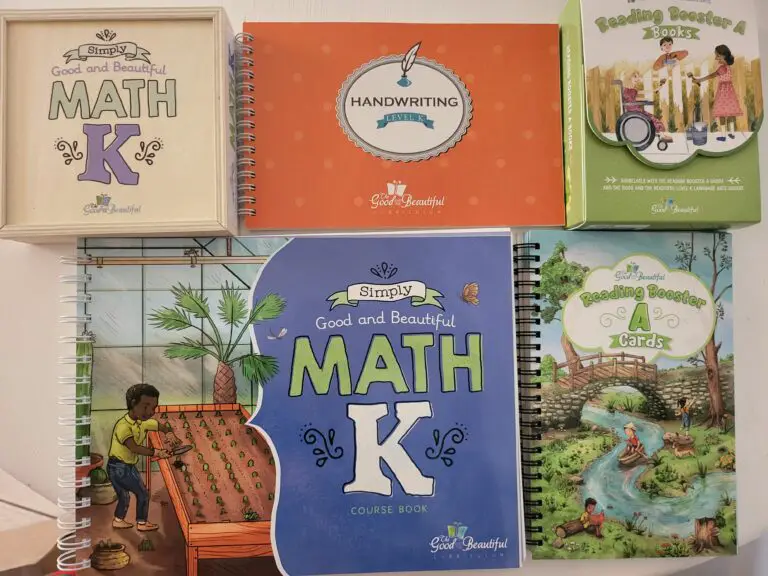
Programs like Apologia’s elementary series, with its conversational tone and notebooking journals, are a natural fit for this style. Likewise, resources like The Good and the Beautiful often weave in nature-based lessons and beautiful literature, making them strong contenders. If you're weighing different philosophies, you might find it helpful to explore this detailed comparison of Charlotte Mason vs Montessori methods.
Key Insight: For Charlotte Mason families, the how of learning is just as important as the what. A curriculum’s tone, beauty, and emphasis on observation are non-negotiable.
For the Classical Education Homeschool
Classical education is a journey through a three-stage process called the Trivium: Grammar, Logic, and Rhetoric. Each stage is designed to match a child's natural cognitive development, building a powerful foundation of knowledge and critical thinking.
In a classical model, science instruction evolves right alongside your child:
- Grammar Stage (Elementary): The goal here is memorizing the foundational facts of science—the "grammar" of the subject. This stage is often filled with songs, chants, and memory work covering everything from the parts of a cell to the planets in our solar system.
- Logic Stage (Middle School): Students naturally start asking "why?" and begin making connections between the facts they've learned. The curriculum shifts to focus on cause and effect, conducting more structured experiments, and learning to build a logical argument.
- Rhetoric Stage (High School): The focus sharpens to expressing and defending scientific ideas. Students dive into deep study, tackle advanced lab work, and learn to articulate their understanding persuasively.
Curricula like Classical Conversations offer a highly structured framework that puts memory work at its core. Others, like REAL Science Odyssey, manage to blend that classical structure with tons of hands-on labs, making them a great fit for families who want rigor without sacrificing engagement.
For Unit Study and Unschooling Families
If your family leans toward unit studies or fully embraces unschooling, you need resources that are, above all else, flexible and adaptable. These philosophies are all about following a child's interests and weaving subjects together into a cohesive, thematic whole.
The best "curriculum" for these families often isn't a single, boxed program but a curated collection of high-quality resources. For instance, a unit study on oceans might pull in videos from Mystery Science, a stack of books from the library, a compelling documentary, and a few hands-on kits to explore marine biology.
For unschoolers, learning is sparked by a child's own questions. A simple question like, "How do rockets actually work?" can launch an incredible exploration into physics, chemistry, and engineering. The "curriculum" becomes a library of potential resources—from YouTube channels and museum visits to project-based STEM kits—that a parent can offer the moment that spark of interest appears. For you, flexibility is everything.
Integrating Hands-On Labs and STEM Projects
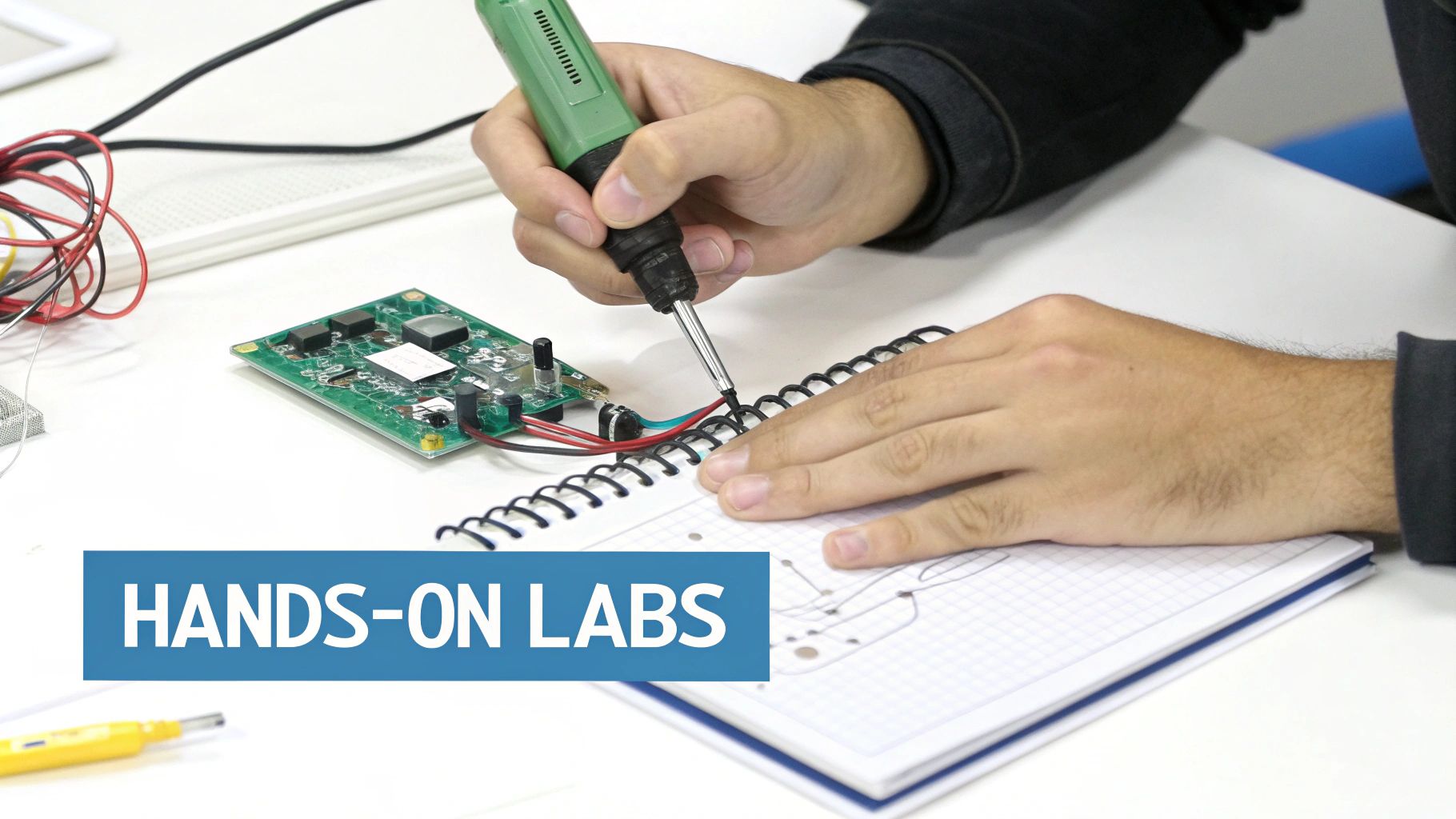
Great science education isn’t built on memorizing facts from a textbook. It’s built on discovery, interaction, and getting your hands dirty. This is where hands-on labs and engaging STEM projects come in—they transform abstract scientific principles into tangible, memorable experiences for your kids.
This hands-on approach is what sparks genuine, lasting curiosity. More than that, it develops crucial skills like critical thinking and problem-solving. When children get to act like real scientists—observing, questioning, predicting, and analyzing—the learning sticks in a way that just reading a chapter never can. Building a simple circuit or watching a butterfly emerge from its chrysalis makes a lesson profound.
Creating Your Simple Home Lab
You absolutely do not need a state-of-the-art laboratory to conduct meaningful experiments at home. A dedicated corner of the kitchen, a simple rolling cart, or even just a few well-organized storage bins can serve as your official home lab. The key isn't fancy equipment; it's organization and accessibility.
Here are some essentials for a budget-friendly home lab:
- Basic Glassware: A few beakers, test tubes, and measuring cylinders are surprisingly versatile for countless chemistry and biology experiments.
- Safety Gear: Safety goggles are non-negotiable. Protecting little eyes is priority number one. Gloves are also a great idea for messy projects.
- Observation Tools: A good magnifying glass is a must-have, and an affordable microscope can open up an entire unseen world, sparking incredible wonder.
- Common Household Supplies: You already have the building blocks for hundreds of classic science experiments. Think baking soda, vinegar, food coloring, salt, and cornstarch.
Keep these materials organized and within reach. That way, when inspiration strikes, you’ll be ready to dive in without a frustrating hunt for supplies. For bigger or more complex experiments, joining forces with others can be a huge help. A homeschool co-op can provide fantastic opportunities to share resources and conduct group labs.
Complementing Your Curriculum with STEM Kits
While your core curriculum provides the structure, supplemental STEM kits can add a layer of excitement and specialized learning. I love these project-based kits because they are designed to be engaging and often require less direct instruction from me.
The market has exploded with options, offering everything from electronics kits to engineering challenges. Products like Snap Circuits, Tinker Crate, and LEGO Education sets are incredibly popular for a reason—they brilliantly blend structured learning with creative, hands-on fun. It's a fantastic way to combine traditional science study with practical STEM activities that equip kids with future-ready skills.
Real-World Example: Let's say your child is learning about electricity in their core curriculum. A Snap Circuits kit lets them actually build a working fan, a doorbell, or a simple alarm. This project doesn't just explain the theory; it makes the concept of a circuit tangible and, frankly, really cool.
Embracing Project-Based Learning
Project-based learning (PBL) takes hands-on science a step further by centering an entire unit around a complex question or challenge. Instead of just doing a one-off experiment, students engage in a longer-term investigation that weaves together multiple skills.
A PBL unit on botany, for instance, might involve designing and planting a small garden, tracking plant growth over weeks, researching local pests, and presenting the final harvest. This approach makes learning deeply relevant and empowers children to take ownership of their education. If you're looking for guidance, you can find a practical guide to project-based learning for elementary at home to get you started.
By weaving these hands-on opportunities into your homeschool, you’re not just teaching science—you’re cultivating a resourceful, inquisitive, and confident learner.
Building a Sustainable Weekly Science Schedule
Picking the right homeschool science curriculum is a huge first step, but the real win is weaving it into your week without everyone getting burned out. A fantastic program sitting on the shelf is just expensive decoration, after all. The key is finding a sustainable rhythm that makes science a consistent, enjoyable part of your homeschool.
This isn't about cramming more into an already packed day. It's about finding a flow that works for your family's unique energy levels and commitments. Some families do great with a little bit of science every day. Others thrive by setting aside one or two bigger chunks of time each week for deeper dives and hands-on labs.

Structuring for Success: Elementary Grades
For younger kids in the elementary years, consistency is everything. Engagement matters far more than the length of the lesson. Short, frequent exposure to science keeps their natural curiosity firing on all cylinders without overwhelming them.
A simple and super effective approach is scheduling science two to three times per week for about 30-45 minutes each time. This is totally manageable for shorter attention spans and keeps the momentum going. Many of us, especially those trying to balance working from home and homeschooling, find this bite-sized plan much easier to stick with.
Here’s a sample weekly schedule that I’ve found works really well to split up lessons and hands-on activities:
Sample Weekly Science Schedule (Elementary)
| Day | Activity | Time Allotment | Notes |
|---|---|---|---|
| Monday | Core Lesson & Reading | 30 minutes | Introduce the main topic with a living book or a short video. Focus on big ideas. |
| Wednesday | Hands-On Experiment | 45 minutes | This is your "lab day." Keep it fun, messy, and focused on observation. |
| Friday | Nature Journaling or Review | 30 minutes | Solidify the week's concepts through drawing, narration, or a related nature walk. |
This kind of structure creates a predictable rhythm that kids can count on. Monday is for learning, Wednesday is for doing, and Friday is for reflecting and connecting it all together.
A Model for Middle School Independence
As students move into middle school, they’re ready for more independence and deeper thinking. Your role can start shifting from direct instructor to more of a facilitator. The schedule should reflect this change by creating space for them to take ownership of their learning.
A great model is to block out two longer science periods per week, each lasting 60 to 90 minutes. This gives them enough time to read a chapter, conduct a more complex experiment, and finish their lab reports or notebooking all in one go.
Key Insight: The goal for middle school is to foster responsibility. A weekly checklist where students see all their assignments—reading, lab, and write-up—and manage their own time within the scheduled blocks is an excellent tool for building this skill.
The Blended Approach for Multiple Ages
Let's be real: teaching science to kids in different grade levels can feel like the ultimate juggling act. The strategy that has saved my sanity is finding a curriculum that lets you teach the same core topic to everyone and then just differentiate the assignments.
For example, if you’re studying botany, your plan might look something like this:
- All Together (30 mins): Read a living book about plants or watch an engaging documentary as a family.
- Breakout Sessions (45 mins):
- Elementary Kids: Get them working on a simple leaf rubbing project and labeling the parts of a plant in their notebooks.
- Middle Schooler: Have them conduct an experiment on photosynthesis and write a formal lab report.
This method allows for that precious shared family learning time while still challenging each child right where they are. It’s a game-changer because you're not trying to teach three completely separate science lessons.
Common Questions About Homeschool Science
Once you've chosen a homeschool science curriculum, the real questions start to pop up. It's totally normal to wonder if you're "doing it right," especially when you're juggling different grade levels or unique learning needs. Let’s tackle some of the most common questions I hear from fellow homeschooling parents.
One of the biggest worries is whether you're actually meeting state requirements. Homeschooling laws vary wildly from one state to another, so your first step should always be to check your local regulations. An organization like the Home School Legal Defense Association (HSLDA) is an invaluable resource for this, offering detailed breakdowns of what’s legally required where you live.
Generally, most states mandate some form of science instruction but give you a ton of freedom in how you teach it. This is great news! It means you can pick a program that truly fits your family, whether that's a comprehensive boxed set or a more eclectic approach using living books and hands-on kits.
Adapting Science for Different Learning Needs
So, what do you do if your child gets bogged down by heavy textbooks or just learns differently? This is a common hurdle, but it's also where the flexibility of homeschooling really shines. You are never locked into a one-size-fits-all box.
Here are a few ways you can adapt your curriculum:
- Lean into Auditory and Visual Learning: Use video-based programs like Mystery Science or find fantastic documentaries on platforms like CuriosityStream. These can bring concepts to life in ways a book can't.
- Emphasize Hands-On Activities: For a kinesthetic learner, the experiment is the lesson. Let them learn by doing, not just by reading about it afterward.
- Modify Assignments: Instead of demanding a formal written lab report, ask for an oral summary, a quick video presentation, or even a detailed drawing of the experiment. The goal is to see if they understood the concept, not to test their writing skills.
The real beauty of homeschooling is that you can completely tailor the educational experience. If a curriculum isn't clicking, you have the power to adjust it, add to it, or switch to something else that truly serves your child’s unique way of learning.
Keeping Science Engaging for Reluctant Learners
Another question I get all the time is how to keep science exciting for a child who insists they "hate" it. More often than not, this feeling comes from a curriculum that feels disconnected from their life—just a bunch of dry facts to memorize.
The secret is to connect science back to their world. If your kid is obsessed with video games, spend time exploring the physics of game design. If they are passionate about art, you can study the chemistry of pigments and paints. Making science relevant is the absolute fastest way to spark genuine curiosity.
Remember, you don't have to follow any curriculum page-by-page, chapter-by-chapter. Feel free to skip lessons that aren't working and linger on topics that light your child up. A successful science education isn't measured by how many workbook pages you complete, but by the wonder it inspires.
At The Mom Resource, our goal is to give you the tools and confidence you need to build a joyful learning environment right at home. Check out our curated resources and join our community for more practical tips from parents who've been there.
Find more guidance and support at https://themomresource.com.