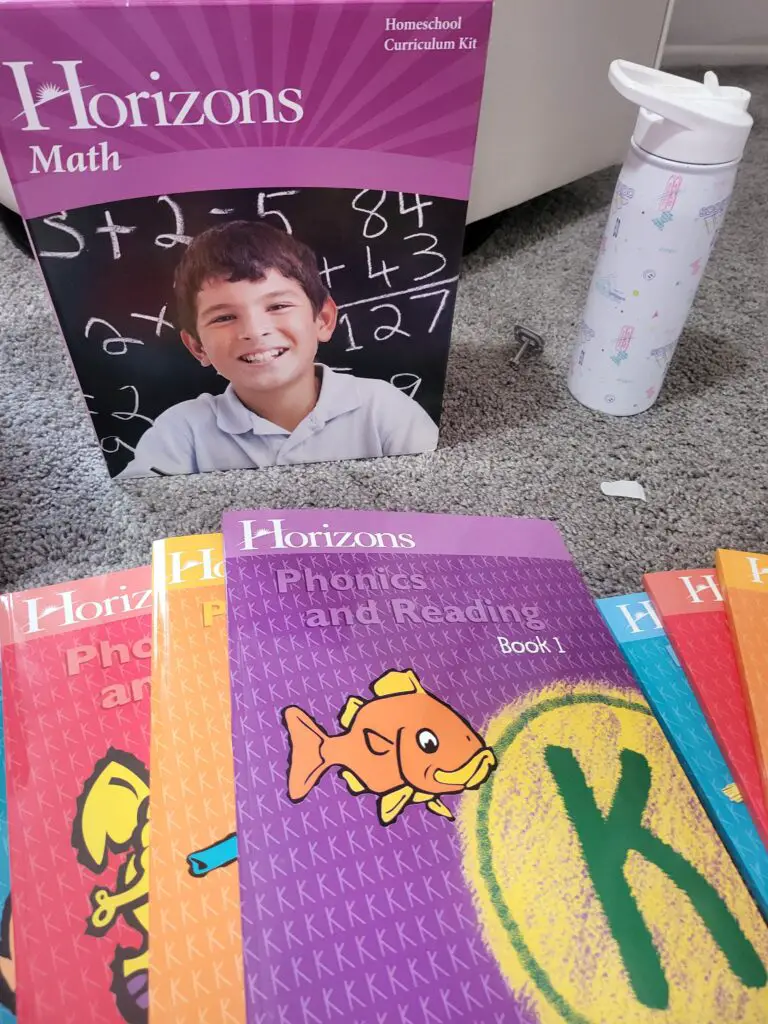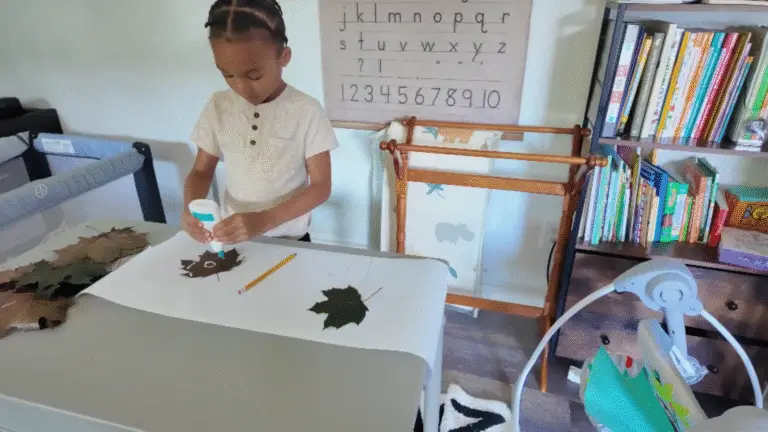

Homeschool Daily Schedule Template: Simple, Flexible Routine
Let's be real for a minute. That rigid, bell-driven schedule from traditional school? It's probably one of the big reasons you decided to homeschool in the first place. When we talk about using a homeschool daily schedule template, we're not talking about recreating that rigid system at home. It's about finding a rhythm that actually works for your family's unique energy, needs, and passions.
This is how we avoid burnout and actually cultivate a real love for learning.
Why a Flexible Rhythm Beats a Rigid Plan Every Time
Trying to stick to a strict, minute-by-minute schedule is a recipe for frustration. Life with kids is unpredictable. A toddler will have a meltdown, a science experiment will get wonderfully messy and take twice as long as planned, or one of your kids will get completely lost in a good book.
A flexible rhythm means you can lean into those moments instead of fighting them. Think of it like a sturdy tree branch that bends in the wind versus a brittle stick that just snaps under pressure.

This freedom is a huge reason why homeschooling has grown so much. Back in 1999, there were about 850,000 homeschooled students in the U.S. By 2023, that number exploded to an estimated 3.1 to 3.7 million. A big piece of that is realizing you can often get formal instruction done in just 3-5 hours a day—a world away from a conventional school day. This shift allows for deeper dives into topics and, more importantly, more quality family time. You can learn more about these homeschooling trends and statistics to see the bigger picture.
Making Space for Natural Curiosity
A flexible routine gives you the breathing room for those spontaneous, child-led learning moments that are pure gold. When your son finds a fascinating beetle in the backyard, you have the freedom to hit pause on the math lesson and spend the next hour researching insects together. These are the moments that stick.
Instead of seeing your schedule as a set of rules you have to obey, think of it as a gentle framework. It's there to guide your day, not run it.
"A flexible homeschool schedule allows you to follow your child's interests and capitalize on their curiosity. When they're genuinely engaged, the learning is deeper and more meaningful."
This mindset shift is everything. It lets you tailor the day to your kids' natural energy flows. Is your child a morning person, ready to tackle the world? That's the perfect time for challenging subjects like math or writing. Save the creative projects or family read-alouds for the afternoon when energy naturally starts to dip.
Cut Down on Stress and Power Struggles
Trying to force a kid bursting with energy to sit still for a grammar lesson is a fast track to frustration for everyone. A flexible schedule honors their needs, not just the checklist.
- Follow Their Energy: Tackle the tough academic stuff during their peak focus times.
- Embrace Rabbit Trails: Allow for those impromptu trips to the library or walks in the park when inspiration strikes.
- Integrate Real Life: Learning doesn't just happen in a workbook. Bake together and practice fractions with measuring cups.
Ultimately, a flexible homeschool daily schedule template is a tool for creating peace in your home. It helps you weave academics, chores, and family life into a joyful flow rather than a stressful list of tasks. You get to build a learning environment that respects each person and feels completely natural.
Laying the Foundation for Your Daily Routine
Before you even think about downloading a printable homeschool daily schedule template, we need to gather the building materials. A template is just an empty container; its real value comes from filling it with a routine that actually reflects your family’s unique needs, goals, and personality.
A schedule that works isn’t forced—it’s built from the ground up, starting with what matters most to you. This foundational step keeps you from trying to shoehorn your vibrant, unique family into a generic, one-size-fits-all plan. It’s all about creating a structure that serves you, not the other way around.
Define Your Homeschooling Philosophy
First, take a moment to consider your "why." What’s your core educational philosophy? Answering this question will immediately narrow down what your daily flow should look like and save you from feeling overwhelmed by endless options.
- Charlotte Mason: If you lean this way, your schedule will naturally feature short lessons, living books, nature walks, and handicrafts.
- Classical: This approach calls for a more structured routine with a heavy focus on logic, Latin, and memorization, especially in the early years.
- Unschooling: Your "schedule" might be more of a loose rhythm, centered entirely on child-led interests with no formal subjects at all.
- Eclectic: Or maybe you're like many of us, pulling the best parts from various methods to create a custom blend that just works.
Knowing your guiding philosophy acts as a compass. It ensures the activities you schedule are intentional and aligned with your ultimate educational goals. For those just beginning, our guide on how to start homeschooling offers a deeper dive into choosing a method that fits your family's vision.
Get to Know Your Learners
Your children are not standardized students, so their schedule shouldn't be either. I've found that the most effective routines are built around their natural rhythms and interests, which dramatically reduces power struggles and increases engagement.
Take some time to just observe each child. Are they a morning lark, ready to tackle complex math problems at 8 AM, or a night owl who does their best creative thinking in the afternoon? A simple T-chart listing their high-energy and low-energy times can be incredibly revealing.
The secret to a peaceful homeschool day is working with your child's natural energy, not against it. Schedule challenging subjects during their peak focus hours and save lighter activities for when their energy wanes.
Think about their current passions, too. If your son is obsessed with ancient Egypt, weaving that theme into reading, history, and even art makes learning feel less like a chore and more like an adventure.
Identify Your Big Rocks First
A brilliant time management concept involves scheduling your "big rocks" first. These are the non-negotiable anchors of your day around which everything else must flex. Trying to plan academics without first accounting for these will only lead to a schedule that constantly breaks.
Your big rocks might include:
- Meal Times: Breakfast, lunch, and dinner create a predictable rhythm.
- Appointments: Doctor visits, therapy sessions, or co-op classes.
- Quiet Time/Naps: Essential for toddlers and a welcome reset for everyone else.
- Chores & Household Tasks: Designated blocks for tidying up or meal prep.
- Independent Play: Crucial, unstructured time for kids to explore their own ideas.
Once these anchors are on your template, you can see the open spaces you have to work with for structured learning. To truly master your day, consider broader organizational skills. Discovering unbeatable time management strategies for moms can help you juggle all your family's responsibilities with greater ease.
Create Your Master Subject and Activity List
Finally, let's brainstorm everything you want to include in your week. This isn't about fitting it all into one day, but about creating a "menu" of options to pull from. This list will become the content you pour into your chosen homeschool daily schedule template.
Example Master List:
- Core Academics: Math, Language Arts (Reading, Writing, Spelling), History, Science
- Creative Pursuits: Art Study, Music Practice, Handicrafts (knitting, drawing)
- Life Skills: Cooking/Baking, Budgeting, Gardening, Household Chores
- Spiritual Growth: Bible Study, Family Devotions, Character Lessons
- Physical Activity: Nature Walks, Sports Practice, Free Play Outside
With these foundational pieces in place—your philosophy, your kids' needs, your big rocks, and your master list—you're now ready to choose a scheduling method and start building a daily rhythm that truly works.
Finding The Right Scheduling Method For Your Family
Let's be honest: a one-size-fits-all schedule just doesn't work for homeschooling. Every family has its own unique rhythm. The real beauty of creating your own homeschool daily schedule template is finding something that feels like a natural extension of your family life, not a rigid set of rules you're forced to follow.
Exploring different scheduling philosophies is the first step to discovering what will bring both peace and productivity to your homeschool days. This is all about deciding whether your family thrives with more structure or if you need a more flexible, go-with-the-flow approach.
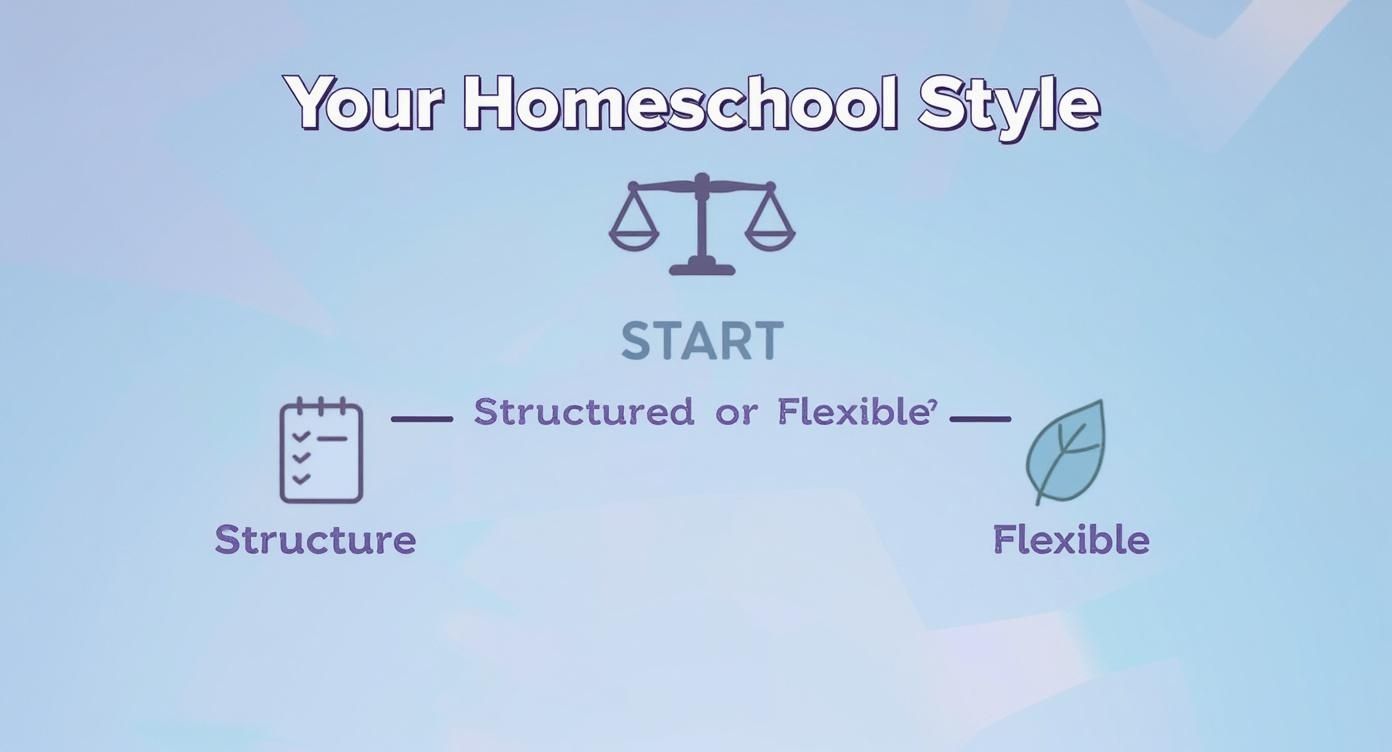
This little visual guide can help you quickly see which styles might be a good fit for your family's personality. Do you love the satisfaction of a checklist, or do you prefer a more organic day?
Time Blocking Your Core Subjects
Time blocking is a classic for a reason. With this method, you assign specific blocks of time to certain subjects or activities. It’s a fantastic system for families who crave predictability and want to make sure all the core subjects get covered consistently.
For example, a morning might be mapped out like this:
- 9:00 AM – 10:00 AM: Math
- 10:00 AM – 10:30 AM: Morning Break & Snack
- 10:30 AM – 11:30 AM: Language Arts
The biggest benefit here is clarity. Everyone knows what’s happening and when, which can seriously cut down on decision fatigue. The main drawback, though, is its rigidity. An unexpected interruption or a lesson that runs long can throw the whole day off schedule.
The Freedom Of Loop Scheduling
Loop scheduling is an absolute game-changer for families who want to cover those wonderful enrichment subjects without the pressure of a daily deadline. Instead of assigning subjects like art or music to a specific day (like "Art on Tuesdays"), you create a list of these subjects and simply "loop" through them.
Imagine your loop includes these subjects:
- Art History
- Composer Study
- Nature Journaling
- Poetry Tea Time
You’d start with Art History. The next time you have a spot for enrichment, you just move on to Composer Study, no matter what day of the week it is. If you miss a day, you don’t fall "behind"—you just pick up right where you left off. This approach is one of the easiest homeschool methods for working moms because it eliminates so much scheduling guilt.
This method really aligns with the fact that homeschool days are often much shorter than a traditional school day. Data from the National Home Education Research Institute (NHERI) shows that formal instruction at home averages just 3 to 5 hours daily. This efficiency, which is a key factor for about 34% of homeschooling parents, makes flexible systems like looping a perfect fit.
Which Homeschool Scheduling Method Fits Your Family
Use this quick comparison to find the scheduling style that aligns with your homeschooling philosophy and daily life.
| Method | Best For | Key Benefit | Potential Drawback |
|---|---|---|---|
| Time Blocking | Families who thrive on routine and structure. | Ensures all core subjects are covered consistently. | Can be rigid; interruptions can derail the day. |
| Loop Scheduling | Families who want to cover enrichment subjects without a strict timetable. | Ultimate flexibility; no guilt if a day is missed. | Core subjects might get pushed aside if not scheduled separately. |
| Block Scheduling | Older students (middle/high school) working on in-depth projects. | Allows for deep, focused work without constant subject switching. | Can be hard to fit in all subjects each week; requires more planning. |
Each of these methods offers something valuable. The trick is to identify what your family needs most in this particular season of life.
Deep Dives With Block Scheduling
Block scheduling is especially powerful for older students in middle or high school. Instead of switching subjects every hour, you dedicate a longer block of time—maybe two hours, or even a whole morning—to a single subject. This allows for deep, focused work that’s perfect for complex science labs, in-depth history projects, or writing a research paper.
"Don't be afraid to experiment. What works for one season of your homeschool journey may need to be adjusted for the next. The best schedule is one that serves your family right now."
A week could be structured with a Math block on Monday morning and a Science lab block on Tuesday morning. This approach prevents the constant mental gear-shifting that can kill concentration and allows students to make real progress on challenging topics.
While printable templates are great, many families find that digital tools can make scheduling much easier. It's worth exploring the best daily planner apps, which can help you implement time blocking, create rotating lists for a loop schedule, or manage longer project-based blocks. Choosing the right tool, whether it's digital or paper, is a huge step toward creating a schedule you can actually stick with.
Printable Homeschool Daily Schedule Templates
Alright, this is the part you’ve been waiting for—the actual, practical tools. Below you’ll find a handful of printable homeschool daily schedule templates I’ve created over the years. Please think of these as a starting point, not a final destination. They're a framework for you to adapt, erase, and remake until they feel like a natural part of your family's rhythm.
Each template comes in two flavors: a filled-in example to get your ideas flowing and a blank, downloadable version ready for you to make your own. The goal isn't to copy my example perfectly, but to use it as a guidepost while you build your own unique routine.
Play-Based Preschool And Toddler Schedule
When you're dealing with little ones, the name of the game is short, engaging activities and a whole lot of free play. Trust me, a rigid, academic-heavy schedule will only end in tears—for everyone involved. This template is built around a gentle rhythm that honors their tiny attention spans and boundless energy.
You’ll notice the day is broken into small, simple blocks like "Morning Basket" and "Outdoor Play." The key here is connection and exploration, not just checking boxes. Learning happens so naturally through stories, sensory bins, and just having fun together.
Example Filled-In Preschool Schedule:
- 8:00 AM Morning Basket & Snuggles (Read a picture book, sing a song)
- 8:30 AM Breakfast & Tidy Up
- 9:30 AM Outdoor Play (Nature walk, sandbox, bubbles)
- 10:30 AM Creative Time (Play-Doh, painting, or a simple craft)
- 11:00 AM Snack & Read Aloud
- 11:30 AM Quiet Activities (Puzzles, building blocks)
- 12:30 PM Lunch
- 1:00 PM Naptime / Quiet Rest
- 3:00 PM Free Play & Afternoon Snack
This play-based approach is incredibly powerful for early learners. It builds such a positive foundation for education by making learning feel like an exciting discovery rather than a chore.
You can download the blank, printable version of this toddler and preschool homeschool daily schedule template to start creating your own gentle rhythm.
Multi-Age Family Schedule
Homeschooling kids of different ages is the ultimate juggling act. I've learned that the secret is to combine where you can and separate where you must. This schedule gives you a peek into how we weave together group subjects with that crucial one-on-one time.
We call our combined learning block "Morning Symposium." This is when we tackle subjects like history, science, and bible study as a family. I'll read a core text aloud, and then each kid gets an age-appropriate assignment—my oldest might write a narration, while my youngest draws a picture about what they heard.
Example Filled-In Multi-Age Schedule:
| Time | All Together | Older Kids (10 & 12) | Younger Kid (7) |
|---|---|---|---|
| 9:00 AM | Morning Symposium (History & Science) | Independent Reading | Phonics Practice (with Mom) |
| 10:00 AM | Snack & Outdoor Play | ||
| 10:45 AM | Math Lesson (Independent) | Math Lesson (with Mom) | |
| 11:30 AM | Silent Reading / Chores | Language Arts (Independent) | Handwriting Practice |
| 12:30 PM | Lunch |
This kind of structure ensures everyone gets the focused attention they need for skill-based subjects while still creating a sense of shared learning as a family. Download the blank multi-age template to start mapping out your own combined and individual learning blocks.
Block Schedule Template For Older Students
As kids hit the middle and high school years, their learning needs a major shift. They need longer, uninterrupted stretches of time to really dive deep into complex subjects. A block schedule is perfect for this, as it gets rid of the constant mental gear-shifting of a traditional, bell-driven day.
This approach dedicates a big chunk of time to a single subject, allowing for more in-depth work. For example, a two-hour science block means a student can conduct an experiment, analyze the results, and write up a lab report all in one go.
Tips for a Successful Block Schedule:
- Alternate Core Subjects: Try not to schedule two heavy-hitters like advanced math and chemistry back-to-back. Follow an intense block with something lighter, like foreign language practice or music.
- Build in Breaks: A 10-15 minute break between those long blocks is absolutely essential for resetting focus.
- Plan for the Week: A block schedule often works best when you look at the whole week, rotating which subjects get the longer blocks each day.
Here is a sample filled-in block schedule:
| Time | Monday | Tuesday |
|---|---|---|
| 9:00 – 11:00 AM | Math (Algebra II) | Science Lab (Biology) |
| 11:00 – 12:00 PM | Foreign Language | Foreign Language |
| 12:00 – 1:00 PM | Lunch Break | Lunch Break |
| 1:00 – 3:00 PM | History & Literature | Writing Workshop |
This homeschool daily schedule template helps older students build real-world time management skills and take true ownership of their education. Grab the blank printable to design a schedule that supports deep, focused learning for your middle or high schooler.
How to Adapt and Troubleshoot Your Schedule
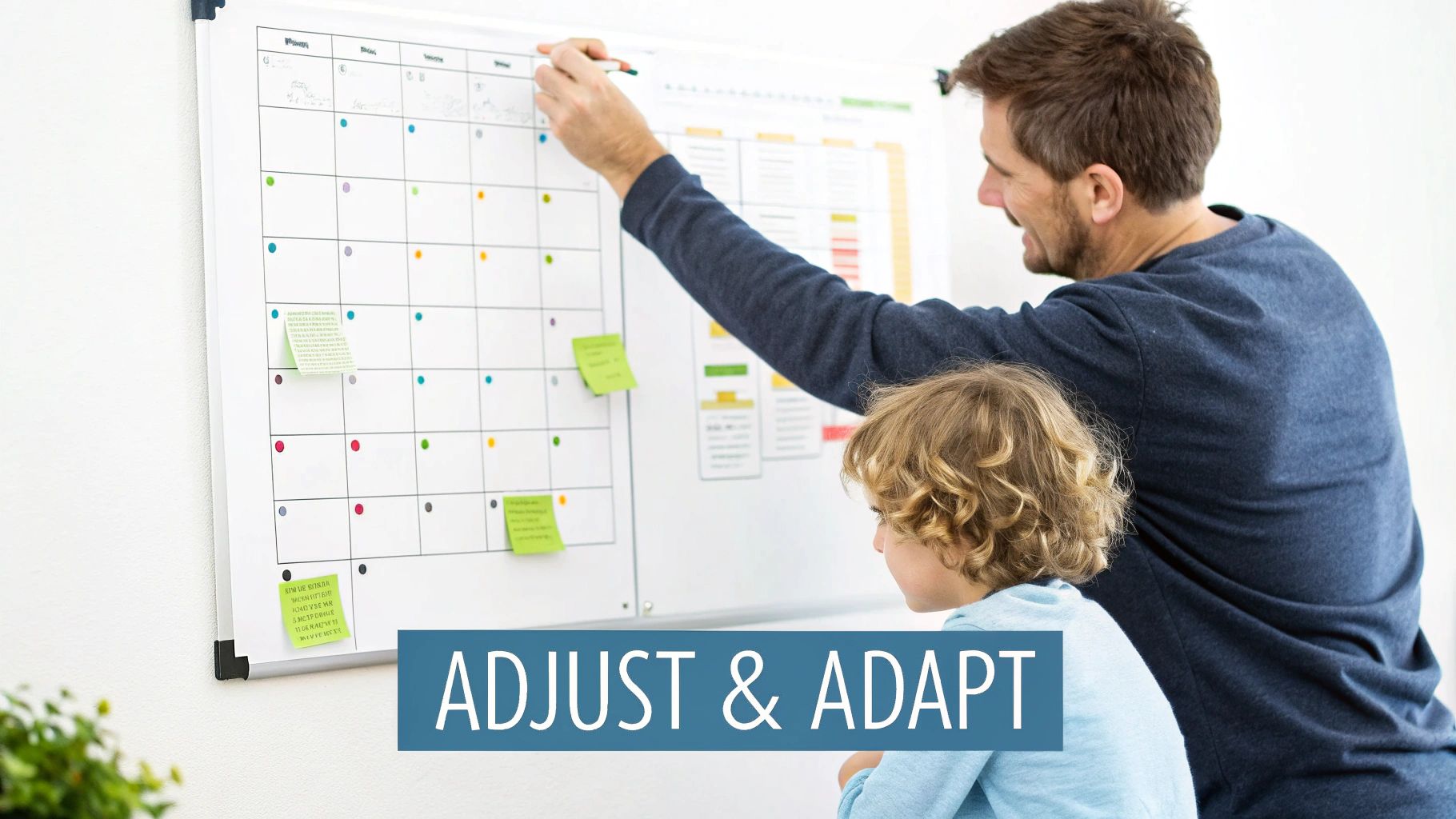
Let's be real for a minute—your first draft of a homeschool schedule will almost never be the final one. And that's okay! The real magic happens in the little tweaks you make along the way as you learn your family’s unique rhythm.
Think of your schedule less like a rigid contract and more like a living, breathing document. It needs room to grow and change right along with your kids.
The most successful homeschool parents I know are the ones who aren't afraid to diagnose what’s not working and make changes. A schedule that creates constant friction isn't a failure on your part. It's just a signal to get curious and find a better flow for your days.
Pinpointing the Problem Areas
When a day feels like you're wading through mud or a certain time block consistently goes off the rails, it's time to play detective. Usually, the issue boils down to just a few common culprits. Running through a quick mental checklist can help you figure out what’s really going on.
Is your schedule hitting one of these snags?
- Overly Ambitious Planning: Are you trying to cram too much into one day? A classic rookie mistake is trying to replicate a public school day at home, but homeschooling is just so much more efficient. You don't need 8 hours.
- Unrealistic Expectations: Did your schedule leave room for a toddler meltdown? What about the snack break that turns into a deep conversation about black holes? Or the day your child just needs an extra 20 minutes to finally grasp a long division concept?
- Low Engagement: Are the kids dragging their feet and getting grumpy during a specific subject every single day? This might mean the timing is wrong for their energy levels, or maybe the curriculum itself just isn't clicking.
Once you have a better idea of the core problem, you can start making small, targeted adjustments instead of feeling like you have to burn the whole thing down and start over.
Building in Margin and Reset Rituals
One of the most powerful changes you can make to your schedule is to build in "margin." This is the unscheduled, in-between time that acts as a buffer for all the little interruptions that are a normal part of life with kids. Without it, one small hiccup can derail the entire day.
Don’t just schedule the learning; schedule the space between the learning. A 15-minute buffer after a math lesson can be the difference between a smooth transition and a stressful rush.
Another game-changer is what I call the Sunday evening reset. This is a simple, 20-minute habit where you sit down with your schedule for the upcoming week. It’s your chance to look back at what worked, notice what didn't, and make proactive changes.
Our Sunday Reset Checklist:
- Review Last Week: What was our biggest win last week? What was the biggest struggle?
- Look Ahead: Do we have any appointments, co-op days, or library trips to plan around?
- Adjust and Prepare: Does a lesson need to be shorter? Should we swap math and history? Do I need to gather supplies for that science experiment on Wednesday?
This simple ritual helps you shift from being a reactive manager of chaos to a proactive designer of your week. For parents who work, this dedicated planning time is absolutely essential. You can find more strategies to balance working from home and homeschooling that make this weekly reset a non-negotiable part of the routine.
Knowing When to Pivot and When to Persevere
So, how do you know if you should stick with a routine to build consistency or just scrap it and try something new? The answer is in the "why" behind the struggle.
If the kids are just having an off day or are pushing back because an activity is new and different, it’s often worth persevering for a week or two. New routines need time to become comfortable habits.
However, if you're seeing the same pattern of frustration day in and day out, that's your cue that the system itself is flawed and needs a bigger change. Don't be afraid to pivot! Maybe your family needs to ditch time-blocking for a season and try a more flexible loop schedule. Giving yourself the freedom to adapt is what will ultimately make your homeschool sustainable and, most importantly, joyful.
Answering Your Top Homeschool Schedule Questions
When you first start homeschooling, it’s completely normal to have a million questions swirling around, especially about what a day is supposed to look like. If you're wondering how to piece it all together, you're not alone. Let's tackle some of the most common questions I get from fellow homeschooling parents about building a daily rhythm that actually works.
My goal here is to give you straightforward, practical answers so you can feel confident creating and tweaking your family's new schedule.
How Long Should a Homeschool Day Actually Be?
This is probably the biggest misconception out there. So many new homeschoolers try to replicate a seven-hour public school day at home, and that’s a fast track to burnout for everyone. The magic of homeschooling is in the one-on-one instruction—it's incredibly efficient, and you just don't need all that time to cover the material.
A good rule of thumb changes as your kids grow:
- Elementary (K-5th): 2-3 hours of focused academic time is usually plenty.
- Middle School (6th-8th): You can bump this up to 3-4 hours of structured work.
- High School (9th-12th): As the coursework gets deeper, aim for 4-5 hours.
The real key is to shift your mindset from logging hours to mastering concepts. Once your child genuinely gets it, you have the freedom to move on. That’s a win!
What Should I Do When My Kids Won't Follow the Schedule?
First things first: take a deep breath. Resistance to a schedule isn't a sign that you have a "bad" kid; it’s a bright, flashing signal that something in the routine isn't a good fit for them. Think of it as valuable feedback, not defiance.
When you hit that wall, play detective. Is a specific subject block too long for their current attention span? Is the timing just plain wrong for their natural energy? Trying to force a high-energy kid to sit for a quiet grammar lesson right after breakfast is practically asking for a power struggle.
Here's a game-changer: let them in on the planning. Giving your child even a small amount of ownership—like letting them decide whether math happens before or after snack—can radically improve their willingness to cooperate.
How Do I Schedule for Multiple Kids of Different Ages?
Ah, the classic homeschool juggling act. This is where you have to get a little strategic. The secret is to combine where you can and separate where you must. You are not running three different one-room schoolhouses.
Many subjects are perfect for family-style learning. Think history, science, art, music, and bible study. You can read a core book together and then give out age-appropriate assignments. For example, your high schooler might write a detailed essay, your middle schooler could draw a map or timeline, and your first grader can draw a picture of the main idea.
Save your precious one-on-one time for the skill subjects that really demand individual attention, like phonics and math. While you're working with one child, the others can be busy with quiet independent work, educational games, or assigned reading.
Should I Schedule Our Weekends, Too?
In most cases, I’d say no. It’s so important to protect your weekends for rest, family fun, and unstructured time. Homeschooling is a marathon, not a sprint, and building that downtime into your life is what will prevent burnout and keep things joyful.
That said, the absolute best part of homeschooling is its flexibility. Some families love a four-day school week, using Fridays for field trips, co-op classes, or just catching up on life. Others might use a Saturday morning for a low-key "catch-up" session if the week got derailed by an illness or appointment. There is no one right answer—only what serves your family best.
At The Mom Resource, we believe in creating routines that serve your family's faith, joy, and educational goals. Find more encouragement and practical tools to help you homeschool with confidence at https://themomresource.com.