
Your Guide to a Homeschool Lesson Plan Template
A good homeschool lesson plan template is your secret weapon for a successful year. Think of it as your master blueprint—it provides structure, clarity, and, honestly, a whole lot of peace of mind. It takes the giant, overwhelming task of planning an entire school year and breaks it down into a calm, manageable process, keeping your subjects, goals, and resources all in one place.
Building Your Homeschool Planning Foundation
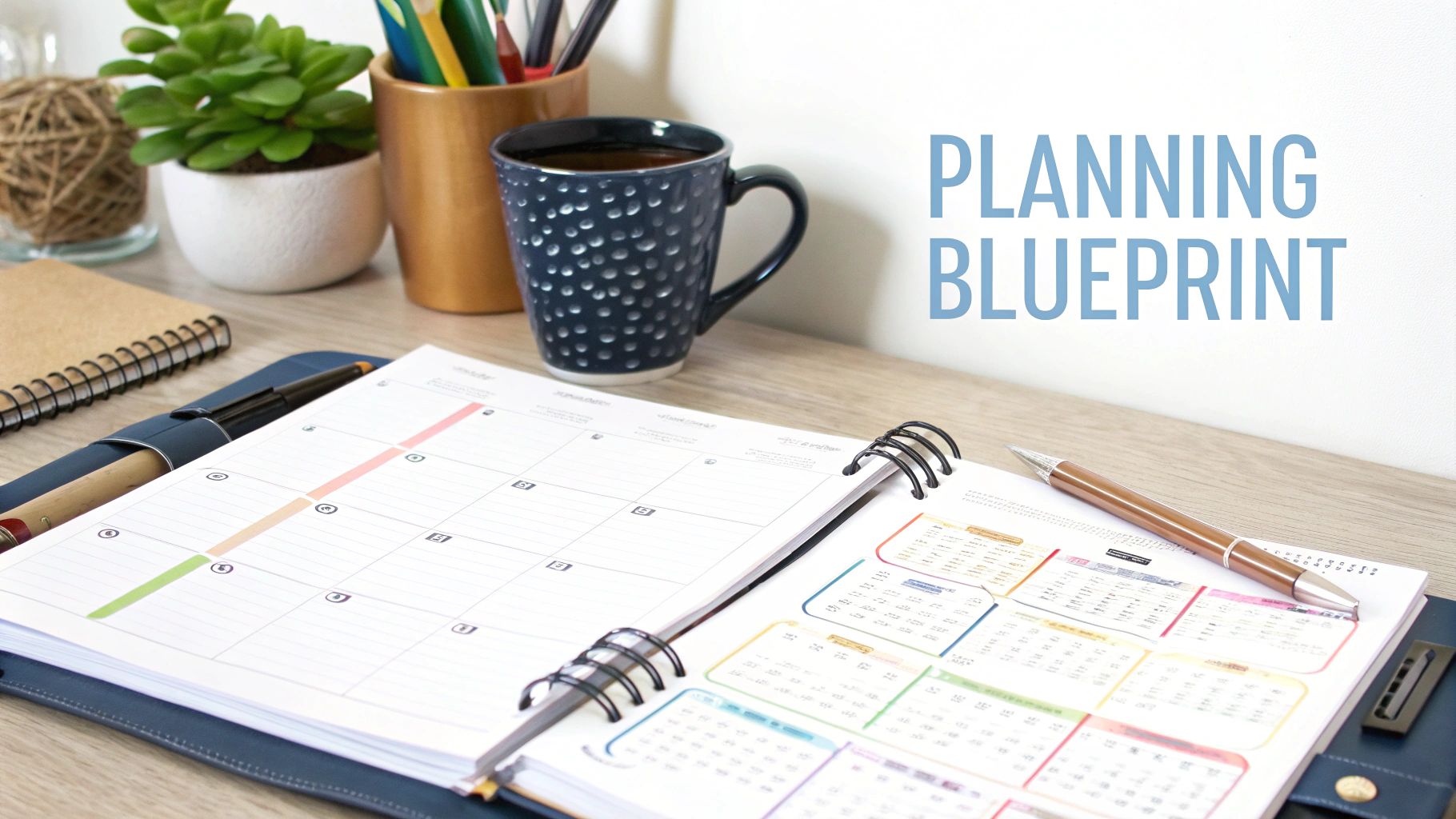
Before you even think about daily schedules or weekly layouts, you need to build a solid planning foundation. This is your big-picture strategy, the sturdy framework that will hold your entire homeschool year together. Trust me, trying to plan day-by-day without this master plan is like building a house without a blueprint—it just leads to chaos and stress.
The very first block in your foundation is your family's unique educational philosophy. This is the core belief system that dictates how you teach and what your template will need to prioritize. There's no single "right" answer here, only what feels right for your family.
- Structured Approach: If you prefer a traditional school-at-home model, your template will probably look familiar, with clear blocks for subjects, grading periods, and curriculum tracking.
- Eclectic Learning: Do you love mixing and matching resources? Then you’ll need a template that can handle different curriculum types, project-based learning, and a variety of materials.
- Unschooling or Child-Led: This beautiful approach calls for a much more flexible template, one focused on documenting interests, tracking resources you've explored, and noting the skills acquired along the way.
Once you’re clear on your "why," you can start setting some realistic goals for each of your kids.
Defining Your Yearly Goals And Scope
Setting annual goals gives your year direction and a clear way to measure progress. A great place to start is with your state's homeschooling requirements, as these often outline the core subjects you'll need to cover. For families just starting out, our guide on https://themomresource.com/how-to-start-homeschooling/ is packed with practical advice for navigating these first crucial steps.
Your goals should be tailored to each child’s learning style and where they are developmentally. A goal for a first-grader might be as simple as "read 20 early reader books," while a middle schooler's goal could be to "complete a research project on ancient Rome." These goals become the signposts that guide you through the entire school year.
Many families find that a 36-week academic plan, often broken into four grading periods, works really well. This structure helps you map out lessons, tests, and projects for each phase, keeping your curriculum delivery consistent.
Key Takeaway: Your master plan isn't about scheduling every single minute of the year. It's about creating a clear vision and organizing the big pieces so that your daily and weekly planning becomes simple and effective.
Assembling Your Master Plan Components
With your philosophy defined and your goals set, it's time to gather the core components of your master plan. These pieces form the backbone of any functional homeschool lesson plan template, making sure all your important information is right at your fingertips.
If you're building your own planner from scratch, checking out some free student planner templates can be a fantastic way to get inspired and see what layouts might work for you.
Think of this master document as your homeschool command center. To help you build it, here’s a breakdown of the essential elements every great homeschool plan needs.
Core Components of Your Master Homeschool Plan
This table outlines the essential elements to build into your yearly homeschool planning template for a successful year.
| Component | Purpose | Example |
|---|---|---|
| Yearly Calendar | Provides a high-level overview of the school year, including start/end dates, holidays, and planned breaks. | A simple one-page calendar marking out a 36-week school schedule with a two-week winter break. |
| Subject Goals | Outlines the main learning objectives for each subject for the entire year. | Math: Master multiplication tables. History: Study the American Revolution. |
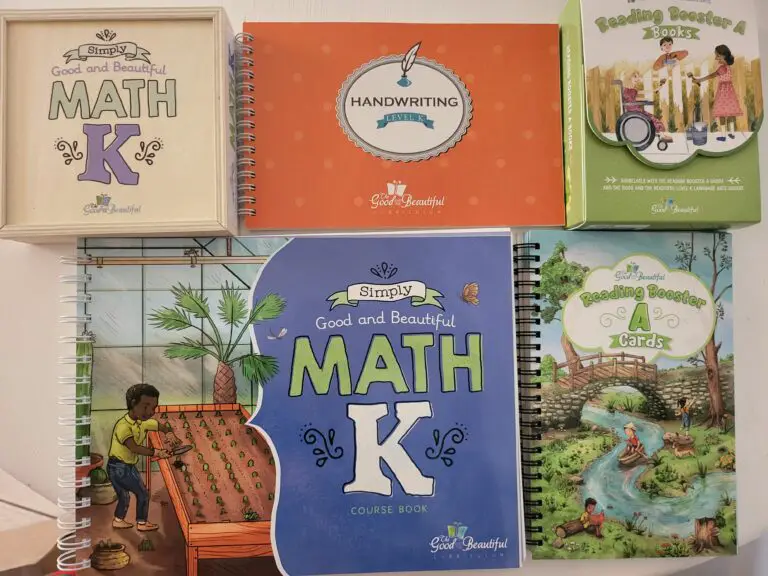
| Curriculum & Resource List | A comprehensive list of all textbooks, online programs, library books, and supplies needed for the year. | Math-U-See Gamma, Story of the World Vol. 3, subscription to KiwiCo Tinker Crate. |
| Reading List | A dedicated list of required and supplemental books for each child to read throughout the year. | The Lion, the Witch and the Wardrobe, Charlotte's Web, various Magic Tree House books. |
By thoughtfully creating this foundational plan first, you establish a clear, intentional path for your homeschool journey, setting yourself up for a year of meaningful learning instead of last-minute scrambles.
Designing Your Weekly and Daily Layouts
Once your big-picture plan is in place, it’s time to zoom in from the year-long vision to the actual rhythm of your week. This is where those lofty goals get translated into the real, bite-sized tasks that make up your day-to-day homeschool life. I can tell you from experience, the right weekly and daily layout can be the difference between chaotic mornings and calm, productive days.
Your goal here is to create a structure that serves your family, not the other way around. There’s no magic, one-size-fits-all layout; the perfect one for you will depend entirely on your kids' ages, their unique learning styles, and your own teaching philosophy. Let’s walk through some of the most effective formats I’ve seen families use.
Finding Your Scheduling Style
The beauty of homeschooling is the freedom to build a schedule that truly fits your family's natural rhythm. Maybe you thrive on a predictable, structured day, or perhaps you prefer a more fluid, interest-led flow. There’s no wrong answer.
-
Block Scheduling: This is the classic, time-based approach most of us remember from school. You assign specific subjects to set time slots (e.g., Math is from 9:00 to 10:00 AM). This style works beautifully for families who need clear structure and a predictable routine to function well.
-
Loop Scheduling: A loop schedule is a sanity-saver for subjects you don’t tackle every single day—think art, music, or nature study. Instead of assigning them to a specific day of the week (and then feeling guilty when you miss it), you create a list. You simply do the next thing on the list whenever you have an open spot, "looping" back to the top when you’re done. It completely eliminates that feeling of being "behind" when a sick day or an unexpected appointment throws things off.
-
Checklist Method: For some families, especially those with older, more independent kids, a simple daily or weekly checklist is golden. You just list the assignments that need to be done, and your child gets the autonomy to decide the order and pace for tackling them.
Honestly, most families I know end up with a hybrid approach. You might use block scheduling for core subjects like math and language arts but a loop for all the fun extras. The key is to experiment and find what reduces the friction in your day.
From Curriculum Goals to Daily Tasks
Okay, let's get practical and connect your big goals to the daily grind. A common mistake I see is people simply copying the table of contents from a curriculum directly into their planner. A good template should help you break down those larger concepts into manageable weekly chunks.
For instance, if a yearly science goal is to "Understand the basics of the solar system," a weekly goal might be "Learn the order of the planets." From there, you can break it down into daily assignments:
- Monday: Read chapter 2 in the science book and watch a short documentary on the planets.
- Tuesday: Get out the craft supplies and build a solar system model.
- Wednesday: Work through the workbook pages for Mercury, Venus, Earth, and Mars.
- Thursday: Tackle the outer planets in the workbook and create some mnemonic flashcards to help remember the order.
- Friday: Have your child present their solar system model to the family and review the flashcards.
See how that process turns a vague, overwhelming goal into a clear, actionable plan?
Your weekly plan is your roadmap. It shows you the destination for the week and gives you the turn-by-turn directions to get there without the stress.
As you think about designing your layouts, it can be helpful to look at how other structured activities are organized. Exploring something like an essential schedule template can offer a fresh perspective on managing time and tasks.
The Power of Batch Planning
One of the best strategies I’ve found for staying consistent is to batch your weekly planning. Many experienced homeschoolers I know dedicate about 30 minutes every Sunday to sit down, review the upcoming week, and fill in their lesson planner with specific page numbers and assignment details.
This simple habit is a game-changer. It gets rid of that daily decision fatigue and makes your school week run so much more smoothly.
This Sunday planning session becomes a powerful routine. You can gather all your books, print out any worksheets you'll need, and get everything set for the week ahead. When Monday morning rolls around, you aren't scrambling to figure out what’s next; you're ready to dive in with confidence and clarity. That small investment of time on the weekend pays you back with so much peace and productivity all week long.
Choosing Between Digital and Printable Planners
The great debate: digital tools versus the classic paper planner. It’s a hot topic in just about every homeschool group, and for good reason. Deciding which format works best for your family isn’t just about personal preference; it’s about finding a tool that genuinely simplifies your life instead of adding another complicated layer to your day.
The right homeschool lesson plan template should feel like a natural extension of how you already think and plan, slotting seamlessly into your family’s rhythm.
The Perks of a Digital System
For many families, especially those juggling multiple kids, the move to digital is all about finding a powerful, all-in-one solution. These platforms are designed to be the central command center for your entire homeschool, managing everything from lesson schedules to official records.
Digital planners are champs when it comes to automation and accessibility. Imagine planning your history unit for the next six weeks and being able to drag and drop lessons, link directly to online videos and articles, and have assignments automatically pop up for your kids. This is where digital tools truly shine.
Many of these platforms come with features built specifically for homeschoolers. They can automatically calculate grades, track attendance, and spit out reports—a total lifesaver when you’re trying to meet state requirements. For a tech-comfortable family, a digital system can turn hours of admin work into a few simple clicks.
This quick decision tree can help you figure out which layout style might be the best fit for your family's planning personality.
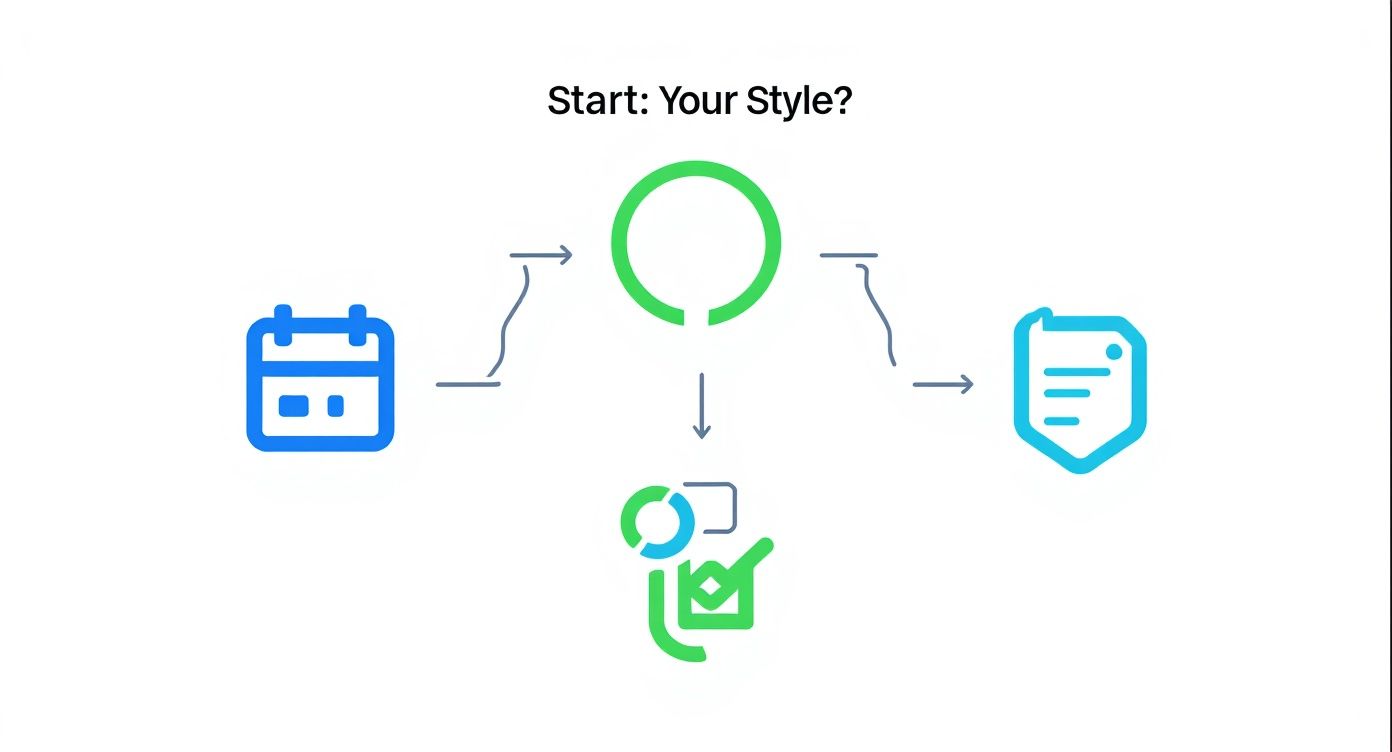
As you can see, it all comes down to your personal style—whether you crave structure, need flexibility, or just want to keep things simple.
The Lasting Appeal of Printable Planners
On the other side of the ring are printable planners, and their appeal is undeniable. For so many of us, the physical act of writing things down, crossing items off a list, and seeing our progress on paper is just so satisfying. It provides a tangible sense of accomplishment that a click of a mouse just can't match.
Printable templates also offer nearly infinite customization. You can design a layout that is perfectly tailored to your family, adding sections for faith studies, character goals, or even therapy appointments. If a layout isn't working, you don’t have to wrestle with rigid software; you just print a new page and try a different approach next week. That flexibility is a game-changer.
Key Insight: The best planner for you is the one you will actually use consistently. Don't force a digital system because it's trendy if you know you're a pen-and-paper person at heart.
Plus, printable planners are incredibly budget-friendly. Once you purchase or download a template, you can print as many copies as you need, year after year, making it a super cost-effective solution. Of course, staying organized as a parent goes way beyond school lessons. You can find more ideas in our guide to the best planners for stay-at-home moms to help manage all the moving parts of family life.
Digital vs Printable Homeschool Planners
Still on the fence? This side-by-side look at the features and benefits can help you decide which lesson plan template format is the best choice for your unique family.
| Feature | Digital Planners | Printable Planners |
|---|---|---|
| Accessibility | Access from any device, anywhere with an internet connection. | Requires physical access to your binder or planner. |
| Customization | Limited to the software's features and layout options. | Fully customizable; you can create or find any layout. |
| Cost | Often involves a recurring subscription fee. | Typically a one-time purchase for a printable file. |
| Automation | Can automate grading, attendance, and report generation. | All tracking and record-keeping is done manually. |
| Collaboration | Easily share plans and assignments with students or spouses. | More difficult to share; requires scanning or photos. |
| Tangible Feel | Lacks the satisfaction of physically writing and checking off. | Provides a satisfying, hands-on planning experience. |
| Record Keeping | Excellent for creating official transcripts and reports. | Requires careful organization to maintain official records. |
| Tech Dependency | Relies on devices, batteries, and internet access. | No tech needed; works anytime, anywhere. |
Ultimately, your choice depends on what you value most: the powerful convenience of digital automation or the tactile, flexible nature of a paper system.
Making the Right Choice for Your Family
So, which path is right for you? It really comes down to your organizational style, your budget, and your family culture. A family with three or more kids in different grades might find the reporting and automation of a digital planner essential for staying sane. On the other hand, a family that values hands-on, creative learning might prefer a printable system that allows for more artistic expression and day-to-day flexibility.
The market has options for both. Digital planners like Homeschool Panda have gained a following for their drag-and-drop planning and simple reporting, often working on a freemium model with premium plans around $4.99 per month. Meanwhile, printable templates are a go-to for their affordability, with some high-quality digital downloads available for as little as $12.
In the end, there's no wrong answer. Some of the most organized homeschool moms I know use a hybrid system—managing their big-picture goals and record-keeping digitally while using a simple printable checklist for daily tasks. The goal is to choose a homeschool lesson plan template that reduces your mental load and brings a little more peace and order to your beautiful, busy homeschool journey.
How to Make Your Template Actually Work for Your Life
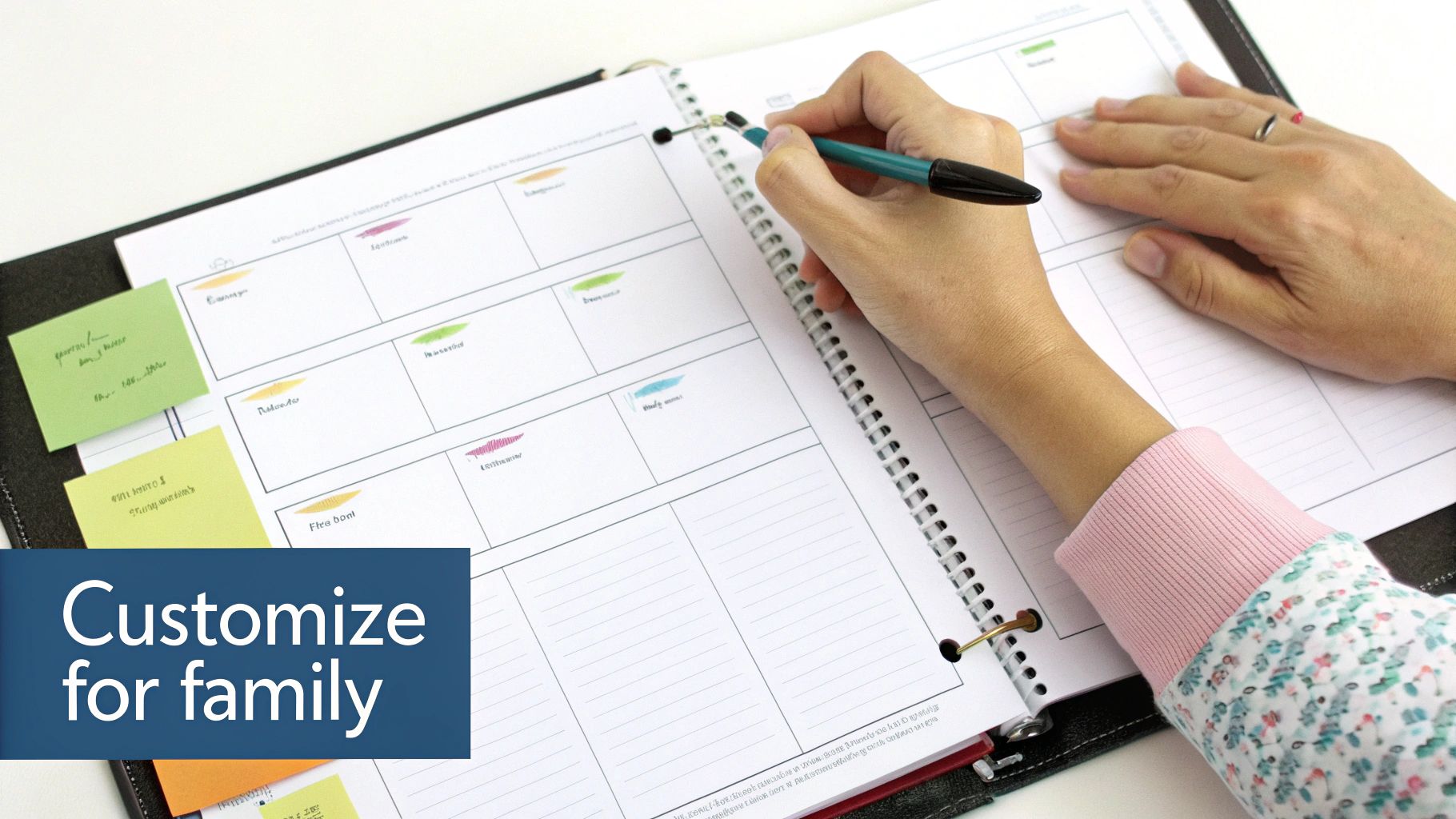
Let’s be honest: a generic, one-size-fits-all planner rarely survives the beautiful chaos of a real homeschool day. The most effective lesson plan template is one that breathes and adapts right alongside your family’s unique needs.
Think of a standard template as your starting point, not the final destination. The real magic happens when you tweak it, personalize it, and make it a true reflection of your life, your children, and your family's values. This is how a simple scheduling tool becomes the command center for your homeschool. It’s all about making sure your planner serves you, not the other way around.
Adapting for Unique Learning Needs
Every child learns differently. For some, those differences mean a standard planner just won’t cut it. Customizing your template isn’t just a nice idea in these situations; it's absolutely essential for creating a learning environment where your child can truly succeed.
Even a simple modification can make a world of difference. For a child with special learning needs, you might add dedicated sections or columns to your weekly layout.
- Therapy Appointments: Don't just squeeze them in. Block out dedicated time for speech, OT, or physical therapy so it’s a visible, integrated part of the week's flow.
- Sensory Breaks: Pencil in short, 10-minute sensory activities between academic subjects. This intentional pause can do wonders for focus and regulation.
- Specific Skill-Tracking: Add a small checklist at the bottom of each day to track progress on a particular goal, like mastering new phonics sounds or practicing fine motor skills.
When you build these elements directly into your planner, you’re making them a priority. It's a proactive approach that helps your child thrive.
Seamlessly Integrating Faith Studies
For many of us, faith isn't just another subject to check off a list—it's the very heart of why we homeschool. Your lesson planner should reflect that. Weaving faith-based studies into your template creates a natural rhythm of discipleship throughout your school week.
Instead of trying to cram it in as an afterthought, give it the space it deserves.
Your planner is a reflection of your priorities. By giving faith its own prominent place in your template, you are intentionally communicating its importance in your homeschool.
Consider adding specific sections that align with your family’s spiritual goals. For instance, you could modify a daily checklist to include a "Character Study" focus for the week or add a box for "Scripture Memory" right next to math and reading. This small change visually elevates its importance and keeps it front and center in your day.
Juggling Multiple Ages and Grades
Homeschooling more than one child is a beautiful balancing act, and your planner is your secret weapon for keeping all the plates spinning. The single best strategy I've found for saving time and sanity is combining subjects wherever possible.
This is where the "morning basket" or "family-style learning" approach becomes a game-changer. You teach subjects like history, science, art, and bible study to all your children at once, simply adjusting the assignments and expectations for each age level. Your homeschool lesson plan template can be designed to make this a breeze.
Create a large, shared block in the morning for these group subjects. Then, use separate columns or sections for each child's individual skill-based work, like math and language arts. This structure gives you the best of both worlds: the connection of learning together and the focused attention needed for individual progress.
Finally, remember to make space for life. Add sections for extracurriculars, field trips, and even meal planning. When your homeschool lesson plan template truly captures the full picture of your family’s week, it becomes an indispensable tool for a more joyful, organized, and intentional journey.
Putting Your Homeschool Lesson Plan Into Action
Creating a beautiful homeschool lesson plan is a huge win, but let's be honest—it's only half the battle. A plan sitting in a folder doesn't actually teach anyone. The real magic happens when you weave that plan into the fabric of your daily routine, turning it from a static document into a living, breathing guide for your school days.
This is where the rubber meets the road. It’s all about creating systems that make your plan easy to grab, simple to follow, and flexible enough to handle the beautiful chaos of life with kids. A great plan isn't meant to be rigid; it's a reliable tool that brings calm and direction to your week.
Setting Up Your Planning Hub
Whether you’ve gone digital or are sticking with a classic three-ring binder, your first move is to set it up so it’s completely intuitive. Think of this as your homeschool mission control. Everything you need should be right at your fingertips, which cuts down on the daily friction of hunting for materials or wondering what's next.
For a physical binder, this means creating a system that makes sense at a single glance.
- Use sturdy tabs: I like to create dividers for each child, but you could also organize by subject if you teach multiple kids together.
- Include pocket folders: These are lifesavers for holding loose worksheets, art supplies for the week, or completed assignments that need to be filed.
- Keep it accessible: Don't tuck your binder away on a high shelf where you'll forget about it. It should live where your schooling happens—on the kitchen counter, your desk, or a central bookshelf.
If you're using a digital system like Google Drive or Trello, the same principles apply. Create a logical folder structure that mirrors your planner. For instance, have a main folder for the 2024-2025 school year, with subfolders for each subject, and then weekly folders inside those. A clean digital space is just as important as a tidy physical one.
The Game-Changing Power of a Flex Day
If I could give every single homeschooling parent one piece of advice, it would be this: build a flex day into your schedule. Life happens. Kids get sick, the washing machine floods, or a gorgeous sunny day just begs for a trip to the park instead of math drills. Without a buffer, these interruptions can quickly make you feel like you're constantly behind.
A flex day, which we usually schedule for Friday, is your built-in catch-up day. It's a day with no new lessons planned. You can use this time to:
- Finish up lessons that took longer than you expected.
- Go on a field trip or make a big library run.
- Dive deeper into a topic one of your kids found fascinating.
- Or, just take a much-needed break.
This proactive approach completely shifts your mindset from "we're falling behind" to "we have a plan for this." It's such a simple strategy, but it can dramatically reduce burnout and keep your homeschool journey joyful.
Conducting Your Weekly Review
A plan is only useful if it's actually working for you. A quick, 15-minute review at the end of each week is one of the most powerful habits you can build. This isn't about grading yourself; it's a gentle check-in to see what needs adjusting for the week ahead. This is especially crucial if you are trying to find the right work-life rhythm. In fact, our guide on how to balance working from home and homeschooling can offer more ideas for finding that sweet spot.
During your review, just ask yourself a few simple questions:
- What worked really well this week? What felt smooth?
- What was a struggle or caused frustration for me or the kids?
- Did we overschedule, or did we have too much unstructured downtime?
- What's one small tweak that could make next week run more smoothly?
This simple act of reflection ensures your homeschool lesson plan remains a dynamic and helpful tool. It allows you to be responsive to your children's needs and your own energy levels, creating a sustainable learning environment that truly serves your family. Your plan becomes a partner in your journey, not a taskmaster cracking a whip.
Of course. Here is the rewritten section, formatted to sound like an experienced human expert and match the provided examples.
Common Questions About Homeschool Planning
Even with the perfect homeschool lesson plan template in hand, real life happens. Questions pop up, plans go sideways, and that’s a completely normal part of the journey. Having practical answers ready can be the difference between feeling totally overwhelmed and feeling confident in your ability to adapt. Let's tackle some of the most common hurdles I see homeschool families face when they're trying to get organized.
The key thing to remember is that your plan is a tool meant to serve you, not a rigid contract you have to follow perfectly. Think of it more like an art than a science.
How Far in Advance Should I Plan My Homeschool Lessons?
This is one of those questions where the "right" answer really depends on your family’s personality and what keeps your stress levels down. After years of doing this and talking with countless other homeschool parents, I’ve found a sweet spot that seems to work for most.
Start by planning the "big picture" for the entire year or semester. This is where you'll outline your major topics, big field trips, and overarching goals. It gives your whole year a sense of direction without locking you in.
Then, get into the nitty-gritty details just one week at a time, usually on a quiet Sunday afternoon. This approach gives you a solid framework but leaves plenty of room to pivot based on your child's pace, a sudden rabbit-trail interest, or just one of those weeks where life throws you a curveball. Trust me, trying to plan an entire year down to the minute is a recipe for frustration.
What Should I Do When We Get Behind on Our Lesson Plan?
First, take a deep breath. I can almost guarantee that every single homeschooling family has gotten "behind" at some point. The goal here is progress, not perfection. When you notice you’ve strayed from your schedule, just pause and figure out why.
Was the material tougher than you expected? Did you have a string of sick days or unexpected appointments? Most of the time, the best solution is simply to adjust.
Don't be afraid to modify your plan. It’s a guide, not a contract. You might combine a couple of lessons, skip a non-essential activity, or just shift your entire schedule forward a day. Your homeschool lesson plan template is there to support you, not to make you feel guilty.
A fantastic strategy I learned early on is to build a "catch-up" or "flex" day into your week. This gives you a built-in buffer to absorb those moments without any stress.
How Do I Plan for Multiple Children in Different Grades?
Ah, the classic homeschool balancing act! Planning for multiple ages can feel like a circus, but the secret is to combine where you can and separate where you must.
Subjects like history, science, art, and bible studies are perfect for teaching together "family style." A lot of families do this with a "morning basket" approach. You teach one core lesson to everyone and then give out different assignments tailored to each child's grade level. The older kids might write an essay while the younger ones draw a picture about the same topic.
For those skill-based subjects that really demand one-on-one focus, like math and phonics, you'll need separate plans. The most effective templates for this scenario have columns or dedicated sections for each child. This lets you see everyone's assignments at a glance and keeps everything neatly organized in one place.
Can I Create a Lesson Plan Without a Formal Curriculum?
Absolutely! This is actually a very common way to homeschool, especially for families who lean toward an eclectic, unschooling, or interest-led style. When you're not following a boxed curriculum, your template's job simply shifts from tracking textbook pages to documenting experiences, goals, and resources.
Instead of lesson numbers, your homeschool lesson plan template might include sections like:
- Books to Read This Month: A running list of library finds and family read-alouds.
- Skills to Practice: A place to focus on mastering specific things, whether it's tying shoes or learning a bit of code.
- Field Trips and Outings: A log of places you've gone and what you learned there.
- Project Ideas: A space to brainstorm and map out hands-on projects your kids are excited about.
In this case, the template becomes your tool for tracking all the rich learning that's happening and ensuring you’re providing a well-rounded education, even without a pre-packaged guide.
Ready to create a plan that truly fits your family? At The Mom Resource, we provide a wealth of printable resources, practical guides, and faith-based encouragement to help you teach with confidence. Explore our tools and join a community of families building joyful learning cultures at home. Find your inspiration at https://themomresource.com.