10 Actionable Homeschool Organization Ideas for 2025
The dream of a peaceful, productive homeschool can often feel distant when you're surrounded by curriculum clutter, scattered supplies, and a schedule that feels more chaotic than calm. Effective organization is the bedrock of a successful home learning environment, turning overwhelming messes into streamlined systems that empower both you and your children. This isn't about achieving a picture-perfect classroom; it's about creating functional, sustainable routines that reduce stress and make more space for joyful, faith-centered learning.
A well-organized homeschool directly impacts your ability to teach effectively and your child's ability to learn without distraction. It transforms reactive, stressful days into proactive, intentional ones. When supplies are accessible, schedules are clear, and progress is easy to track, the mental load on the parent-educator decreases significantly. This newfound clarity allows for deeper engagement with both the curriculum and your children, fostering an atmosphere of peace rather than pressure.
This guide provides a comprehensive collection of actionable homeschool organization ideas designed for real families. We move beyond generic advice to offer specific strategies you can implement immediately. You will discover practical systems for every aspect of your educational journey, from managing physical and digital resources with binder systems or a digital LMS, to structuring your day for maximum impact using time blocking and master schedules. We will cover everything from setting up dedicated workspace stations to simplifying your record-keeping. These methods will help you build a strong foundation of order that supports your unique educational goals and strengthens your family's learning journey.
1. Subject-Based Folder System
One of the most effective homeschool organization ideas is creating a hierarchical system based on academic subjects. This method involves organizing all your materials, both physical and digital, into clearly defined categories like Math, Science, Language Arts, and History. This approach centralizes resources, ensuring that every worksheet, lesson plan, and digital file for a particular subject is easy to locate, which streamlines your daily prep and teaching time.

This system shines when you're managing curriculum for multiple children or juggling various units simultaneously. By dedicating specific binders, filing cabinet drawers, or digital folders to each subject, you eliminate the frantic search for that one specific resource you know you have somewhere. It provides a clear, scalable framework that grows with your family.
How to Implement This System
To get started, assign a distinct color to each subject for quick visual identification. For example, blue for Math, green for Science, and yellow for History. Use this color-coding across physical binders, folders, and even digital folder icons in Google Drive or Dropbox.
- Physical Organization: Use a filing cabinet or magazine holders. Create a main folder for each subject (e.g., "Math") and then use sub-folders for units ("Fractions," "Geometry") or by grade level.
- Digital Organization: Create a primary "Homeschool" folder in your cloud storage. Inside, make a folder for each subject. Further subdivide these with folders for lesson plans, printables, and completed work scans.
- Consistency is Key: Use a label maker for all physical files to maintain a neat, uniform look. This simple step makes items easier to find and put away.
Pro-Tips for Success
For maximum efficiency, create an index document or a simple spreadsheet that maps out where specific curriculum components are stored. Review your folders quarterly to purge outdated materials and archive completed work, keeping your system clutter-free and relevant. This disciplined approach to subject-based organization transforms chaos into a predictable, functional, and peaceful learning environment.
2. Binder-Based Organization System
A binder-based system is another powerhouse among homeschool organization ideas, offering a self-contained and portable method for managing curriculum. This approach involves using three-ring binders to house all materials, worksheets, lesson plans, and records for a specific child or subject. Each binder acts as a comprehensive hub, bringing structure to daily lessons and creating a tangible record of progress throughout the year.
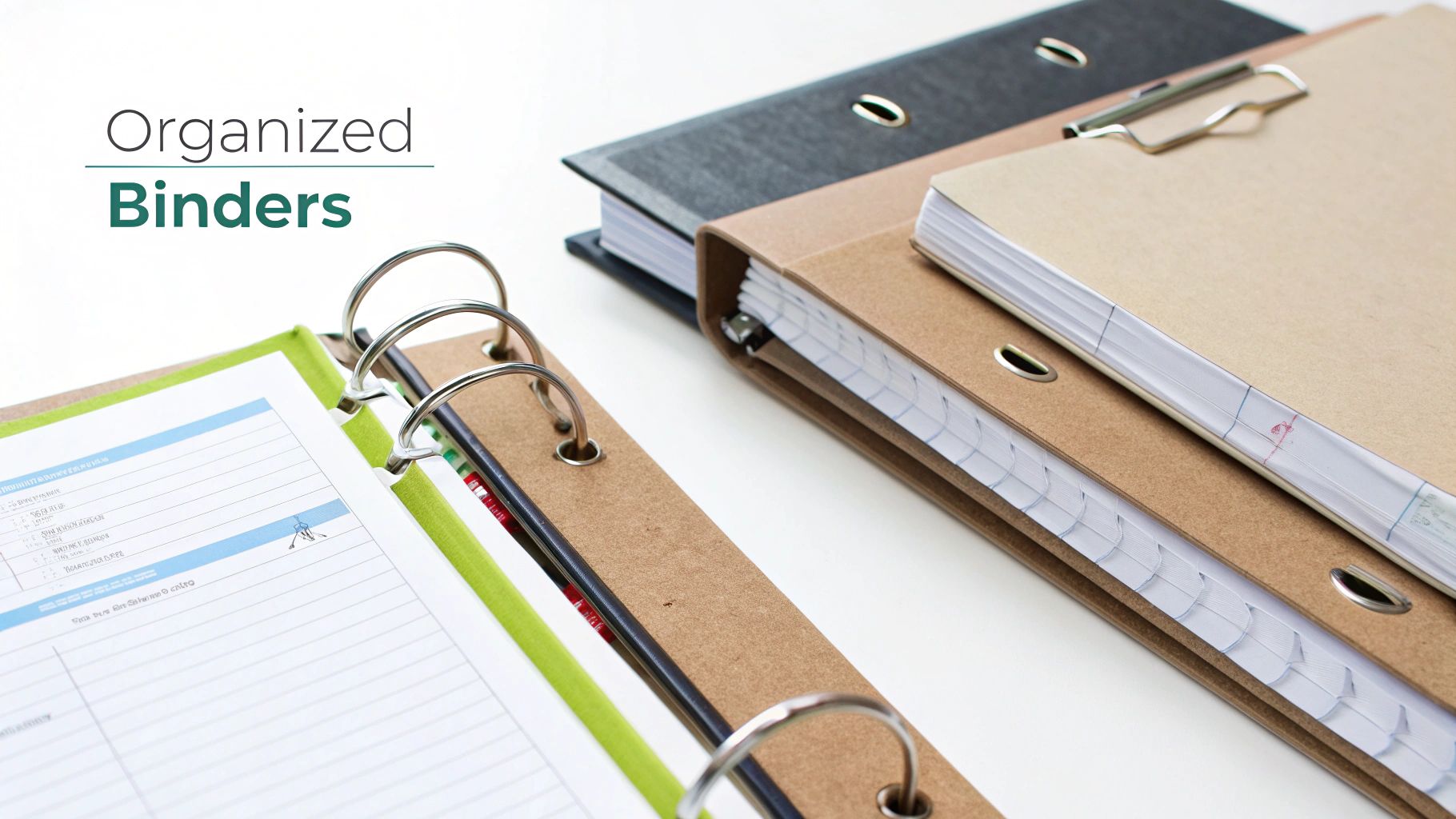
This method is particularly effective for families using curricula like Classical Conversations that rely on weekly memory work, or those who embrace notebooking. It consolidates everything needed for a lesson into one grab-and-go package, minimizing distractions and time spent gathering supplies. For families with multiple children, assigning each child their own set of binders creates a clear sense of ownership and responsibility for their schoolwork.
How to Implement This System
Start by deciding whether to organize binders by child or by subject. For a family with several children in different grade levels, organizing by child often works best. For a single child or children close in age, organizing by subject might be more efficient.
- Establish a Standard Structure: For each binder, create a consistent layout. Start with a table of contents or a weekly checklist, followed by tab dividers for units, weeks, or types of materials (e.g., "Lesson Plans," "Worksheets," "Completed Work").
- Use Essential Supplies: Stock up on tab dividers, page protectors, and three-hole-punched pocket folders. Page protectors are invaluable for reference sheets like multiplication tables or maps, while pocket folders can hold flashcards or loose papers.
- Color-Code for Clarity: Assign a specific binder color to each child or subject. For example, your son's math, history, and science are in blue binders, while your daughter's are in purple. This visual cue makes finding the right materials instantaneous.
Pro-Tips for Success
To maximize the effectiveness of your binder system, create a "Master Binder" for yourself containing yearly goals, curriculum overviews, and attendance records. At the end of each week, take a few minutes to file completed work and add the upcoming week's materials to each binder. This routine prevents overwhelm and ensures your binder-based organization system remains a streamlined, functional tool for your homeschool.
3. Digital Learning Management System (LMS)
For the tech-savvy homeschooler, leveraging a Digital Learning Management System (LMS) is a game-changer among homeschool organization ideas. These cloud-based platforms centralize your entire curriculum, from lesson plans and assignments to resources and progress tracking, all within a single, accessible digital hub. Systems like Google Classroom or Homeschool Planet offer integrated tools that streamline planning, grading, and communication.
This approach is ideal for families who prefer a paperless environment or need to manage diverse digital resources like videos, websites, and interactive assignments. An LMS provides a clear dashboard of daily tasks for students, automates assignment collection, and creates a seamless digital record of completed work. It’s a powerful tool for promoting student independence and preparing them for future academic or professional settings.
How to Implement This System
Choosing the right platform is the first step. Start with a free, user-friendly option like Google Classroom to see if it fits your family's needs before committing to a paid, homeschool-specific service like Homeschool Planet.
- Platform Setup: Create a “class” for each child or for your family as a whole. Set up subjects as topics or modules within the class.
- Establish Conventions: Before you start uploading, decide on a clear file naming convention (e.g., "ChildName_Subject_AssignmentName_Date"). This prevents digital clutter and makes searching for files effortless.
- Schedule and Assign: Use the platform’s features to schedule lessons and assignments in advance. Attach all necessary resources, such as PDFs, links to educational videos, or Google Docs, directly to the assignment.
Pro-Tips for Success
To get the most out of your LMS, integrate it with your family's digital calendar to sync assignment due dates and lesson schedules. Establish a consistent daily or weekly routine for uploading new materials and grading submitted work. This prevents tasks from piling up and keeps the learning momentum strong, transforming your digital space into a highly efficient and organized educational command center.
4. Master Schedule and Planner System
A cornerstone of effective homeschool organization ideas is a comprehensive master schedule and planner system. This method involves mapping out your entire school year, breaking it down into months, weeks, and daily tasks. It coordinates lesson plans, extracurriculars, appointments, and deadlines into a single, cohesive system, providing a clear roadmap for your educational journey. This centralized approach prevents overwhelm and ensures all subjects and activities receive the attention they deserve.
This system is invaluable for families who need a high-level view of their commitments while also managing the granular details of daily lessons. Whether you use a digital platform or a traditional paper planner, the goal is the same: to create a single source of truth for your homeschool schedule. This clarity empowers you to stay on track, adapt to unexpected changes, and feel in control of your week.
How to Implement This System
Start by choosing a planning tool that fits your style, whether it's a digital app or a physical journal. The key is to select one central system and commit to using it consistently for all scheduling.
- Digital Planning: Utilize tools like Google Calendar to create shared family schedules, Trello or Asana for weekly assignment boards, or dedicated homeschool software like Homeschool Planet for interactive lesson planning and record-keeping.
- Analog Planning: Opt for a detailed paper planner, such as an Erin Condren or a Bloom planner, to write everything down. A bullet journal offers a highly customizable, creative alternative for those who prefer a blank canvas.
- Yearly Overview: Begin by blocking out holidays, vacations, and important dates for the entire year. Then, pencil in your broad curriculum goals for each term or semester.
Pro-Tips for Success
For this system to work, build in buffer time and be realistic about what you can accomplish each day. Color-code entries by child or subject for at-a-glance clarity, and regularly include breaks, free time, and field trips in your plan. If you're new to creating a schedule from scratch, you can explore detailed guides while learning more about how to start homeschooling. Review and adjust your schedule monthly to ensure it still serves your family's needs, turning your planner into a dynamic tool that fosters a structured yet flexible learning environment.
5. Workspace Station Organization
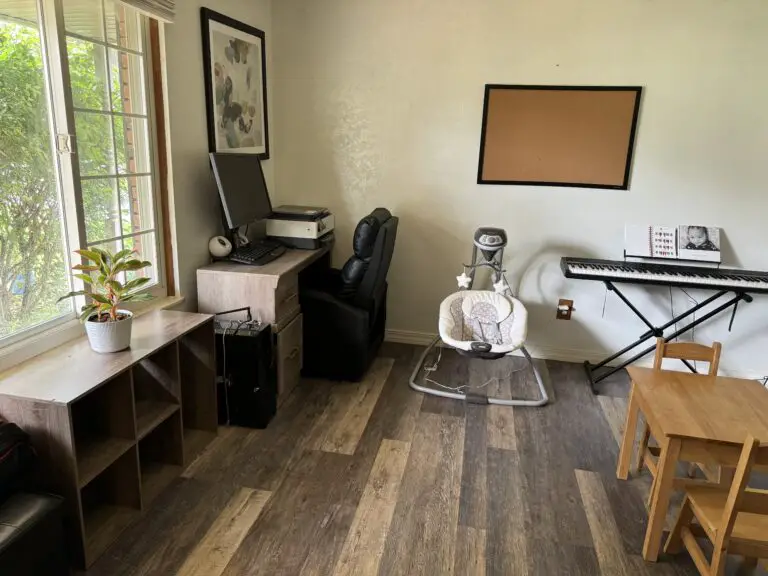
One of the most impactful homeschool organization ideas is to create dedicated, self-contained learning stations for each child or subject. This method involves setting up a specific area, like a desk or a corner of a room, with all the necessary supplies, materials, and resources within arm's reach. This approach minimizes distractions and transition time, empowering students to work independently and efficiently.
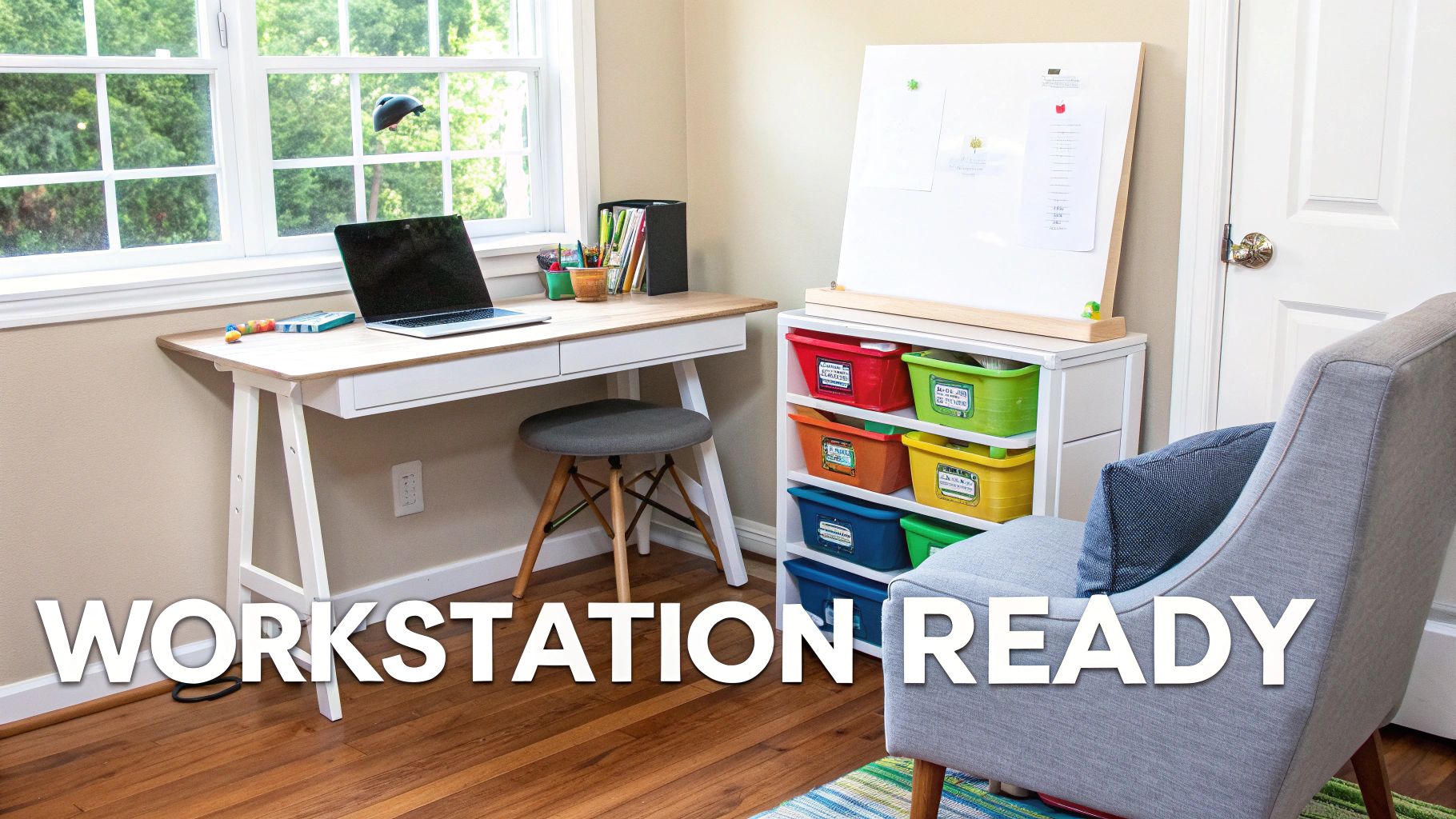
This strategy is particularly effective for families with multiple children of different ages, as it gives each student a sense of ownership over their learning environment. From a Montessori-inspired corner for a preschooler to a fully equipped desk for a high schooler, a designated workspace fosters focus and responsibility. It streamlines the daily flow by ensuring everything from math manipulatives to art supplies has a proper home.
How to Implement This System
Start by assessing the needs of each child or subject. A reading nook might require comfy seating and good lighting, while a science station will need durable surfaces and access to water. To truly optimize your designated learning area, utilize custom name labels for workspace organization, clearly marking zones for different subjects or materials.
- Vertical Storage: Install floating shelves or wall-mounted pegboards above desks to keep frequently used items accessible without cluttering the work surface.
- Mobile Carts: Use a rolling utility cart to create a mobile station for shared supplies like art materials or STEM kits. This allows you to move the station where it's needed most.
- Contain and Divide: Employ clear plastic bins, drawer dividers, and desktop carousels to sort small items like pencils, scissors, and paper clips. Visibility is key to maintaining order.
Pro-Tips for Success
Establish a "10-minute tidy" routine at the end of each school day where children are responsible for resetting their stations. This builds positive habits and ensures you start fresh the next morning. Create and post a simple inventory checklist for each station, which helps children learn to manage their supplies and lets you know at a glance when it's time to restock.
6. Portfolio and Record-Keeping System
A robust portfolio and record-keeping system is one of the most vital homeschool organization ideas for tracking progress and preserving achievements. This method involves systematically collecting, organizing, and storing student work samples, assessments, and other documentation throughout the year. It provides tangible evidence of learning, which is crucial for meeting state requirements, creating transcripts, and building college applications.
This system is indispensable for demonstrating academic growth over time. By maintaining a well-organized portfolio, you can easily pull examples of your child's best work, track skill development, and compile a comprehensive narrative of their educational journey. It transforms a year's worth of papers and projects from a cluttered pile into a meaningful and professional record.
How to Implement This System
Start by deciding on a format that best suits your family: physical, digital, or a hybrid of both. The key is to establish a consistent process for selecting and filing work from day one of the school year to avoid a year-end scramble.
- Physical Organization: Use a three-ring binder or an accordion file for each child, with dividers for each subject. Store larger projects or art pieces in a dedicated art portfolio case or a flat storage box.
- Digital Organization: Create a main portfolio folder in Google Drive or Dropbox for each child. Inside, create sub-folders for each subject and academic year (e.g., "2024-2025," then "Math," "Science"). Use a scanner app on your phone to quickly digitize physical work.
- Consistency is Key: Designate a specific day each week or month to select and file portfolio items. Label every piece of work with the date, subject, and a brief note about the assignment or concept it demonstrates.
Pro-Tips for Success
To make your portfolio even more valuable, include student self-reflections. Have your child write a short paragraph about what they learned from a project or what they found challenging. Regularly archive completed portfolios at the end of each year, creating a summary sheet of major accomplishments, books read, and final grades for easy reference when building high school transcripts.
7. Supply and Resource Management System
One of the most practical homeschool organization ideas is to establish a centralized system for tracking and managing your educational supplies. This method goes beyond simple storage by creating a comprehensive inventory of all resources, from art supplies and math manipulatives to books and technology. A robust management system prevents overbuying, reduces waste, and ensures you always have what you need for lessons, saving both time and money.
This system is particularly effective for families who utilize a variety of hands-on materials or share resources among multiple children. By knowing exactly what you have and where it is, you can quickly pull together activities without a last-minute scramble. It transforms your supply closet from a chaotic collection into a functional, predictable resource library.
How to Implement This System
Start by creating a master inventory, which can be a simple spreadsheet or a laminated checklist posted inside a cabinet door. This central list will be your command center for tracking usage, noting what needs to be restocked, and planning curriculum purchases.
- Physical Organization: Use clear, labeled bins so you can see contents at a glance. Store frequently used items like pencils, paper, and scissors in easily accessible caddies or carts. Consider grouping items by category (e.g., "Painting Supplies," "Science Experiments") rather than by subject.
- Digital Organization: A simple spreadsheet can track quantities, purchase dates, and links to favorite products for reordering. For digital resources, like e-books or printables, organize them in cloud storage with a folder structure that mirrors your physical system.
- Maintain Your System: Schedule a quick monthly inventory check to update your list and restock low supplies. This proactive step prevents the dreaded "we're out of glue" moment in the middle of a project.
Pro-Tips for Success
To maximize efficiency, create a designated "to-be-restocked" bin where family members can place empty containers or notes about depleted items. For managing your curriculum printing needs, it's crucial to have a reliable device; you can find recommendations by reading about the best homeschool printers on themomresource.com. This kind of deliberate planning turns resource management into a seamless, automated part of your homeschool routine, freeing you to focus on teaching.
8. Time Blocking and Rotation Schedule
One of the most powerful homeschool organization ideas for creating structure without rigidity is time blocking paired with a rotation schedule. This method involves dedicating specific blocks of time to certain subjects or activities and rotating them throughout the week. Instead of trying to fit every subject into every single day, you can create themed days or rotate specialized subjects, ensuring a balanced and less overwhelming learning rhythm.
This approach is particularly effective for families using rich, content-heavy curricula like Charlotte Mason or Classical Conversations. It prevents burnout by focusing deep work on a few key areas each day rather than skimming the surface of many. This creates predictability and routine, which helps children feel secure and focused while giving the parent a clear, manageable plan for each day.
How to Implement This System
Start by identifying your core subjects (e.g., Math, Language Arts) and your rotation subjects (e.g., History, Science, Art, Music). Core subjects might happen daily, while rotation subjects are slotted into specific time blocks on different days. This is a key strategy for those who need to learn more about balancing work and homeschool on themomresource.com.
- Create Time Blocks: Designate specific chunks of time in your day, such as a "Morning Block" (9:00-11:30 AM) and an "Afternoon Block" (1:00-2:30 PM). Assign core work to one and rotational subjects to another.
- Establish a Rotation: You could implement a "Science Monday/Wednesday" and "History Tuesday/Thursday" schedule. Or, for a unit study approach, you might dedicate an entire week to one theme that integrates multiple subjects.
- Visualize the Schedule: Use a whiteboard or a printable chart to display the daily or weekly schedule. This visual cue helps children know what to expect and fosters independence.
Pro-Tips for Success
To make this system work, be realistic about your time blocks and include generous buffers. A 15-minute transition period between subjects can prevent stress and allow for cleanup or a quick brain break. Test your proposed schedule for at least two weeks before committing to it, and be prepared to adjust based on your family's natural energy levels and attention spans. This thoughtful approach to scheduling transforms your homeschool from a chaotic scramble into a predictable, peaceful, and productive environment.
9. Curriculum Mapping and Unit Planning Framework
A powerful strategy for long-term homeschool organization ideas is creating a curriculum map and unit planning framework. This method involves a high-level, strategic approach where you outline the entire academic year, breaking it down into manageable units of study. By mapping out learning objectives, resources, and assessments in advance, you create a clear roadmap that prevents curriculum gaps and last-minute scrambling.
This framework is especially valuable for families using an eclectic approach or piecing together their own curriculum. It provides the structure of a pre-packaged curriculum while allowing for complete customization. Seeing the year at a glance helps you integrate subjects thematically, such as studying ancient civilizations in history while reading related literature and exploring relevant science concepts. This creates a cohesive, rich learning experience.
How to Implement This System
Start by outlining your major goals for the year, then break them down into smaller, thematic units. A digital spreadsheet like Google Sheets or a dedicated planner like Homeschool Planet can be an invaluable tool for this process.
- Yearly Overview: Create a chart with months across the top and subjects down the side. Pencil in major topics or units for each month to get a bird's-eye view.
- Unit Templates: Design a reusable template for each unit of study. Include sections for learning objectives, key vocabulary, required resources (books, videos, supplies), project ideas, and assessment methods.
- Resource Alignment: Before the year begins, gather and organize all physical and digital resources according to your unit plan. Place books for "Unit 1: The Solar System" in one bin and printables in a corresponding digital folder.
Pro-Tips for Success
To keep your curriculum map a living, useful document, build in flexibility. Schedule "catch-up" or "deep-dive" weeks between units to allow for rabbit trails or to reinforce difficult concepts. Regularly review your map every six to eight weeks to make adjustments based on your child's progress and interests. This forward-thinking approach to organization transforms your teaching from reactive to proactive, ensuring a smooth and intentional homeschool year.
10. Communication and Progress Tracking Dashboard
A centralized dashboard for communication and progress tracking is one of the most powerful homeschool organization ideas for maintaining a clear academic overview. This system creates a single source of truth for each child's performance, organizing grades, feedback, and communication with tutors or co-op instructors. It provides a real-time snapshot of academic standing, making it easier to identify areas needing improvement and to celebrate achievements.
This method is invaluable for families with multiple children, those participating in co-ops, or those preparing students for high school transcripts. Instead of sifting through papers and emails, a dashboard aggregates all assessment data into one accessible location, whether it's a digital platform like Notion or a simple physical gradebook. This clarity simplifies record-keeping and empowers both parents and students to take ownership of the learning journey.
How to Implement This System
To build your dashboard, choose a format that fits your technical comfort level and daily routine. The goal is to create a sustainable habit of recording progress, not to add another complex task to your plate.
- Digital Dashboards: Use tools like Google Sheets, Airtable, or Notion to create a custom tracking system. You can build templates to log assignments, grades, attendance, and notes. Many homeschool-specific platforms like PowerSchool also offer robust gradebook features.
- Physical System: A traditional teacher's gradebook or a dedicated binder can be just as effective. Use tabs to separate subjects for each child and create columns for assignment names, dates, scores, and brief comments.
- Establish a Routine: The key to a successful dashboard is consistent updates. Set aside a specific time each week, perhaps Friday afternoon, to log all grades and feedback from the past week.
Pro-Tips for Success
To get the most out of your dashboard, integrate it fully into your homeschool rhythm. Share relevant parts of the dashboard with your older students to help them monitor their own progress and due dates. Schedule monthly review meetings where you and your child can look at the data together, discuss trends, and set goals for the upcoming month. This practice fosters accountability and turns progress tracking into a collaborative, encouraging process.
Homeschool Organization: 10-System Comparison
| Method | 🔄 Implementation complexity | ⚡ Resource requirements | ⭐ Expected outcomes / effectiveness | 📊 Ideal use cases | 💡 Key advantage / tip |
|---|---|---|---|---|---|
| Subject-Based Folder System | Low–Medium (initial setup time) | Low (folders, labels, cloud backup) | Strong organization & quick retrieval ⭐⭐⭐⭐ | Multi-age homeschools; subject-focused planning | Centralize by subject; keep index and purge quarterly 💡 |
| Binder-Based Organization System | Low (simple assembly, ongoing maintenance) | Low (binders, dividers, protectors) | Portable and tangible; limited capacity ⭐⭐⭐ | Field trips, co-ops, tactile learners | Use TOC, tabs, pockets; color-code per child/subject 💡 |
| Digital Learning Management System (LMS) | Medium–High (setup & learning curve) | High (internet, devices, possible subscriptions) | High scalability, real-time tracking ⭐⭐⭐⭐ | Hybrid/online learning; multiple children; record-keeping | Start with free options; standardize file names and integrations 💡 |
| Master Schedule and Planner System | High (significant upfront planning) | Low–Medium (planner tools + time investment) | High consistency, improved time management ⭐⭐⭐⭐ | Families needing structure, accountability, pacing | Build buffers; review monthly; color-code schedules 💡 |
| Workspace Station Organization | Medium (initial setup and upkeep) | Medium–High (furniture, storage, space) | High for independence and focus ⭐⭐⭐⭐ | Hands-on activities; independent workstations; multiple kids | Label bins, rotate supplies, enforce daily cleanup 💡 |
| Portfolio and Record-Keeping System | Medium (consistent documentation required) | Medium (storage space or digital platform + time) | High for evidence, transcripts, and reflection ⭐⭐⭐⭐ | College applications, legal documentation, progress reviews | Use digital backups, photos of work, and semester summaries 💡 |
| Supply and Resource Management System | Medium (inventory setup and maintenance) | Medium (bins, labels, tracking tool or spreadsheet) | Efficient use of resources; cost savings ⭐⭐⭐ | Multi-child homes; shared resources; budgeting | Keep master list, transparent bins, monthly inventory checks 💡 |
| Time Blocking and Rotation Schedule | Medium (planning + testing and adjustments) | Low (schedules, timers, visual aids) | High for routine, focus, reduced burnout ⭐⭐⭐⭐ | Children with attention needs; rhythm-based curricula | Start simple (4-day rotation), allow buffers, test 2–3 weeks 💡 |
| Curriculum Mapping and Unit Planning Framework | High (detailed mapping & standards alignment) | Medium–High (time, templates, standards references) | Very high for coverage & integration ⭐⭐⭐⭐ | Long-term planning; cross-curricular units; transcript-ready plans | Use reusable templates and spreadsheets; map standards & checkpoints 💡 |
| Communication and Progress Tracking Dashboard | Medium (regular data entry) | Medium (gradebook/dashboard tool + maintenance time) | High for monitoring and early intervention ⭐⭐⭐⭐ | Co-ops, tutors, multi-child tracking, parent-teacher communication | Update weekly, color-code, automate calculations where possible 💡 |
Building Your Family's Unique Organizational Rhythm
As we've explored this extensive collection of homeschool organization ideas, from subject-based folder systems to comprehensive curriculum mapping, a single, powerful truth emerges: there is no one-size-fits-all solution. The most effective organizational system is not a flawless template you find online, but a custom-built framework that honors your family’s unique rhythm, educational philosophy, and spiritual goals. The goal isn't to create a picture-perfect, Pinterest-worthy classroom; it's to cultivate a peaceful, intentional, and joyful learning environment where your family can thrive.
The journey toward an organized homeschool is a process of stewardship. It’s about wisely managing the time God has given you, the resources He has provided, and the precious opportunity to guide your children's hearts and minds. The strategies discussed, whether a binder-based system or a digital dashboard, are simply tools to help you fulfill that calling more effectively. They are meant to serve you, not the other way around.
From Inspiration to Implementation: Your Actionable Next Steps
Feeling overwhelmed by the sheer number of possibilities is natural. The key to making real, lasting change is to start small and focus on your most significant pain point. Don't try to overhaul your entire homeschool structure overnight. Instead, prayerfully consider which area, if improved, would make the biggest positive impact on your daily life.
- Identify Your Biggest Challenge: Is it the clutter of art supplies? The struggle to keep track of assignments? The feeling of being behind on record-keeping? Pinpoint the one area causing the most friction in your homeschool day.
- Choose One System to Implement: Based on your challenge, select a single strategy from this article. If supplies are the problem, implement a robust Supply and Resource Management System. If scheduling is chaotic, start with a Time Blocking and Rotation Schedule.
- Adapt and Customize: Take the core concept and make it your own. Does the binder system need a section for prayer requests? Does your digital dashboard need a field to track character development goals? Infuse the system with your family's values and needs.
- Commit to Consistency, Not Perfection: The most powerful of all homeschool organization ideas is consistency. A simple system used consistently will always outperform a complex system used sporadically. Give your new strategy a few weeks to become a habit, and don't be discouraged if it requires adjustments along the way. Progress, not perfection, is the goal.
The True Purpose of an Organized Homeschool
Ultimately, mastering these organizational concepts is about more than just efficiency. It’s about creating margin in your day for what truly matters. An organized homeschool reduces decision fatigue, minimizes stress, and frees up mental and emotional energy.
An organized home is a peaceful home, creating an environment where faith, family, and learning can flourish. This is the foundation upon which a resilient and joyful learning culture is built.
When you aren’t scrambling to find a math workbook or wondering what’s next on the schedule, you have more capacity for deep conversations, spontaneous nature walks, and moments of genuine connection. You create a predictable and secure atmosphere where children feel safe to explore, ask questions, and grow. This structure provides the freedom to be flexible, to follow a child’s curiosity, and to build a learning lifestyle that extends far beyond the checklist. Embrace this journey as an act of love for your family, crafting a homeschool that is not only well-managed but also rich in purpose and peace.
Ready to take the next step with practical, faith-centered tools? The Mom Resource offers a curated collection of printable planners, routine charts, and educational resources designed to help you implement these homeschool organization ideas with confidence and grace. Visit The Mom Resource to discover a community and resources dedicated to helping you build a joyful, organized, and Christ-centered home.