What is the Montessori Method of Teaching? Quick Guide
The Montessori method is a wonderfully unique approach to education that honors a child's natural desire to learn. Instead of focusing on lectures and tests, it centers on hands-on, self-directed activity. The teacher acts more like a guide, preparing a special environment that allows children to learn at their own pace, naturally building independence and a genuine love for discovery.
Unpacking the Montessori Philosophy
To really wrap your head around the Montessori method, you have to set aside most of what you think about traditional school. Forget the idea of a teacher pouring information into a child's head like an empty piggy bank. Montessori sees the child as an eager explorer, already wired to discover the world. The goal isn’t to force-feed information but to create the perfect conditions for learning to happen on its own.
This entire philosophy was brought to life by Dr. Maria Montessori, an Italian physician who opened her first classroom, the Casa dei Bambini (Children's House), in Rome way back in 1907. Through careful, scientific observation of how children actually learn, she developed a system that was a world away from the rote memorization common in her day.
At its heart, the Montessori method is a perfect example of the constructivist learning theory, which suggests that kids actively build their own knowledge by interacting with their surroundings. They aren’t passive recipients; they are the architects of their own understanding.
The Teacher’s New Role: From Lecturer to Guide
In a Montessori classroom, the teacher’s job looks completely different. They aren't standing at the front of the room delivering a lesson to everyone at once. Instead, they are careful observers and gentle guides.
They meticulously prepare the classroom with specific, beautiful materials, introduce a new concept when a child shows they’re ready, and then—this is the important part—they step back. This gives the child the space to dive deep into the material, make their own connections, and even figure out their own mistakes without fear of judgment.
To give you a clearer picture, let’s compare how this approach stacks up against what most of us experienced in school.
Montessori vs Traditional Education at a Glance
This table breaks down the fundamental differences between the two educational models, showing just how distinct the Montessori approach truly is.
| Aspect | Montessori Method | Traditional Method |
|---|---|---|
| Learning Focus | Child-led, follows individual interests | Teacher-led, follows a set curriculum |
| Pace of Learning | Individualized, students progress at their own pace | Group-paced, all students cover the same material together |
| Teacher's Role | Guide, observer, and facilitator | Lecturer, primary source of information |
| Classroom Setup | Open, accessible, mixed-age groups | Age-based groups, teacher-focused layout |
| Learning Materials | Hands-on, self-correcting, specialized materials | Textbooks, worksheets, and abstract concepts |
| Assessment | Observation, portfolios, self-assessment | Grades, standardized tests, and exams |
| Work Structure | Long, uninterrupted work cycles | Short, scheduled periods for each subject |
As you can see, the focus shifts entirely from the teacher's agenda to the child's developmental needs, fostering a sense of ownership and deep engagement in their own education.
Key Characteristics of the Approach
While every Montessori school has its own unique flavor, they all share a few core ingredients that make them so different from other educational philosophies. If you’re trying to weigh your options, our guide on Charlotte Mason vs. Maria Montessori is a great place to compare two popular child-led methods.
Here are the foundational elements you’ll find in a true Montessori environment:
- Child-Led Learning: Children have the freedom to choose their own "work" from a range of carefully selected activities. This freedom respects their natural curiosity and helps them take ownership of their learning.
- Prepared Environment: The classroom itself is a teaching tool. It's orderly, beautiful, and filled with child-sized furniture and accessible materials designed to encourage independence. Everything has a place.
- Hands-On Materials: You won't find many traditional toys. Instead, there are specially designed learning tools that encourage exploration and help children grasp abstract concepts—like multiplication—through physical touch and manipulation.
- Uninterrupted Work Cycles: Kids are given long, open-ended blocks of time (often up to 3 hours) to focus deeply on their chosen tasks without being shuffled off to the next activity. This builds concentration and respect for deep work.
This structure isn't just about teaching reading, writing, and arithmetic. It’s designed to nurture the whole child—their cognitive, social, emotional, and physical development—all at once.
The Five Core Montessori Principles You Need to Know
To really get what the Montessori method is all about, we have to look past the beautiful wooden toys and famously calm classrooms. The entire approach is built on five core principles that honor a child's natural path of development. These aren't just stuffy academic theories; they are the practical, foundational ideas that shape every single interaction in a Montessori home or school.
It all starts with a deep, genuine respect for the child as a whole and capable person. From that single, powerful idea, the philosophy builds layer by layer to create a space where children can, quite literally, teach themselves.
This little diagram helps show how it all fits together, with the child right at the heart of their own learning journey.
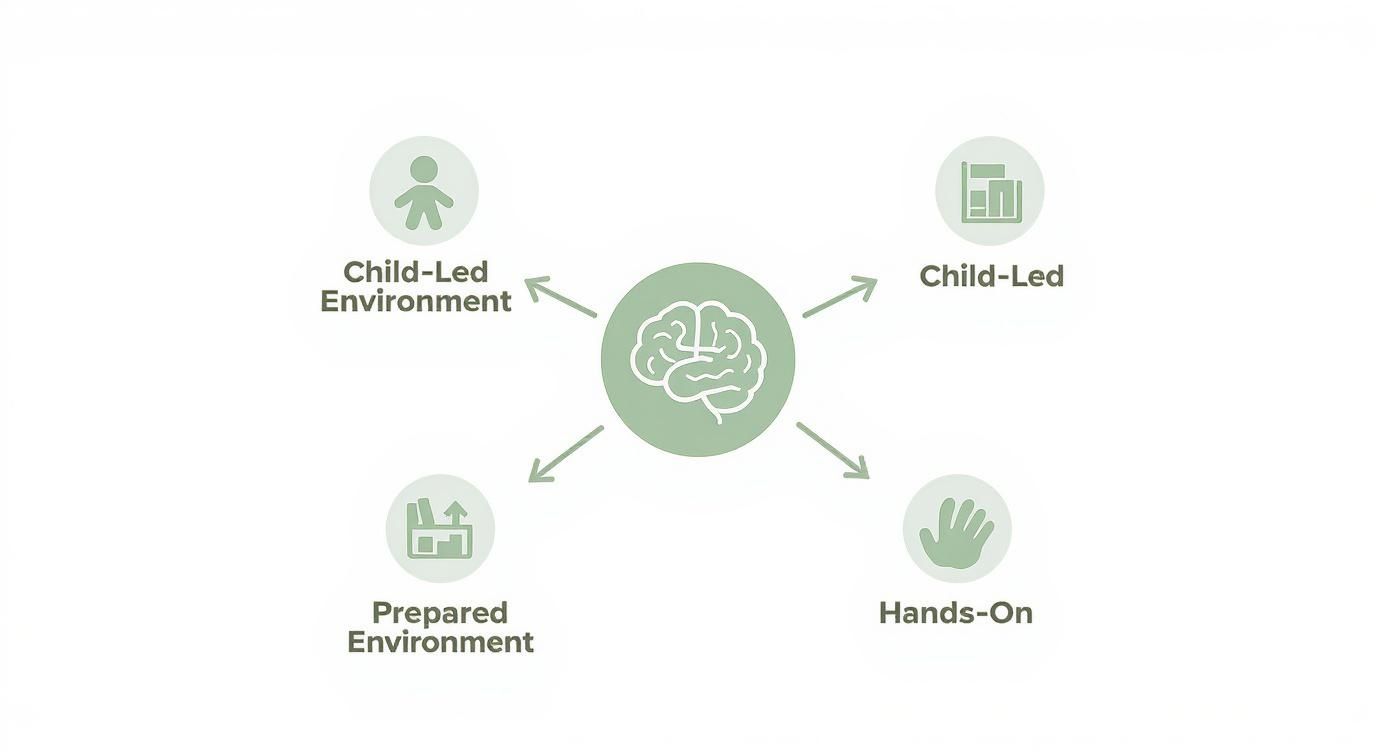
As you can see, the method is a beautiful dance between a child's own inner drive, the thoughtfully designed environment, and the hands-on materials that connect abstract ideas to concrete, real-world understanding.
1. Respect for the Child
The absolute, non-negotiable starting point for everything in Montessori is Respect for the Child. This goes way beyond just being kind or polite. It’s a deep-seated belief in a child's potential and in their innate ability to guide their own growth.
So, what does this look like in real life? It means we don't interrupt a child who is completely absorbed in a task. We trust their choices, give them the space to solve their own problems, and speak to them with the same courtesy we'd show an adult. It's about seeing them for who they are right now—not as empty buckets we need to fill, but as incredible individuals on their own unique path.
2. The Absorbent Mind
Dr. Montessori observed something incredible about children from birth to age six: they possess what she called The Absorbent Mind. Instead of thinking of a young child's brain like a notebook we have to write in, picture it as a super-powered sponge. It effortlessly and indiscriminately soaks up everything in its environment.
This is exactly why the language, attitudes, and sense of order in a child's surroundings are so critically important. During this precious window, they aren't trying to learn; they are simply absorbing the world around them, building the very foundation of their intelligence and personality without even trying.
"The most important period of life is not the age of university studies, but the first one, the period from birth to the age of six. For that is the time when man's intelligence itself, his greatest implement, is being formed."
— Dr. Maria Montessori
This single insight explains why creating a rich, positive, and well-ordered environment is one of the biggest jobs of a Montessori parent or guide.
3. Sensitive Periods
Within this "absorbent mind" stage, kids go through what are called Sensitive Periods. Think of these as temporary windows of opportunity where a child has an intense, almost irresistible drive to learn a specific skill. You can't miss it when it happens—it's a time when they are passionately drawn to certain activities over and over again.
For instance, a toddler who suddenly needs to line up all their blocks in perfect rows is in a sensitive period for order. A child who constantly points at things for you to name is deep in a sensitive period for language.
These periods pop up on an internal timetable and include sensitivities to things like:
- Order: A deep need for consistency, routine, and knowing where things belong.
- Language: An explosive capacity to absorb vocabulary, grammar, and syntax.
- Movement: A powerful drive to refine coordination, balance, and small-muscle control.
- Small Objects: A fascination with tiny details that adults often overlook.
- Social Aspects: An emerging interest in learning manners, interacting with others, and working together.
Recognizing and leaning into these periods is key. It's the easiest, most joyful time for a child to master these essential life skills.
4. The Prepared Environment
Because of the absorbent mind and sensitive periods, the learning space itself is a huge piece of the educational puzzle. The Prepared Environment is just a fancy term for a classroom or home space that is intentionally designed to meet the specific developmental needs of the children using it.
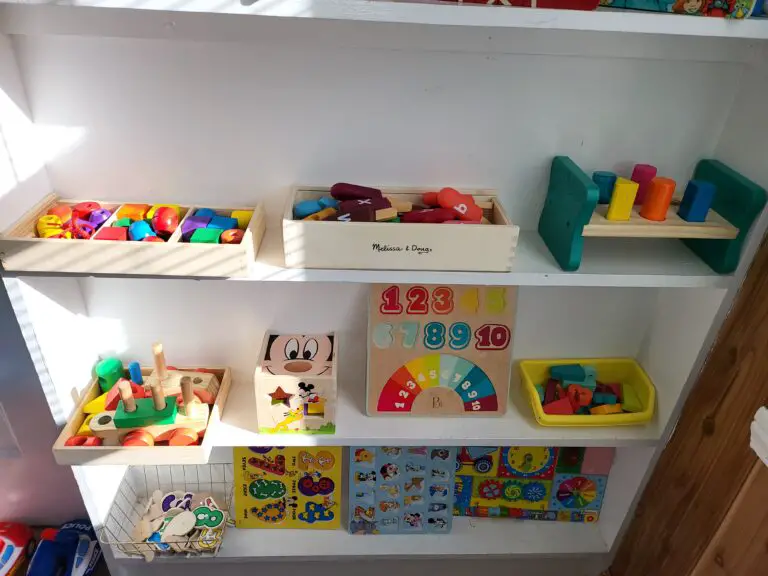
This space is orderly, beautiful, and completely accessible to the child. Everything has a specific place on low, open shelves. Furniture is child-sized to foster independence. Materials are laid out logically, from the simplest to the most complex. It’s a calm, nurturing place that practically begs a child to come explore, and it removes the physical and mental clutter that can get in the way of learning.
5. Auto-Education (Self-Education)
The final principle, Auto-Education, is really the beautiful outcome of all the others working together. This is the ultimate goal.
When a child is placed in a prepared environment that is filled with hands-on, self-correcting materials, they naturally become the director of their own education. For example, when a child works with the famous Pink Tower, they can see with their own eyes if a block is out of place; no adult needs to come over and point out the "mistake."
This built-in self-correction empowers the child, building their concentration, confidence, and a true love for the process of discovery. The teacher’s role shifts from being a lecturer to being a guide—simply connecting the child to the work, and then stepping back to let the magic happen.
Key Elements of a Montessori Learning Environment
If the core principles are the "why" behind Montessori, the learning environment is the "how." This is where the philosophy truly comes to life. A real Montessori space isn't just a room with educational toys; it’s a carefully orchestrated world built entirely for the child. It's designed to spark curiosity, grow independence, and make learning feel as natural as breathing.
Forget the idea of a chaotic playroom. Instead, picture a calm, beautiful, and orderly space that feels more like a welcoming little workshop. Every single item has a purpose and a designated home. This intentional design is what helps a child move from abstract ideas to concrete understanding, and it all rests on three essential components working together.
The Prepared Environment
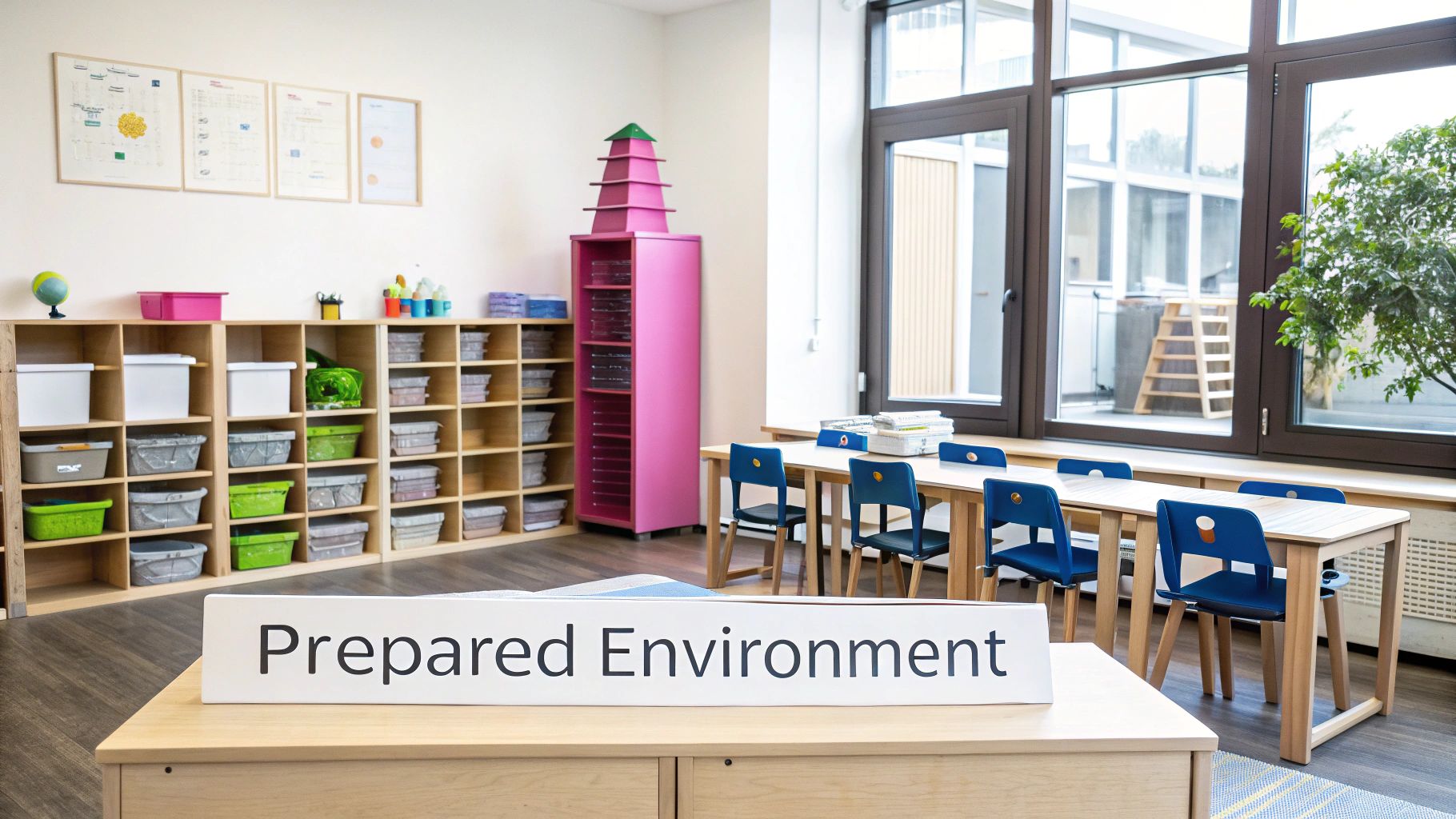
Dr. Montessori was convinced that the environment itself is a powerful teacher. The Prepared Environment is a space intentionally designed to meet the developmental needs of the children in it. It removes obstacles to learning and allows them to explore freely and safely. Think of it as a giant "yes" space where they can interact with the world on their own terms.
What does this actually look like?
- Child-Sized Everything: Tables, chairs, shelves, and even little brooms and dustpans are scaled to fit the child. This empowers them to be physically independent without constantly asking an adult for help.
- Order and Accessibility: Materials are displayed on low, open shelves, usually arranged from simple to complex. This external order helps children develop their own internal sense of logic and responsibility as they learn to put things back where they belong.
- Beauty and Simplicity: The space is clutter-free and often filled with natural materials like wood and plenty of sunlight. This calm atmosphere helps children focus and builds an appreciation for beauty and taking care of their surroundings.
The whole point is to create a world where the child feels competent and respected—a place that quietly says, "You can do this yourself."
Montessori Materials
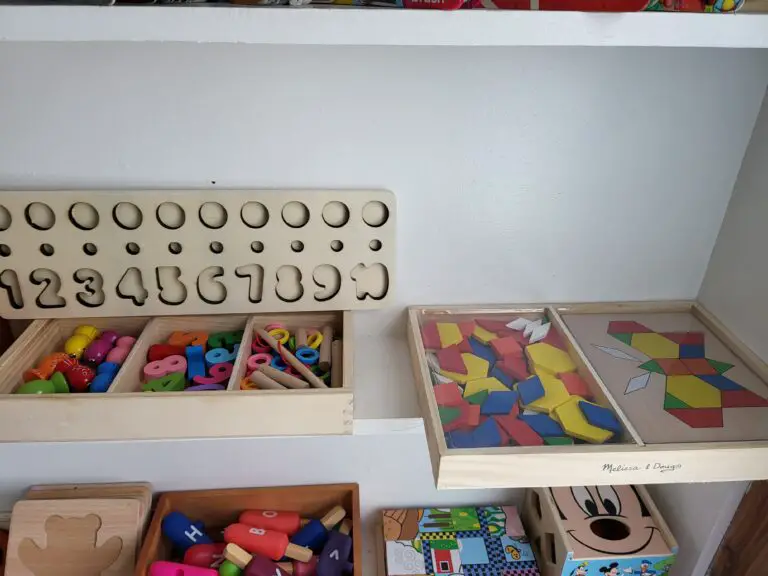
You won't find many flashy, battery-operated toys in a Montessori classroom. What you will see are shelves of beautifully crafted Montessori Materials. These are not toys; they are specialized, hands-on tools for learning, each designed to isolate a single concept or skill.
Take the iconic Pink Tower. It’s a simple set of ten pink cubes that vary in size. As a child stacks them from largest to smallest, they are physically and visually internalizing concepts of dimension, weight, and order. And the best part? The material is self-correcting. If a cube is out of place, the tower will look wrong or feel unstable. The child can see the error and fix it on their own, building real problem-solving skills without any adult intervention.
This principle of self-correction is central to fostering independence. The child learns from the material itself, not from the praise or correction of a teacher, which builds deep intrinsic motivation.
These materials cover a huge range of subjects. For example, some of the best Montessori materials for math use beads and rods to make abstract concepts like addition and multiplication tangible for young minds. From practical life skills like buttoning to sensorial explorations of different textures, every material is an invitation for hands-on discovery.
The Mixed-Age Classroom
One of the most unique—and powerful—parts of a Montessori environment is the Mixed-Age Classroom. Instead of grouping kids strictly by their birth year, classrooms typically span a three-year age range (like ages 3-6). This creates a dynamic social environment that looks a lot more like the real world.
This structure has amazing benefits for everyone involved:
- Younger Children get to watch the older kids work, which is incredibly inspiring. They get a living preview of all the exciting lessons to come, and it naturally sparks their curiosity and ambition.
- Older Children step into roles as mentors and leaders. By teaching a concept to a younger peer, they actually reinforce their own understanding on a much deeper level, building confidence and empathy along the way.
This setup fosters a true community of learners where collaboration is far more important than competition. Children learn from each other in a supportive, family-like setting, developing social skills that are just as vital as their academic ones. The classroom becomes a place where everyone is both a student and a teacher.
What Are the Real Benefits of the Montessori Approach?
Parents and educators who commit to the Montessori path aren't just chasing a trend; they're investing in a philosophy that delivers real, observable results. The benefits go far beyond hitting academic benchmarks. You can see it in the way children think, how they interact with others, and the confidence they bring to new challenges. This is about nurturing the whole child, building a solid foundation for a capable and well-adjusted life.
At its core, the approach is designed to cultivate sharp cognitive skills right from the start. By letting children get their hands on self-correcting materials and work without interruption, the method strengthens what experts call executive functions—those critical mental skills like working memory, flexible thinking, and self-control. Kids don't just learn what to think; they learn how to think.
This focus on process over rote memorization pays off in huge ways. It fosters creative problem-solving and an agile mindset, equipping children to tackle complex problems with curiosity instead of just looking to a teacher for the single "right" answer.
Nurturing a Confident and Kind Heart
Beyond academics, the social and emotional advantages are where Montessori truly shines. The mixed-age classroom, for instance, is a natural laboratory for developing empathy, cooperation, and leadership. Older children solidify their own understanding by mentoring their younger peers, while the little ones are inspired by and learn social graces from their role models.
This setup builds a genuine sense of community and mutual respect. And because the environment is built on "freedom within limits," children learn to manage their own time and choices responsibly. This fosters a powerful sense of self-discipline and intrinsic motivation. The drive to learn comes from within, not from a fear of getting in trouble or the promise of a sticker.
The ultimate goal of the Montessori method isn't just to create smart kids, but to help children grow into confident, compassionate, and responsible people who feel a real sense of purpose and belonging.
Don't just take my word for it—the research is compelling. A landmark national randomized trial involving 588 children found that Montessori students showed significantly stronger outcomes by the time they reached kindergarten. They scored higher in reading, memory, executive function, and social understanding compared to their peers in other programs.
Building a Foundation for a Successful Life
The skills picked up in a Montessori classroom aren't just for school; they are skills for life. That blend of academic strength, emotional intelligence, and self-regulation prepares children to thrive in a world that’s constantly changing.
Here are some of the key long-term benefits that stick with them:
- Remarkable Adaptability: Kids get comfortable managing their own work and making choices, which makes them far more flexible in new situations.
- Deep Concentration: The uninterrupted work cycles build a child’s ability to focus deeply on a task—a superpower in our distraction-filled world.
- A True Love of Learning: Because learning is tied to their natural curiosity, children develop a genuine passion for discovery that lasts a lifetime.
- A Strong Sense of Self: By mastering real-world tasks and directing their own learning, children build powerful self-esteem and a belief in their own abilities.
These qualities come together to create individuals who are not only smart but also socially graceful and emotionally resilient. As you build this holistic foundation, it’s also worth understanding the profound benefits of reading to your child, as it perfectly complements the Montessori goal of fostering both literacy and connection. Ultimately, the method provides a time-tested framework for helping children become the very best version of themselves.
How To Bring Montessori Principles Into Your Home
You don’t need a certified classroom or expensive, specialized materials to bring the Montessori philosophy into your home. The real beauty of this method is that it’s less about buying stuff and more about a shift in your mindset. You can start building independence, sparking curiosity, and fostering a true love of learning right now, with simple, practical changes to your home and routine.
It’s really about seeing your home through your child’s eyes and making it a place where they can grow and explore respectfully. The goal is to stop seeing them as a little guest in an adult world and start viewing them as a capable, contributing member of the family.
Create a Prepared Environment
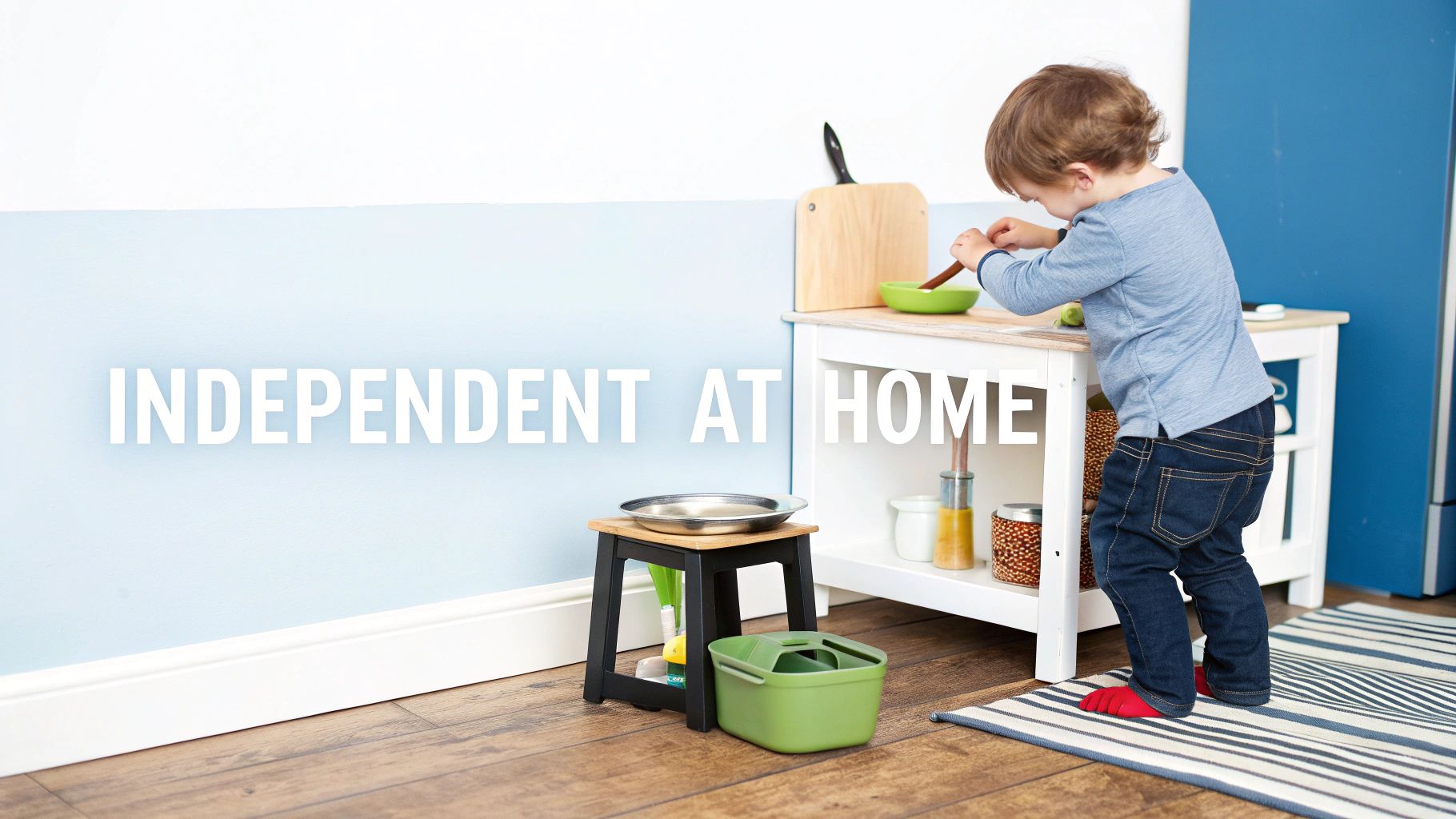
The very first step is adapting your home for your child. This doesn’t mean a massive renovation! It just means making small, thoughtful adjustments so they can do more for themselves. Think of it as creating a series of "yes spaces" where they are free to interact with their world safely and independently.
The best way to start is by getting down on their level—literally. Crawl around your living room and kitchen to see the world from their perspective. What can they actually reach? What obstacles are constantly in their way? This simple exercise will reveal a dozen easy ways to boost their independence.
Here are a few practical ideas to get you started:
- Accessible Belongings: Put a low stool in the bathroom so they can reach the sink to wash their hands. Install low hooks by the door for their own coat and backpack.
- Organized Play Space: Swap out a deep toy box for low, open shelves. This lets them see all their choices clearly and makes it infinitely easier for them to put things back where they belong.
- Kitchen Involvement: Dedicate a low drawer in the kitchen for their own plates, cups, and utensils. This empowers them to set their place at the table or get a drink of water without having to ask for help.
These small changes send a powerful message: "You are capable, and you belong here."
Focus on Practical Life Skills
A huge part of bringing Montessori home is embracing Practical Life activities. These are simply the everyday tasks you do to care for yourself and your home—things like getting dressed, preparing food, and cleaning up messes.
Involving your child in this real-world work is one of the most effective ways to build their confidence, coordination, and sense of purpose.
Instead of shooing them away when you're busy, invite them to join you. Yes, it will probably slow you down at first, but the skills they gain are absolutely invaluable. The key is to provide child-sized tools that actually work, like a small pitcher for pouring or a tiny broom and dustpan for sweeping up crumbs.
By allowing children to participate in meaningful household work, we teach them that their contributions are valuable. This fosters a deep sense of purpose and responsibility that is essential for their development.
The goal isn't perfection; it's participation. When your toddler helps you move laundry from the washer to the dryer, they aren't just developing motor skills—they're learning what it means to be a helpful, contributing member of the family.
Simplify and Rotate Toys
In a Montessori-inspired home, less is always more. A huge mountain of toys is actually overwhelming for a young child and often leads to scattered, superficial play. Instead, try curating a smaller, more intentional selection of high-quality, open-ended toys.
Organize the toys on a low shelf, with each activity contained in its own tray or basket. This creates an orderly, appealing display that invites deep focus. A good rule of thumb is to have only 6-10 options available at a time.
Store the rest of the toys away and rotate them every few weeks. This simple strategy keeps their environment fresh and interesting, making old toys feel brand new again. It also lets you tailor the activities to their current developmental stage and interests. For more specific ideas, check out our guide on 30 unique toddler Montessori activities.
This approach honors a child’s natural ability to concentrate deeply when they aren’t overstimulated. While this philosophy is incredible for nurturing social and emotional skills, it's also linked to strong academic outcomes. Research has found that Montessori students often outperform their peers, with one analysis showing they scored significantly higher on math and science exams years later. By bringing these principles home, you're not just organizing your space; you're building a powerful foundation for lifelong learning.
To give you a clearer picture, here are some simple, age-appropriate activities you can set up at home with things you probably already have.
Montessori at Home Activity Ideas by Age
| Age Group | Practical Life Activity | Sensorial Activity | Language Activity |
|---|---|---|---|
| Infants (0-12 mo) | Reaching for and grasping a soft cloth to wipe their tray. | Exploring a "treasure basket" with safe, natural objects (wood, metal, fabric). | Looking at high-contrast black-and-white image cards. |
| Toddlers (1-3 yrs) | Pouring water from a small pitcher into a cup. | Matching color cards or sorting large pom-poms by color. | Matching small animal figures to picture cards of the same animal. |
| Preschoolers (3-6 yrs) | Using a child-safe knife to slice a soft banana. | Grading different-sized blocks from smallest to largest. | Using sandpaper letters to trace the shape while saying the sound. |
These are just starting points, of course. The key is to observe your child, see what they're interested in, and provide simple, hands-on activities that let them explore the world at their own pace.
Common Questions About the Montessori Method
Even after seeing all the benefits, it’s completely normal to have a few lingering questions. Let’s be honest—the Montessori method is wonderfully different from the way most of us went to school, and those differences can lead to some common myths and practical "what ifs."
Think of this as our final chat over coffee, where we tackle those last few uncertainties. I want to clear up the most frequent questions parents ask so you can feel confident and clear about what this unique path really offers your child.
Is Montessori Only for Certain Types of Children?
This is probably the most persistent myth out there. So many people have the impression that Montessori is either for gifted kids who need to speed ahead or for children with specific learning challenges. The beautiful truth? The Montessori method was intentionally designed for all children.
Its real power is in its individualized, self-paced structure. In a Montessori classroom, every child works at their own level without the pressure of comparison. A child who grasps a concept quickly is free to move on to more challenging work, while a child who needs a bit more time can practice a skill until they feel completely confident. This incredible adaptability is what makes it so effective for a huge range of learning styles and abilities.
How Does All That Freedom Prepare Kids for the Real World?
I get this question all the time! The idea of "freedom" in a Montessori classroom is often pictured as a free-for-all, but it’s actually a carefully balanced principle called "freedom within limits." It's not chaos; it's structured independence.
Children are free to choose their work from the prepared shelves, decide where they want to work in the room, and determine how long to spend on an activity that has captured their interest. But—and this is the important part—this freedom comes with clear responsibilities. They have to use the materials respectfully, clean up their workspace, and not disturb others. This structure fosters a deep sense of self-discipline and time management.
Instead of just learning to follow external commands, children develop the inner control and motivation they need to manage their own choices. This self-regulation is arguably far better preparation for navigating the complexities and responsibilities of adult life.
They're learning to follow their curiosity while still respecting the needs of the community—a crucial skill for life.
Do I Need To Be a Trained Teacher To Use Montessori at Home?
Absolutely not! You don't need a formal teaching certificate to bring the beautiful, child-honoring principles of Montessori into your home. For parents, the focus isn't on teaching specific lessons but on embracing the core philosophy.
Applying Montessori at home is really about shifting your perspective and making small, intentional changes:
- Respecting your child as the capable, unique individual they are.
- Preparing your home environment to be accessible and empowering for them.
- Encouraging independence in everyday life, from dressing themselves to helping in the kitchen.
- Observing your child to truly understand their needs and what fascinates them right now.
Simple things, like having a small stool so your child can reach the sink, keeping their toys on low shelves they can access, or inviting them to help you prepare a snack, are powerful ways to live out the method. The goal is to nurture their natural drive to learn and contribute, and that’s a mindset any loving parent can adopt.
What Is the Teacher’s Role in the Classroom?
In a Montessori classroom, the teacher is called a "guide," and that title perfectly captures their unique role. They aren't the center of attention; the child is. The guide's job is to be a facilitator, a keen observer, and the crucial link between the child and the learning environment.
Instead of lecturing to the whole class, a guide’s day looks very different:
- Prepares the Environment: They meticulously arrange the classroom with materials that meet the developmental needs and interests of the children.
- Presents Lessons: The guide presents new materials to children individually or in very small groups, but only when a child shows they are ready and interested.
- Observes Carefully: A huge part of their time is spent quietly observing, taking notes on each child's progress, interests, and challenges to know how to support them best.
- Steps Back: After giving a lesson, the guide steps away. This is critical. They allow the child to explore the material independently, protecting their concentration from interruptions.
They are the keeper of the environment, making sure it remains a peaceful, productive, and inspiring place where children can truly direct their own learning.
At The Mom Resource, we believe in equipping you with the knowledge and tools to create a joyful and effective learning environment at home. From practical tips to faith-based encouragement, we are here to support your family’s educational journey. Explore our growing library of resources to teach with confidence. Find out more at https://themomresource.com.