
Common Homeschooling Mistakes to Avoid as a Beginner
If you are reading this with a stack of unopened curriculum on your kitchen table and not a clue where to begin, come sit with me for a minute. I remember that feeling so well.
The first week of our homeschool, I had a color-coded binder, a laminated schedule, and a very firm belief that I was about to become the best teacher my children had ever had. By Thursday, someone was in tears. By Friday, it was me.
I share that because I want you to know something right at the start: making mistakes in your first year of homeschooling does not mean you are failing. It means you are new. Every experienced homeschool mom you admire has a story (usually several) about the curriculum she bought and never used, the schedule that fell apart by lunchtime, and the season she was sure she had ruined everything.
But here is the encouraging part. Many of the hardest beginner mistakes are completely avoidable when someone tells you about them ahead of time. So that is what I want to do today. I want to be the friend who sits across the table, hands you a cup of coffee, and says, “Here is what I wish someone had told me.”
These are the most common homeschooling mistakes I see new moms make, the ones I made myself, and what to do instead. Take what helps, leave what does not, and give yourself a generous measure of grace as you go.
“Train up a child in the way he should go; even when he is old he will not depart from it.” Proverbs 22:6
That verse is not asking you to be perfect. It is asking you to be faithful. Let’s talk about how.
Why Beginner Mistakes Happen (And Why They Are Okay)
Before we dive into the list, I want to say a word about why we all stumble at the start.
Most of us grew up in a classroom. School is the only model of education we have ever seen up close, so when we begin homeschooling, we naturally try to copy it. We also love our children deeply, which means the stakes feel enormous. Add in the endless opinions online, the pressure of social media, and the very real fear of “messing up” our kids, and it is no wonder new homeschool moms feel overwhelmed.
The good news is that homeschooling is wonderfully flexible. You can adjust, change course, and try again. A mistake in month two is not a life sentence. It is just information.
So let’s look at what the most common mistakes are, so you can skip as many of them as possible.
Mistake #1: Trying to Recreate School at Home
This was my first and biggest mistake. I set up a desk for each child, wrote out a bell schedule, and expected everyone to sit quietly for six hours, while I mimicked my childhood school setting.
It lasted about four days.
The thing is, school was built to teach thirty children at once. Your home is built for a handful of children you know intimately. That changes everything. One-on-one or small group instruction is far more efficient than classroom teaching, which is why many homeschool families finish their core subjects in just two to four hours a day, especially in the early years.
When you try to replicate an eight-hour school day, you end up with tired kids, an overwhelmed mom, and a lot of wasted time on busywork that exists only to manage a big classroom.
What to do instead:
- Start with a short block of focused learning each morning, then add more as your family finds its rhythm.
- Let your learning happen at the kitchen table, on the couch, outside on a blanket, or in the car on the way to the library.
- Remember that reading aloud, cooking together, and nature walks all count as education.
- Ask yourself, “What actually needs to happen today?” rather than “What would school be doing right now?”
You are not running a miniature school. You are raising and teaching your own children, and that is a different and more beautiful thing.
Mistake #2: Buying Too Much Curriculum (and Switching Constantly)
Oh, friend. I have a closet that tells this story better than I can.
In my first year, I bought a full boxed curriculum, three supplemental math programs, a language arts program I read about on a forum, and enough read-aloud books to stock a small library. Then in November, I decided none of it was working and bought a completely different set.
The truth is that there is no perfect curriculum. There is only the curriculum that works for your child, your family, and your season of life. And you often cannot know whether something works until you have given it real time.
Curriculum hopping is one of the most expensive homeschooling mistakes a beginner can make, both in money and in momentum. Every time you switch, your child has to adjust to a new format, new expectations, and a new pace. Progress stalls.
What to do instead:
- Choose one core curriculum and commit to it for at least a full semester before judging it.
- Keep it simple in the early years. Reading, writing, math, and plenty of read-alouds are the foundation.
- Read honest reviews, look at sample pages, and borrow from friends or the library before you buy.
- Ask whether the problem is the curriculum or simply the adjustment period. Often it is the second one.
- Give yourself permission to change course if something is truly not working after a fair trial, but do not change it every time you have a hard day.
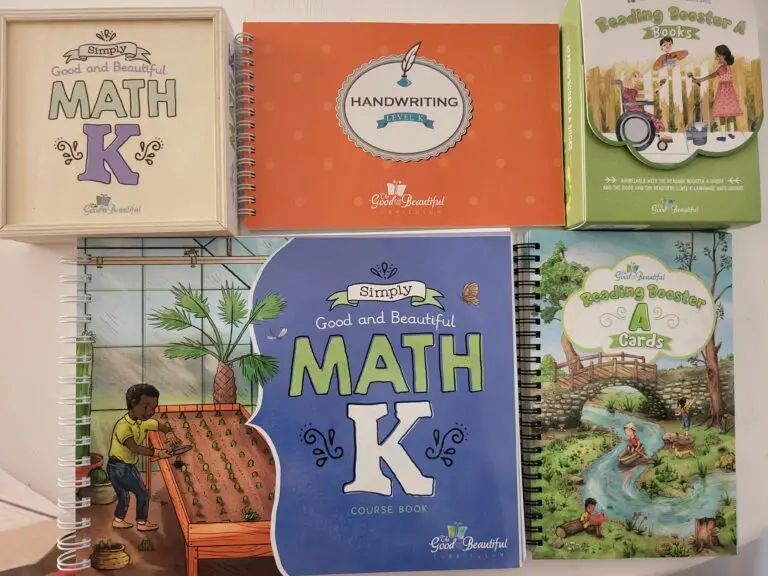
If you are looking for a gentle, mom-friendly place to start, here are a few resources I have loved over the years:
- The Good and The Beautiful
- Horizons Curriculum
- Teach Your Child to Read in 100 Easy Lessons
- The Well-Trained Mind by Jessie Wise and Susan Wise Bauer, for a classical approach and a roadmap through the grade levels
- Honey for a Child’s Heart by Gladys Hunt, a wonderful guide for choosing living books
Mistake #3: Comparing Your Homeschool to Everyone Else’s
I love Pinterest. I run a Pinterest account, after all. But I have also scrolled through photos of immaculate homeschool rooms, perfectly planned unit studies, and smiling children in matching outfits and felt my confidence slide right out the door.
Here is what those pictures do not show you: the math meltdown that happened twenty minutes earlier, the pile of laundry just outside the frame, or the fact that the whole thing was staged for a ten-second photo.
Comparison is a thief. It steals your joy, your confidence, and your ability to see what is actually working in your own home. It also tempts you to chase someone else’s method instead of listening to what your children need.
“Let us not become conceited, provoking one another, envying one another.” Galatians 5:26
What to do instead:
- Remember that you are seeing someone’s highlight reel, not their whole story.
- Unfollow or mute any account that regularly leaves you feeling like you are not enough.
- Define what success looks like for your family. Write it down.
- Celebrate small wins: a child who finally sounded out a hard word, a good conversation about history, a peaceful morning.
- Measure your homeschool against the goals God has placed on your heart, not against a stranger’s Instagram feed.
Your homeschool is allowed to look different. In fact, it is supposed to.
Mistake #4: Not Knowing Your State’s Homeschool Laws
This one is not glamorous, but it is important. Homeschool laws vary widely from state to state and country to country. Some places require a notice of intent, some require standardized testing or portfolio evaluations, and some require very little at all.
Many beginners skip this step because it feels intimidating, or they assume the rules are the same as the neighbor’s. Then they scramble when a deadline arrives or a question comes up.
What to do instead:
- Look up the homeschool requirements for your specific state or region before you begin, using your state education department and a reputable homeschool legal organization.
- Find out what notice, record keeping, testing, or evaluation is required, and note the due dates on your calendar.
- Connect with a local homeschool group in your area. Experienced moms usually know the process well and are happy to walk you through it.
- Keep copies of anything you submit.
A quick note: I am not a lawyer, and laws change, so always confirm the current requirements with an official source for your area. A little homework up front brings a lot of peace of mind.
Mistake #5: Skipping the Deschooling Season
If your children have been in traditional school, one of the kindest things you can do is give everyone time to decompress. This is often called deschooling, and many beginners skip it entirely because they are so anxious to get started.
Children who have spent years in a school environment often need time to unwind. They may be tired, resistant, or unsure how to learn without constant instructions and grades. And honestly, so do you. You are shedding your own assumptions about what education has to look like.
A common rule of thumb is about one month of deschooling for every year your child spent in school, though every family is different. You do not have to follow that exactly, but the principle is sound: rest and rebuilding come before rigor.
What to do instead:
- Spend the first few weeks reading together, visiting museums and parks, cooking, playing games, and rebuilding your relationship.
- Watch what your children get curious about. Their interests will tell you a lot.
- Ease into formal lessons slowly, beginning with one or two subjects.
- Let go of the idea that you are “behind.” You are not. You are laying a foundation.
If you want some encouragement for this stage, The Brave Learner by Julie Bogart is a warm and inspiring read about bringing wonder back into learning at home [Amazon affiliate link].
Mistake #6: Overscheduling (or Having No Rhythm at All)
Beginners tend to land at one of two extremes. Either they build a minute-by-minute schedule that collapses the moment a toddler wakes up from a nap, or they have no structure whatsoever and wonder why nothing gets done.
I have lived on both ends of this spectrum. The rigid schedule made me feel like a failure every time we fell off it. The no-schedule approach left us drifting until 2 p.m., when I would panic and cram in worksheets.
What finally worked for us was a rhythm rather than a strict schedule. A rhythm is a predictable flow to your day without the pressure of exact times. We do the same things in roughly the same order, and the order is what holds the day together.
Here is a simple example:
- Morning basket: Scripture, prayer, a poem, and a read-aloud together
- Core subjects: math and language arts while little ones are fresh
- Break: snack, outdoor play, chores
- Afternoon: science, history, art, or reading on the couch
- Quiet time for everyone
If the day goes sideways, you simply pick up with the next thing in the flow. No guilt, no scrambling.
What to do instead:
- Build your day around anchors like meals, chores, and a morning start time.
- Plan fewer things than you think you can do. You can always add more.
- Schedule margin for the unexpected, because it will come.
- Do the most important subjects first, while energy is high.
- Look at your week as a whole, not just individual days. If Tuesday falls apart, Thursday can pick up the slack.
A good planner can make this easier. I love using a simple weekly layout that gives me room to adjust [Amazon affiliate link].
Mistake #7: Ignoring How Your Child Actually Learns
I have two children who could not be more different. One devours books and loves to sit quietly with a pencil. The other learns best when moving, building, and talking things through out loud.
When I first tried to teach them the same way, one thrived and the other shut down completely. It took me far too long to realize the problem was not my child’s attitude. It was my approach.
One of the greatest gifts of homeschooling is the ability to tailor education to the individual child. When we ignore that gift and force every child through the same mold, we lose one of the main reasons we chose this path in the first place.
What to do instead:
- Observe your child. Notice when they light up and when they check out.
- Offer a variety of ways to learn: reading, listening, building, drawing, acting things out, and hands-on projects.
- Let wiggly learners move. Standing, bouncing on an exercise ball, or pacing while reciting are all perfectly acceptable.
- Adjust the pace. If your child is flying through a subject, move ahead. If they need more time, give it without shame.
- Remember that struggling in one area does not mean something is wrong with your child or your teaching.
This is also a place where faith and trust come in. God made each of your children with a unique design, and He placed them in your home on purpose.
“He tends his flock like a shepherd: He gathers the lambs in his arms and carries them close to his heart; he gently leads those that have young.” Isaiah 40:11
He gently leads. We can do the same.
Mistake #8: Trying to Do Everything Alone
Homeschooling can be isolating, especially in the beginning. You are home with your children all day, you may not know any other homeschool families, and your friends in traditional school might not understand what you are doing.
Many new moms respond by pushing through alone, assuming they should have it all figured out. That path leads straight to burnout.
I will never forget the first time I walked into a homeschool co-op meeting, nervous and sure I would be the only one who did not know what she was doing. Within ten minutes, a mom I had never met sat down next to me and said, “Honey, I cried in my pantry three times last month. You are doing fine.” I nearly cried right there.
Community changes everything.
What to do instead:
- Look for a local homeschool group, co-op, or church-based community in your area.
- Join an online community that shares your values and approach, but guard your heart so it encourages rather than overwhelms you.
- Find one or two experienced homeschool moms you can ask questions and be honest with.
- Arrange regular park days, field trips, or playdates so your children can build friendships too.
- Do not be afraid to ask for help with a subject you find hard. Co-op classes and tutors are wonderful resources.
“Two are better than one, because they have a good reward for their toil. For if they fall, one will lift up his fellow.” Ecclesiastes 4:9-10
You were never meant to carry this alone.
Mistake #9: Neglecting Your Own Spiritual and Physical Well-Being
This is the mistake I most want to warn you about, because it is the one that quietly drains the joy from everything else.
When you homeschool, it is very easy to pour yourself out for everyone else. You plan the lessons, grade the papers, cook the meals, wipe the counters, and answer four hundred questions before noon. Meanwhile, your own time with the Lord gets pushed to the bottom of the list, your sleep suffers, and you begin to run on fumes.
I hit a wall in the middle of our second year. I was short-tempered, exhausted, and honestly resentful. I realized I had been trying to teach from an empty cup, and no curriculum in the world could fix that.
“Come to me, all who labor and are heavy laden, and I will give you rest.” Matthew 11:28
A well-known book that helped me enormously during that season is Teaching from Rest by Sarah Mackenzie, which gently reframes how we approach the whole homeschool day [Amazon affiliate link].
What to do instead:
- Protect a quiet time with the Lord, even if it is only ten minutes before the children wake up.
- Build rest into your week. Quiet time in the afternoon is a gift for both you and your kids.
- Take care of the basics: sleep, water, nourishing food, and a little movement.
- Say no to extra commitments that do not serve your family in this season.
- Ask your husband, a friend, or a grandparent for a break when you need one.
- Remember that a rested, peaceful mom teaches better than a perfect lesson plan ever could.
You cannot give what you do not have. Filling your own cup is not selfish. It is part of being faithful with the work God has given you.
Mistake #10: Forgetting to Keep Records
In the busy, beautiful chaos of the first year, record keeping often falls off the list. It feels boring compared to the fun parts of homeschooling, and it is easy to tell yourself, “I will remember what we did.”
You will not. Trust me.
Records matter for several reasons. Your state may require them. They help you see how far your children have come on discouraging days. And if your children eventually move into a traditional school, a community college, or a program that asks for transcripts, you will be so glad you have a clear picture of what you covered.
What to do instead:
- Keep a simple log of subjects covered, books read, and field trips taken.
- Save a few work samples from each subject every semester.
- Track attendance or days of instruction if your state requires it.
- Take photos of projects, experiments, and outings.
- Use a basic planner, spreadsheet, or notebook. The best system is the one you will actually use.
A little bit of consistency here saves a mountain of stress later. You can even make it a quick Friday habit with a cup of tea.
Mistake #11: Focusing Only on Academics and Missing the Heart
It is so easy to get caught up in checklists, grade levels, and whether your child is “on track.” I understand, because I have been there. But somewhere along the way, I realized I had spent weeks stressing about phonics charts and had barely stopped to enjoy my children.
One of the biggest reasons many of us homeschool is to nurture our children’s hearts, character, and faith alongside their minds. If the academics are perfect but the relationship is strained, something has gone wrong.
The hard truth is that a child who feels loved, known, and encouraged will learn far more than one who is being pushed through a program out of fear.
“Whatever you do, work heartily, as for the Lord and not for men.” Colossians 3:23
What to do instead:
- Begin your day with Scripture, prayer, and time together before you open any textbooks.
- Read aloud every single day. It builds vocabulary, imagination, and closeness all at once.
- Teach character alongside academics, and model it in how you handle hard moments.
- Stop a lesson when it is going badly, hug your child, and come back later. Relationship first.
- Make room for play, creativity, and plenty of laughter.
- Ask your children regularly what they love about learning and what feels hard.
If you want a beautiful, encouraging read on this very idea, For the Children’s Sake by Susan Schaeffer Macaulay is a treasure [Amazon affiliate link].
Mistake #12: Quitting Too Soon
I would love to tell you that every day of homeschooling is smooth, but you know that is not true. There will be days when nothing goes right. There will be weeks when your child resists everything, or when you wonder whether you are cut out for this.
The temptation to quit often hits hardest in the first few months, right when the novelty wears off and the reality sets in. Many beginners decide, in a moment of discouragement, that homeschooling “does not work” for their family.
But a rough season is not the same as a wrong decision. Most of the time, it is simply the hard middle of learning something new, for you and for your children.
Before you make any big decisions, I encourage you to pause. Rest. Pray. Talk to an experienced homeschool mom. Adjust your approach, simplify your schedule, or take a week off. Then see how things feel.
“Let us not grow weary of doing good, for in due season we will reap, if we do not give up.” Galatians 6:9
If, after real prayer and honest reflection, you decide that homeschooling is not right for your family at this time, that is okay too. There is no shame in changing course. But do not let one hard Tuesday make that decision for you.
A Simple Beginner Checklist to Get You Started
If this list feels like a lot, here is a short summary you can come back to whenever you need a reset:
- Learn your state or local homeschool requirements and note the deadlines.
- Give your family time to decompress, especially if you are coming from traditional school.
- Choose simple, well-reviewed curriculum and commit to it for a full semester.
- Build a gentle daily rhythm, not a rigid minute-by-minute schedule.
- Keep lessons short and focused, and let learning spill into real life.
- Find at least one homeschool friend or community to walk with you.
- Keep simple records of what you cover.
- Guard your time with the Lord and your own rest.
- Put your children’s hearts before their test scores.
- Give yourself grace, again and again.
Frequently Asked Questions About Starting Homeschool
How many hours a day should a beginner homeschool?
This depends on your children’s ages and your state’s requirements, but most families spend far less time than a traditional school day. Younger children often need just one to two hours of focused work, while older children may need three to five. Quality matters far more than quantity.
What is the biggest mistake new homeschool moms make?
In my experience, the biggest mistake is trying to recreate a classroom at home and then feeling like a failure when it does not work. Releasing that expectation brings so much freedom.
Is it okay to change curriculum mid-year?
Yes, if something is truly not working after a fair trial. Just be careful not to switch at the first sign of difficulty. Often a little patience, or a small adjustment to how you are using the curriculum, solves the problem.
How do I know if my child is learning enough?
Look for steady progress rather than perfection. Keep simple records, watch for growth in reading, writing, and math, and use any testing or evaluation your state requires as a helpful checkpoint rather than a verdict on your worth as a teacher.
What if I feel like I am not qualified to teach my own children?
You are more capable than you think. You know your children better than anyone, you can learn alongside them, and there are wonderful resources, co-ops, and communities available to help. Love, consistency, and a willingness to keep showing up matter more than a teaching degree.
Final Thoughts: You Are Doing Better Than You Think
If you take one thing from this post, I hope it is this: you do not have to get it all right.
I have been homeschooling long enough now to see what really matters. It is not the perfect schedule or the fanciest curriculum. It is the quiet, ordinary faithfulness of showing up each day, loving your children, and trusting God with the results.
You will make mistakes. I still do. But every mistake is a chance to learn, to extend grace, and to model for your children what it looks like to keep going with humility and hope.
So take a deep breath, set down the comparison, and look at the beautiful, messy, wonderful life right in front of you. You were chosen for these children, and they were chosen for you.
“Commit your work to the Lord, and your plans will be established.” Proverbs 16:3
You can do this, mama. I am cheering you on.