How to Homeschool a 6 Year Old with a Baby at Home: Realistic & Peaceful Strategies for 2026
Summary
Wondering how to homeschool a 6 year old with a baby at home without completely losing your sanity? You’re not alone! Balancing phonics lessons while simultaneously bouncing a fussy baby is one of the greatest juggling acts in modern parenting. The good news is that homeschooling your first grader while caring for a baby is absolutely doable with the right strategies, realistic expectations, and a hefty dose of grace for yourself. This guide shares proven techniques for creating a peaceful homeschool routine that honors both your baby’s needs and your 6 year old’s education, without requiring superhuman multitasking abilities or a perfectly clean house. Ready to discover how other moms are making this work in real life?
Table of Contents
- Why Homeschooling with a Baby Is Actually Possible
- Setting Realistic Expectations for This Season
- Creating a Flexible Daily Schedule
- Baby-Proof Learning Activities for First Grade
- Teaching During Nap Times vs. Baby Awake Times
- Incorporating Baby into Learning Activities
- Essential Supplies That Make Everything Easier
- Managing Interruptions Without Losing Progress
- Self-Care Strategies for Overwhelmed Moms
- When to Simplify and What to Let Go
Introduction
“Mama, can we do school now?” my 6 year old asked eagerly while I was elbow-deep in a diaper blowout that had somehow reached the baby’s hair. Welcome to homeschooling with a baby at home—where your best-laid lesson plans often get derailed by unexpected bodily functions and feeding schedules that change daily!
Here’s something nobody tells you before you start homeschooling with a baby: you’ll feel like you’re failing at both jobs simultaneously. A recent survey found that 68% of homeschool moms with babies report feeling overwhelmed regularly, but here’s the encouraging part—those same moms also reported that their older children developed incredible patience, independence, and compassion through the experience.
I started homeschooling my 6 year old when my second baby was just three months old. Those early weeks were rough, I’m not gonna lie. There were days when we accomplished exactly one math worksheet and called it victory. There were mornings when I cried into my cold coffee because I felt like I was shortchanging both kids. But somewhere around month four, something clicked. I stopped trying to replicate a traditional classroom and started creating a homeschool experience that actually fit our chaotic, beautiful, messy reality.
The secret isn’t doing everything perfectly or maintaining some impossible standard of academic excellence while your baby screams in the background. The secret is learning to work with your baby’s rhythms instead of against them, choosing the right teaching approaches for this specific season, and giving yourself permission to redefine what successful homeschooling looks like when you’ve got a tiny human who needs you constantly.
Why Homeschooling with a Baby Is Actually Possible
Let me start by addressing the elephant in the room. Yes, there will be days when you question whether homeschooling with a baby is sustainable. But I’m here to tell you it absolutely is, and many families are thriving in this exact situation! For starters:
- Six year olds need less direct instruction time than you think
- Babies sleep more than older children, creating windows of opportunity
- First grade curriculum is typically straightforward and parent-friendly
- Your 6 year old can develop valuable independence skills
- Short, focused lessons are often more effective than lengthy ones
First graders actually only need about 1-2 hours of focused academic instruction per day, according to most educational guidelines. That’s way less than a full school day! When my baby was tiny, I obsessed over trying to recreate a full school day at home. What a waste of energy that was. Once I realized we could accomplish our educational goals in much shorter bursts, everything became more manageable.
The beauty of homeschooling at this age is that much of first grade learning happens through everyday life experiences anyway. Reading street signs during errands, counting toys during cleanup and observing weather changes, are all legitimate educational activities that require zero special setup and can happen with a baby strapped to your chest. My 6 year old probably learned more math from real life application than from formal worksheets.
Babies also create natural accountability and time limits that can actually improve your homeschool efficiency. You know you’ve got maybe 20 minutes before the baby needs to nurse again? You focus like crazy during those 20 minutes! There’s no drifting off task or letting lessons drag on unnecessarily when you’re working on baby time.
Setting Realistic Expectations for This Season
Adjusting your expectations is probably the most important step in creating a peaceful homeschool environment with a baby. What worked before baby arrived might not work now, and that’s completely okay! Some things too keep in mind is that:
- Some days you’ll accomplish less than planned and that’s normal
- Your house will be messier than you’d like during school hours
- Interruptions are inevitable and should be built into your plans
- Flexibility matters more than rigid schedules
- Progress matters more than perfection
I had to completely let go of my pre-baby homeschool ideals. You know those Instagram photos of perfectly organized homeschool rooms with color-coded materials and smiling children? Yeah, that wasn’t happening in my house. We did school at the kitchen table surrounded by breakfast dishes and baby toys, and honestly, it worked just fine.
My biggest mindset shift came when I stopped comparing our homeschool to traditional classrooms or even to other homeschool families without babies. A classroom teacher doesn’t have a baby who needs to eat every three hours. Other homeschool moms might have older kids who can work independently while baby naps. Your situation is unique, and your homeschool should reflect that reality rather than someone else’s circumstances.
Accept right now that some days will be survival mode days. Maybe the baby had a terrible night and you’re all exhausted. Maybe your 6 year old is going through a difficult phase. Maybe the baby is teething and impossibly fussy. On those days, reading together on the couch and calling it a school day is perfectly acceptable. You’re not lowering your standards, you’re just being realistic about what’s sustainable long-term.
Creating a Flexible Daily Schedule
The word “schedule” takes on a whole new meaning when you add a baby to the mix. Forget rigid time blocks! Think flexible frameworks that can adapt to whatever the day throws at you! For example:
- Block schedules based on baby’s natural rhythms
- Plan core subjects during baby’s most predictable times
- Keep backup activities ready for unexpected baby needs
- Build in buffer time between subjects
- Create multiple “start times” throughout the day
My flexible schedule looks nothing like a traditional school day, and that’s the point. We have a morning session that happens sometime between 8am and 10am, depending on when the baby wakes up and how the morning feeding goes. If the baby is happy and content, we dive into our most challenging subject first. If the baby is fussy, we start with something easier like reading aloud, which I can do while nursing.
I like to keep three different versions of our daily plan ready. Version A is our “ideal day” when baby cooperates perfectly. Version B is our “baby is awake and needs attention” plan with more interactive activities. Version C is our “baby is having a rough day” plan with lots of audiobooks, educational videos, and low-prep activities. Having these options ready prevents me from feeling like a failure when we can’t follow the original plan.
The afternoon is reserved for hands-on subjects like art, science experiments, or nature study. Things that are either really engaging for my 6 year old (so they’re motivated to work independently) or things where baby participation doesn’t ruin the activity. We save screen-based learning for desperate moments, like when the baby won’t nap but is too fussy to be around focused learning.
Baby-Proof Learning Activities for First Grade
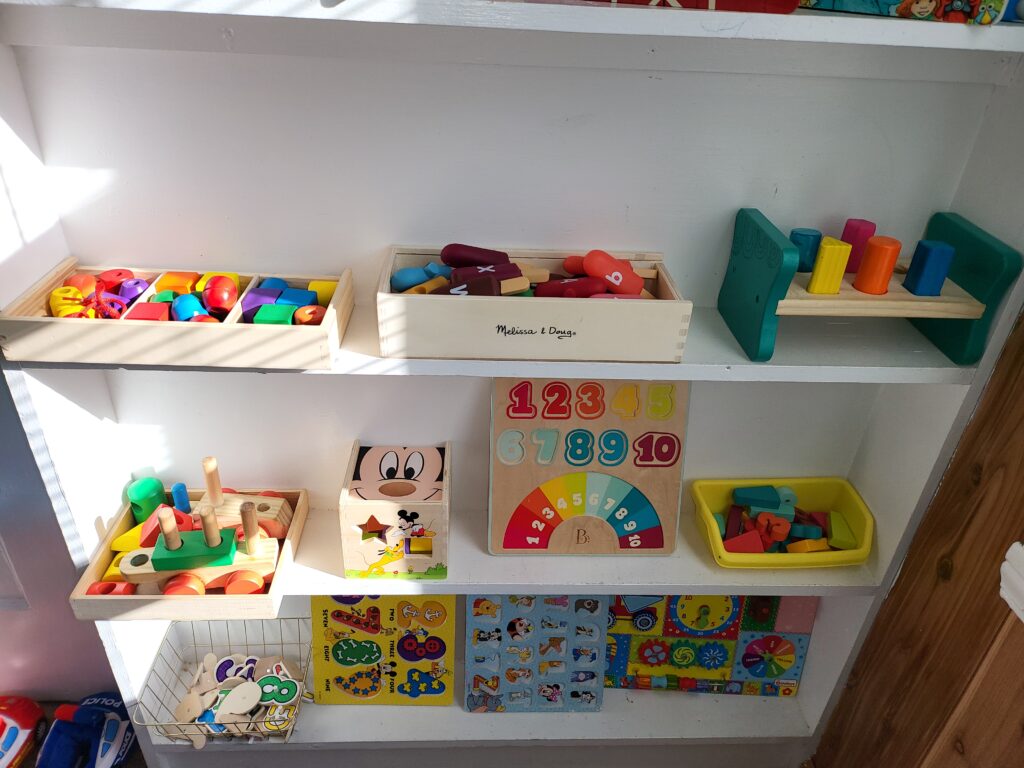
Choosing the right activities makes all the difference! Some learning activities are practically impossible with a mobile baby, while others work beautifully even with a crawling baby trying to “help.” Aim for:
- Large manipulatives baby can’t choke on
- Dry erase boards instead of worksheets baby might grab
- Audio-based learning programs baby can’t interrupt
- Floor activities in baby-gated areas
- Mess-free art supplies that won’t stain if baby touches them
Dry erase boards have been absolute lifesavers for us. My 6 year old does math problems, spelling practice, and handwriting on a large whiteboard mounted at their height. When the baby inevitably crawls over and grabs at things, there’s no paper to crumple or pencils to poke anyone with. Plus, mistakes erase instantly, which reduces my first grader’s frustration when baby causes disruptions.
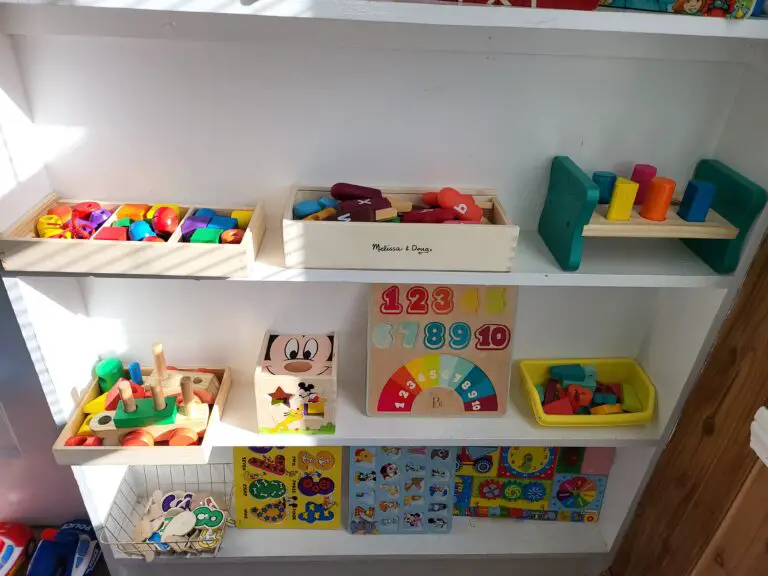
We switched to jumbo manipulatives for math, such as big wooden blocks, large counting bears, and oversized pattern blocks. These are substantial enough that baby can’t swallow them, and honestly, baby playing nearby with a few blocks while my 6 year old works on math problems has become a sweet bonding time. They’re “doing math together” even though baby is just chewing on a block.
Audio programs like audiobook versions of our readers or educational podcasts have become essential tools. I can nurse the baby while my 6 year old listens to a story, then we discuss it together afterward. There’s no visual component for baby to mess up, and my older child is developing excellent listening comprehension skills. Win-win!
Teaching During Nap Times vs. Baby Awake Times
The great nap time debate! Should you save all your teaching for when baby sleeps, or spread it throughout the day? I’ve tried both approaches, and the answer is probably both. Here’s a few quick tips:
- Reserve complex subjects requiring focus for nap times
- Use baby-awake times for interactive and flexible activities
- Don’t put all your eggs in the nap time basket
- Teach your 6 year old independent work habits for nap times
- Have both quiet and active learning options ready
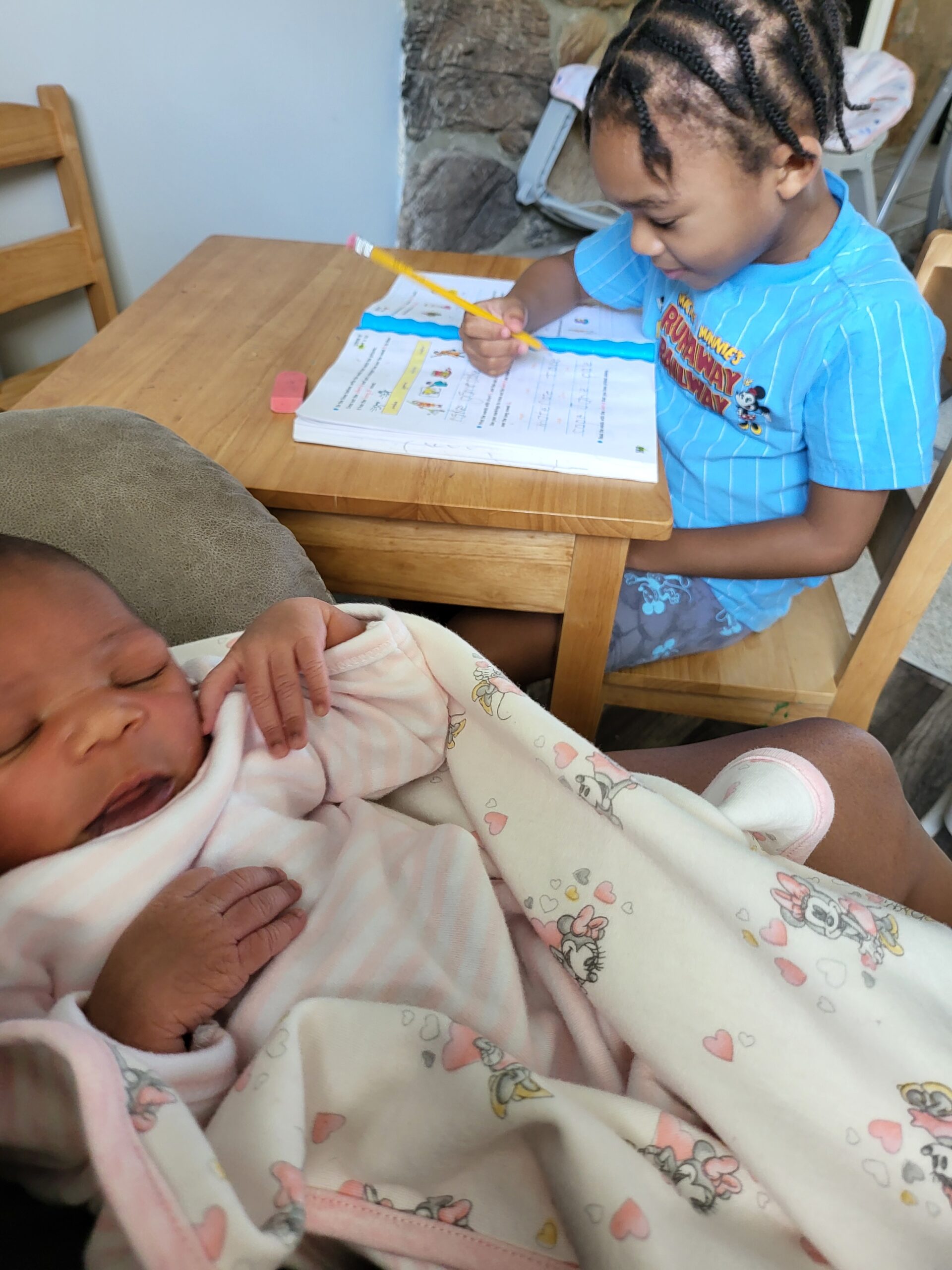
During my baby’s morning nap, we tackle anything that requires sustained concentration, such as new math concepts, phonics instruction and handwriting practice. My 6 year old knows this is focused work time, and we make the most of that precious quiet hour. I set up their workspace before baby goes down so we can dive right in without wasting valuable minutes.
But here’s what I learned the hard way: naps are unreliable! If you plan your entire homeschool day around nap time, you’re setting yourself up for frustration when baby decides to skip a nap or only sleep for 20 minutes. That’s why we also do plenty of learning while baby is awake. Reading aloud, hands-on science observations and nature walks all work fine with baby along for the ride.
When baby is awake but content, we do activities where interruptions don’t derail everything. Building words with letter tiles, sorting objects by color, measuring ingredients for a simple recipes are all stop-and-start friendly activities. My 6 year old has actually gotten really good at pausing their work to help me with the baby, then jumping back in where they left off. That is absolutely precious!
Incorporating Baby into Learning Activities
Sometimes the best solution isn’t separating baby from school time, it’s including baby in age-appropriate ways! This creates family bonding time and teaches your 6 year old about caring for siblings. Some age appropriate learn includes:
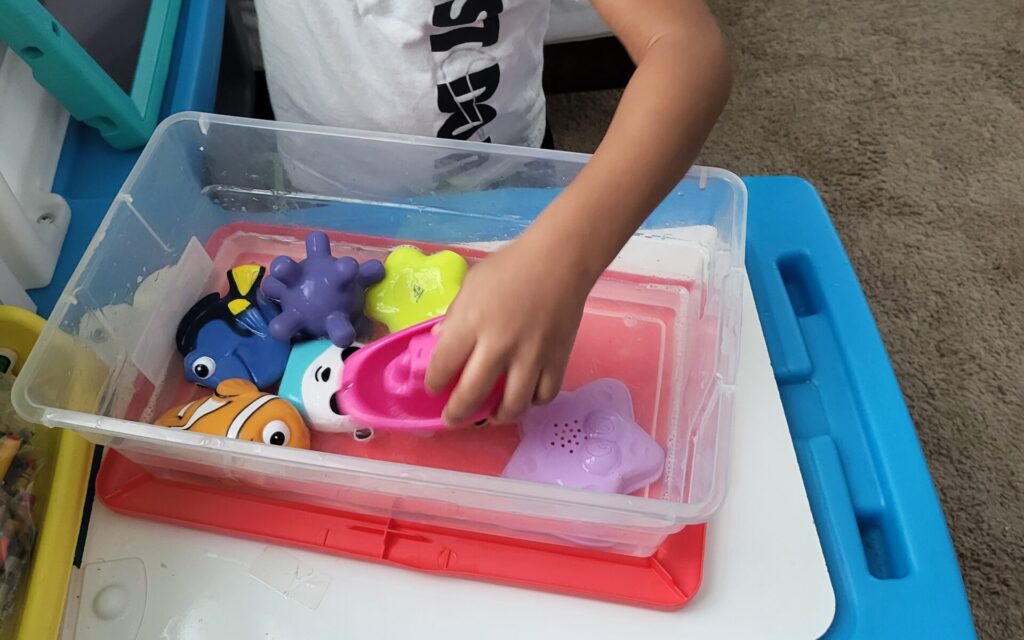
- Sensory bins baby can safely explore during lessons
- Music and movement activities that include baby
- Story time where baby participates at their level
- Nature observations baby can experience too
- Simple science experiments safe for baby to watch
Sensory bins have been a game-changer for us. While my 6 year old does focused work, baby sits in the high chair with a bin of large pasta shapes or fabric scraps to explore. They’re occupied, developing fine motor skills, and close enough for me to supervise while I help my older child. I rotate the sensory materials weekly so baby stays interested.
Music time includes everyone! We sing counting songs, phonics songs, and silly educational tunes while baby bounces in the bouncer or sits on my lap. My 6 year old is learning, baby is entertained, and we’re building those family memories that make homeschooling special. Baby doesn’t understand the educational content yet, but they’re absorbing language patterns and rhythm.
Story time is a whole family affair. Baby sits on my lap or plays nearby with board books while I read chapter books to my 6 year old. Sometimes baby gets fussy and we have to stop, but mostly they’re content just being part of the routine. My older child has learned to summarize parts baby might have interrupted, which strengthens their comprehension skills.
Essential Supplies That Make Everything Easier
The right supplies can make homeschooling with a baby so much more manageable! These aren’t fancy or expensive, but they’ve saved my sanity more times than I can count.
- Baby carrier for hands-free teaching
- Portable playpen for confining baby safely during lessons
- Timer for structured lesson blocks
- Audio books and educational podcasts
- Independent work boxes for your 6 year old
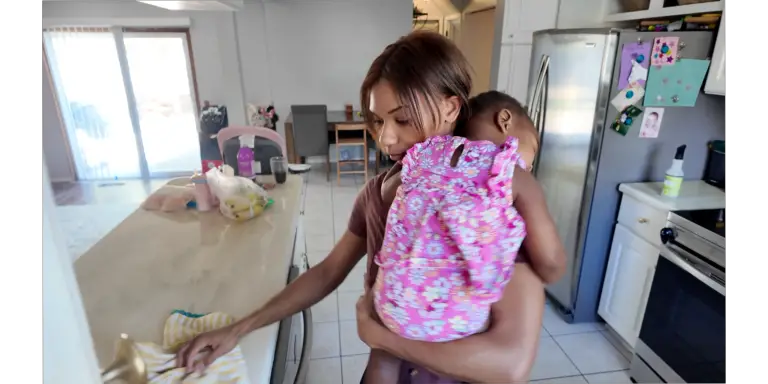
My baby carrier is probably the most-used homeschool supply I own, which sounds weird, right? But wearing baby while teaching phonics or demonstrating a math concept has been essential. Baby stays calm and close, my hands are free to point and demonstrate, and we keep making progress. I’ve taught entire lessons while bouncing and swaying with baby strapped to my chest.
The portable playpen creates a safe space where baby can play while staying close to our learning area. I fill it with age-appropriate toys that rotate regularly so baby doesn’t get bored. My 6 year old can focus better knowing baby is safe and contained, and I can give full attention to teaching without constantly watching to make sure baby isn’t eating something dangerous.
Independent work boxes transformed our homeschool routine. Each morning, I fill a box with activities my 6 year old can complete independently. This can include coloring pages reinforcing what we’ve learned, simple math worksheets, pattern matching games, and reading practice. When I need to feed baby or deal with a diaper emergency, my older child knows exactly what to work on without asking me constant questions.
Managing Interruptions Without Losing Progress
Interruptions aren’t a matter of if but when. Learning to handle them gracefully is essential for maintaining peace and making consistent progress in your homeschool! Utilize:
- Pause and resume strategies that maintain learning flow
- Quick transition phrases that refocus your 6 year old
- Documentation methods to track where you left off
- Flexible lesson structures that accommodate breaks
- Positive reframing of interruptions as learning opportunities
My first strategy is acknowledging interruptions calmly instead of getting frustrated. When baby cries mid-lesson, I say to my 6 year old, “Let’s pause here, and can you remember this problem while I help baby?” This teaches patience and helps them practice holding information in their working memory, which is actually a valuable cognitive skill!
I even use sticky notes sometimes, to mark our place in workbooks, on pages of readers, or on our daily checklist. When we get interrupted, I stick a note exactly where we stopped. This prevents those “where were we?” moments that waste time and create frustration. My 6 year old has started using this strategy independently, which shows they’re developing good organizational habits.
Flexible lesson structures have been crucial. Instead of planning “Math 9:00-9:45,” I plan “Math lesson covering addition with regrouping.” Whether that takes 20 minutes straight or gets stretched across three 10-minute sessions doesn’t matter, we’re focusing on mastery rather than clock-watching. This mindset shift reduced my stress dramatically.
Self-Care Strategies for Overwhelmed Moms
You cannot pour from an empty cup! Taking care of yourself isn’t selfish, it’s essential for sustainable homeschooling with a baby.
- Lower your housekeeping standards during intense baby phases
- Accept help when offered without guilt
- Protect rest time even if it means shorter school days
- Connect with other homeschool moms for emotional support
- Celebrate small victories instead of focusing on what didn’t happen
I had to completely abandon my pre-baby cleaning standards. You know the laundry piles up, toys scattered everywhere, sometimes we have pizza for dinner, and you know what? Everyone is still happy! Trying to maintain a perfect house while homeschooling and caring for a baby is a recipe for burnout. Something has to give, and it’s okay if that something is a spotless home.
When my husband offers to watch the kids for a couple hours during homeschool while he works, I used to feel guilty accepting because “I should be able to handle this.” That was ridiculous thinking! Now when help is offered, I say yes and use that time however I need. Those breaks make me a better mom and teacher.
I’ve also found my people in church and online homeschool groups specifically for moms with babies and toddlers. These women get it in a way others don’t. When I’m having a rough day, I can post about it and receive encouragement from moms who’ve been there. We share what’s working, laugh about what’s not, and remind each other that this season won’t last forever.
When to Simplify and What to Let Go
Knowing what to let go of is just as important as knowing what to keep! Some things can wait until baby is older, and that’s perfectly fine.
- Complicated art projects can wait for a less chaotic season
- Extensive science experiments might need to be simplified
- Multiple extracurricular activities may be too much right now
- Elaborate unit studies could be replaced with simpler themes
- Some subjects can be temporarily reduced or combined
I had grand plans for weekly science experiments with my 6 year old. The reality? Most experiments require setup and supervision that’s really hard with a baby around. So we simplified. Instead of elaborate experiments, we do simple observations like watching ice melt, observing bugs outside, and growing seeds in a jar. The learning still happens, just without the stress and mess of complex setups.
We temporarily paused our co-op participation when baby was between 2-6 months old. The logistics of getting everyone ready, packing supplies, and managing baby in a group setting was just too overwhelming. Some homeschool moms will tell you to push through and maintain all your activities, but I’m here to tell you it’s okay to step back. We rejoined when baby was older and more portable, and honestly, taking that break preserved my sanity.
Unit studies are wonderful, but they require a lot of planning and prep work. During baby’s first year, we stuck to straightforward curriculum that didn’t need much parent preparation. I could open the book and teach without having to gather 15 different materials or create elaborate activities. There’s no shame in choosing simplicity during demanding seasons!
Conclusion
Learning how to homeschool a 6 year old with a baby at home is one of those challenges that feels impossible until you’re actually doing it and then you realize thousands of moms before you have managed it successfully! The key isn’t finding some magic formula or becoming a superhuman multitasker. The key is embracing flexibility, extending yourself grace, and recognizing that this intense season is temporary but also precious.
Your 6 year old is learning so much more than academics during this time. They’re learning patience when lessons get interrupted. They’re learning compassion as they watch you care for baby with love. They’re developing independence and problem-solving skills when they figure out how to continue working while you tend to baby’s needs. These life skills are just as valuable as anything in a textbook!
Remember that progress isn’t always linear, and that’s especially true when you’re homeschooling with a baby. Some weeks you’ll crush your lesson plans and feel like a homeschool superhero. Other weeks you’ll barely keep everyone fed and clean, and that’s okay too. What matters is that you’re showing up, you’re trying, and you’re creating a learning environment filled with love even when it’s also filled with chaos.
Be gentle with yourself, mama. You’re doing something incredibly challenging and incredibly valuable. Your 6 year old is receiving an education uniquely tailored to their needs, and they’re learning it in the context of a loving family where everyone’s needs matter. That’s not something you can get in any traditional classroom!
The baby phase won’t last forever. Before you know it, you’ll have two students and wonder how you ever thought homeschooling with a baby was hard compared to managing multiple grade levels! But seriously, you’ve got this. Take it one day at a time, celebrate the small victories, and trust that you’re giving your children exactly what they need during this beautiful, exhausting, wonderful season.
Thanks for reading, and remember, the peaceful homeschool isn’t the one without interruptions. It’s the one where you’ve learned to roll with them and still find joy in the journey!